

If you want to keep your dog healthy and happy, knowing how much they should eat is one of the most important things you can do. But how do you figure out the right amount?
It’s not just about guessing or following generic advice. Your dog’s weight plays a big role in deciding their daily food needs. Feed too little, and they might lack energy; feed too much, and you risk health problems. You’ll discover simple, clear guidelines on how much your dog should eat based on their weight.
By the end, you’ll feel confident giving your furry friend the perfect portion every day. Keep reading to learn the secrets to a balanced, healthy diet for your dog!

Credit: kdfoundation.org
Factors Affecting Dog Food Intake
Several factors affect how much a dog should eat based on its weight. Each dog has unique needs. These needs change with different conditions. Understanding these factors helps provide the right amount of food. Proper feeding keeps dogs healthy and active.
Feeding too much or too little can cause problems. Knowing these factors makes feeding easier and safer for your dog.
Age And Life Stage
Puppies need more calories for growth. Adult dogs require fewer calories to maintain weight. Senior dogs often eat less due to slower metabolism. Life stages change how much energy dogs burn daily.
Breed And Size
Small breeds burn energy faster than large breeds. Large breeds need more food but fewer calories per pound. Each breed has a different metabolism and energy use. Size directly affects daily food intake requirements.
Activity Level
Active dogs burn more calories and need more food. Sedentary dogs require less food to avoid weight gain. Activity level varies by lifestyle and environment. Adjust feeding according to your dog’s daily exercise.
Health Conditions
Some health issues change appetite and energy needs. Dogs with illnesses may need special diets or less food. Overweight dogs need controlled portions to lose weight. Always follow your vet’s advice for feeding during illness.
Calculating Daily Food Amount
Knowing how much to feed your dog each day helps keep them healthy. Dogs need the right amount of food based on their weight. Too little food can cause weakness. Too much can lead to obesity. Calculating the daily food amount is key.
Different dogs have different needs. Their size, age, and activity level all affect how much food they require. Here are easy ways to calculate the right daily portion for your dog.
Using Body Weight
Start by weighing your dog. Use their current weight in pounds or kilograms. The daily food amount often depends on this number. For example, a dog weighing 20 pounds may need less food than one weighing 50 pounds. This method gives a basic idea of how much food to offer each day.
Calories Per Pound
Every dog needs a certain number of calories per pound of body weight. Small dogs usually need more calories per pound than large dogs. On average, dogs require 30 to 40 calories per pound daily. Multiply your dog’s weight by this number to find their calorie needs. This helps in choosing the right amount of food based on its calorie content.
Adjusting For Metabolism
Each dog has a unique metabolism. Some burn calories faster, others slower. Active dogs may need 20% to 30% more calories. Older or less active dogs may need fewer calories. Watch your dog’s weight and energy levels. Adjust food portions if your dog gains or loses weight unexpectedly.
Types Of Dog Food And Portions
Choosing the right type of food and portion size is key to feeding your dog well. Different dog foods have different nutrient levels and water content. These factors affect how much your dog should eat each day. Understanding each type helps you feed your dog properly based on their weight and needs.
Dry Kibble
Dry kibble is the most common dog food type. It contains less water, so it is calorie-dense. Dogs eat less volume but get enough energy from kibble. Portion size depends on the dog’s weight and activity. Small dogs need about a half cup to one cup daily. Larger dogs can eat several cups per day. Always check the package for feeding guidelines.
Wet Food
Wet food has higher moisture content than dry kibble. It looks like canned food and is soft to eat. Dogs may need to eat a larger portion to get the same calories as kibble. Wet food can help keep dogs hydrated. Portion size varies by dog weight and food brand. Usually, feed less wet food by weight than dry food because it contains more water.
Raw And Homemade Diets
Raw and homemade diets include fresh ingredients. They can contain meat, vegetables, and grains. These diets offer natural nutrients but need careful portion control. Feeding too much or too little affects your dog’s health. Calculate portions based on your dog’s weight and energy needs. Consult a vet to ensure balanced nutrition with homemade meals.
Credit: www.petmd.com
Feeding Guidelines By Dog Weight
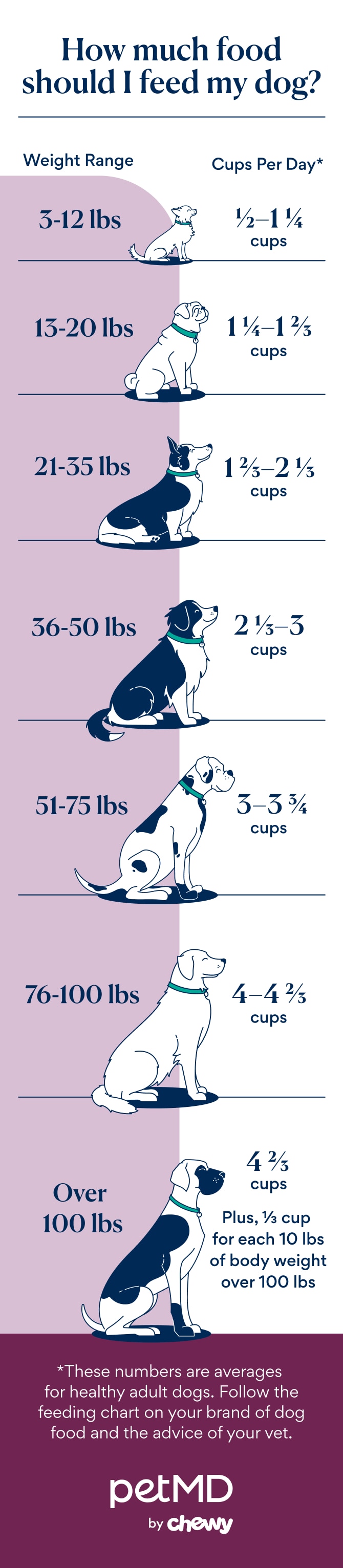
Feeding your dog the right amount is key to their health. Dogs need different food amounts based on weight. Overfeeding or underfeeding can cause health problems. Use weight as a simple guide to find the right portion size. This helps keep your dog active and happy.
Here are feeding guidelines by dog weight. These tips help you serve the correct food amount daily.
Small Breeds
Small dogs weigh under 20 pounds. They burn energy fast but need less food. Feed them about 1/4 to 1 cup of dry food daily. Divide the meals into two servings. Small breeds have fast metabolism but small stomachs.
Medium Breeds
Medium dogs weigh between 20 and 50 pounds. They need about 1 to 2 cups of food each day. Give two meals for best digestion. Medium breeds have balanced energy and appetite. Adjust portions if your dog is very active.
Large Breeds
Large dogs weigh 50 to 100 pounds. They require 2 to 4 cups of food daily. Split meals into two or three servings. Large breeds grow slower and need joint support nutrients. Avoid overfeeding to protect their bones and joints.
Giant Breeds
Giant dogs weigh over 100 pounds. Feed about 4 to 6 cups of food daily. Give multiple small meals to help digestion. Giant breeds grow slowly and need special care. Watch their weight closely to prevent obesity issues.
Signs Of Overfeeding And Underfeeding
Knowing the signs of overfeeding and underfeeding helps keep your dog healthy. Dogs need the right food amount for their weight, size, and activity. Too much or too little food causes health problems. Watch your dog closely for changes. These changes show if you need to adjust their diet.
Weight Gain And Obesity
Weight gain happens from eating too much food. Dogs may look rounder or have a thick waist. Obesity makes dogs tired and less active. It can cause joint pain and breathing problems. Overfeeding often leads to extra fat buildup. Keep an eye on your dog’s body shape regularly.
Weight Loss And Malnutrition
Weight loss can mean your dog is not eating enough. Thin ribs and a sunken belly are clear signs. Malnutrition weakens your dog’s immune system. It can cause dull fur and low energy. Underfeeding stops your dog from getting needed nutrients. Check your dog’s body condition to avoid these risks.
Behavioral Changes
Eating too much or too little can change your dog’s behavior. Overfed dogs may become lazy or irritable. Underfed dogs might act restless or anxious. Loss of appetite or begging can also show feeding issues. Behavior gives clues about your dog’s health and diet. Pay attention to these signals every day.
:max_bytes(150000):strip_icc()/puppy-feeding-schedule-2-d8f6749725de477eb32756329140a85b.png)
Credit: enontab.org
Tips For Healthy Feeding Habits
Healthy feeding habits keep your dog happy and strong. Feeding the right amount helps avoid weight problems. It also supports good digestion and energy levels. Simple steps make a big difference in your dog’s health.
Here are key tips to create healthy feeding routines for your dog.
Consistent Feeding Schedule
Feed your dog at the same times every day. This helps their body expect food and digest well. Choose two or three feeding times daily. Avoid free-feeding to control portion size. Consistency keeps your dog’s metabolism steady and healthy.
Measuring Portions Accurately
Use a measuring cup or scale to serve food. Eyeballing portions often leads to overfeeding. Follow the feeding guidelines based on your dog’s weight. Adjust portions if your dog gains or loses weight. Accurate portions help maintain a healthy weight and avoid hunger or fullness issues.
Choosing Quality Ingredients
Pick foods with real meat, vegetables, and whole grains. Avoid fillers like corn or soy. Quality ingredients provide essential nutrients and support overall health. Read labels carefully to find natural, balanced options. Better ingredients mean better energy and a shiny coat.
When To Consult A Vet
Knowing how much your dog should eat by weight is important. Sometimes, feeding needs change. Knowing when to ask a vet can keep your dog healthy and happy. Changes in behavior, weight, or energy may signal a need for advice. A vet can guide you on feeding amounts and diet choices.
Diet Adjustments
Your dog’s diet might need changes over time. Puppies, adults, and seniors have different needs. A vet can suggest the right food amounts. Changes in activity or health may require diet updates. Avoid guessing; a vet’s advice ensures your dog gets enough nutrients.
Special Nutritional Needs
Certain dogs need special diets. Dogs with allergies or illnesses may require unique food. Vets can recommend diets for kidney issues, diabetes, or obesity. Special foods help manage these conditions. Feeding the wrong amount or type can worsen health problems.
Monitoring Health Issues
Weight loss or gain can signal health problems. Sudden changes in eating habits need attention. A vet checks for infections, parasites, or chronic diseases. Regular vet visits help catch problems early. Early care improves your dog’s life quality and longevity.
Frequently Asked Questions
How Much Food Does A Dog Need By Weight?
A dog’s food amount depends on weight, age, and activity. Typically, dogs eat 2-3% of their body weight daily. For example, a 50-pound dog needs about 1 to 1. 5 pounds of food daily. Always adjust based on your dog’s health and energy.
Does Dog Breed Affect Food Portion Size?
Yes, dog breed influences portion size because metabolism and activity vary. Larger breeds need more calories, while smaller breeds require less food. Breed-specific nutritional needs also matter, so consult your vet for precise feeding guidelines tailored to your dog’s breed.
How Often Should I Feed My Dog By Weight?
Most adult dogs should eat twice a day, morning and evening. Puppies may need three to four meals daily due to higher energy needs. Feeding frequency depends on your dog’s weight, age, and health to maintain proper digestion and energy levels.
Can I Feed My Dog Based On Weight Only?
Feeding solely by weight is a starting point but not enough. Age, activity level, and health conditions also influence food needs. Always consider these factors and monitor your dog’s weight and condition to adjust portions accurately.
Conclusion
Feeding your dog the right amount helps keep them healthy. Weight is a key factor to decide food portions. Too little food can cause weakness. Too much food may lead to weight gain. Watch your dog’s body and energy levels closely.
Adjust food as your dog grows or changes activity. Regular check-ups with a vet help keep feeding on track. Healthy meals support a happy, active dog life. Simple steps make feeding easy and stress-free. Your dog deserves good care every day.
Disclosure: As an Amazon Associate, I may earn from qualifying purchases at no extra cost to you. Amazon and the Amazon logo are trademarks of Amazon.com, Inc, or its affiliates.
