
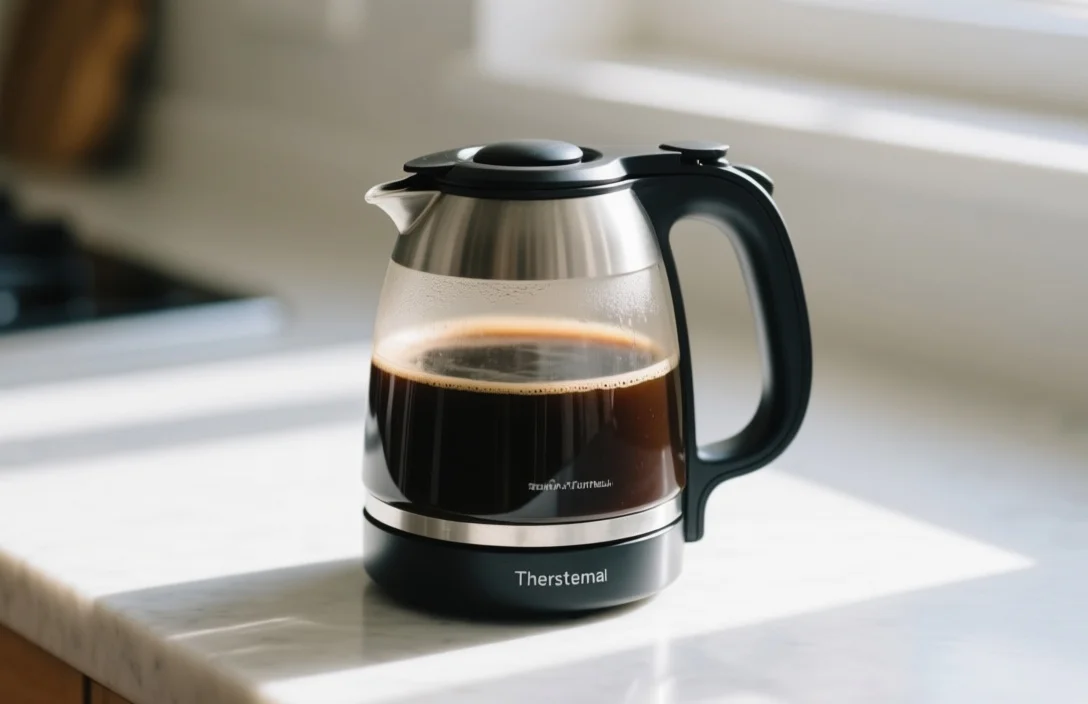
A thermal carafe coffee maker is a drip machine that brews coffee directly into a vacuum-insulated stainless steel container instead of a glass pot on a heated plate. This design relies on physical insulation to keep coffee hot for hours without using an external heat source that cooks the liquid. Most users choose these machines to avoid the “burnt” taste associated with traditional warming plates.
Thermal carafe coffee makers keep coffee at a drinkable temperature (typically 150-170 degrees Fahrenheit) for 2 to 4 hours without electricity. Unlike glass carafes, these double-walled vessels prevent heat from escaping and stop the coffee from evaporating or oxidizing as quickly.
Key Takeaways
- Vacuum insulation. Double-walled stainless steel prevents heat transfer through conduction and convection.
- No warming plate. These machines eliminate the hot plate, which stops the coffee from scorching or tasting bitter.
- Extended heat. Coffee stays hot for several hours, making it ideal for slow drinkers or office settings.
- Durability gains. Stainless steel carafes do not shatter like glass, reducing the risk of kitchen accidents.
- Taste preservation. Without constant reheating, the volatile oils and flavors in the coffee remain stable longer.
- Pre-heating needs. Rinsing the carafe with hot water before brewing significantly increases heat retention.
What to Know About what is a thermal carafe coffe
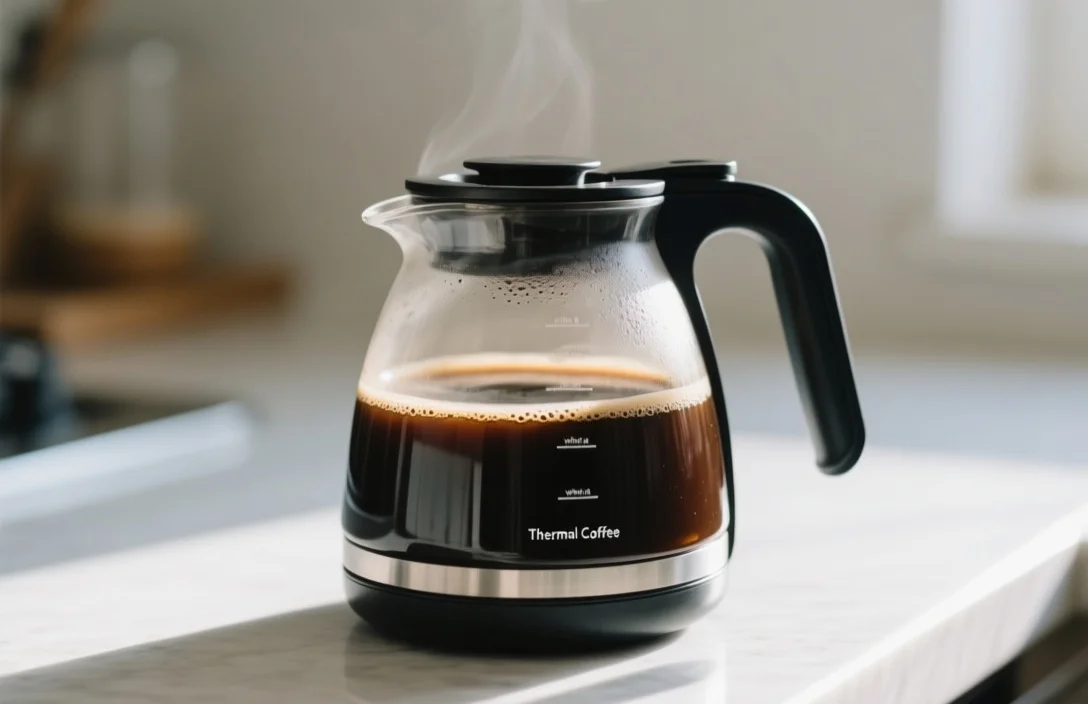
A thermal carafe coffee maker is defined by its lack of a heating element under the pot. In a standard coffee maker, the glass carafe sits on a hot plate that keeps the coffee warm, but this process continues to “cook” the coffee, leading to a bitter, acrid taste. A thermal machine solves this by using a Dewar flask design, where two walls of steel or glass are separated by a vacuum.
This vacuum acts as a barrier because heat cannot travel through a void. When the machine finishes brewing, the coffee is trapped in this insulated environment. The heat is held by the liquid itself rather than being forced back into the liquid by a heating coil.
The brewing process is identical to a standard drip machine. Water is heated, passed through a filter and coffee grounds, and drips into the carafe. The only difference is where the coffee lands and how it is stored.
For someone who drinks a full pot over three hours, this is the only way to ensure the last cup tastes like the first. If you drink your entire pot in ten minutes, the thermal advantage is negligible, but the durability of the steel remains a plus.
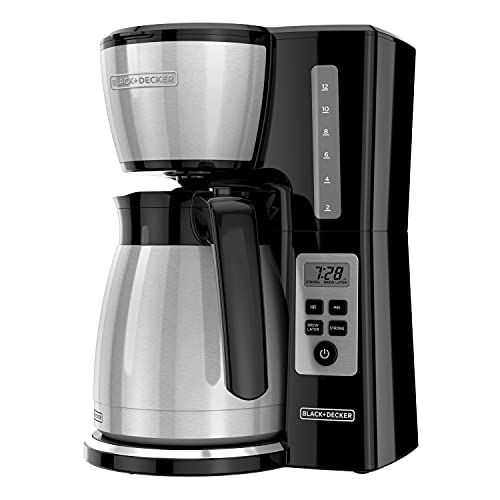
Helpful pick
BLACK+DECKER 12 Cup Thermal Programmable Coffee Maker with Brew Strength and VORTEX Technology, Black/Steel, CM2046S
A great entry point to thermal brewing, featuring VORTEX technology for consistent extraction and heat retention.
Things that matter most
Temperature stability is the primary goal of a thermal system. Because there is no hot plate, the coffee temperature begins to drop the moment it hits the carafe, but it does so at a much slower rate than in an open pot. High-quality carafes can keep coffee above 140 degrees Fahrenheit for several hours.
The material of the carafe matters. Most modern machines use 18/8 food-grade stainless steel. This material is non-reactive, meaning it will not impart a metallic taste to the coffee, and it is resistant to the stains and odors that can plague plastic components.
Maintenance differs from glass systems. While you cannot see the coffee level through the steel, most carafes have a marking on the handle or a specific pouring sound that tells you when it is empty. Cleaning requires a bottle brush and occasionally a vinegar soak to remove coffee oil buildup from the interior walls.
Three specific factors determine the performance of these machines:
- Seal quality. A tight-fitting lid prevents steam from escaping, which is the fastest way coffee loses heat.
- Wall thickness. Thicker vacuum seals generally correlate with longer heat retention.
- Carafe capacity. Smaller carafes lose heat faster because there is less thermal mass to hold the energy.
Tips for what is a thermal carafe coffe
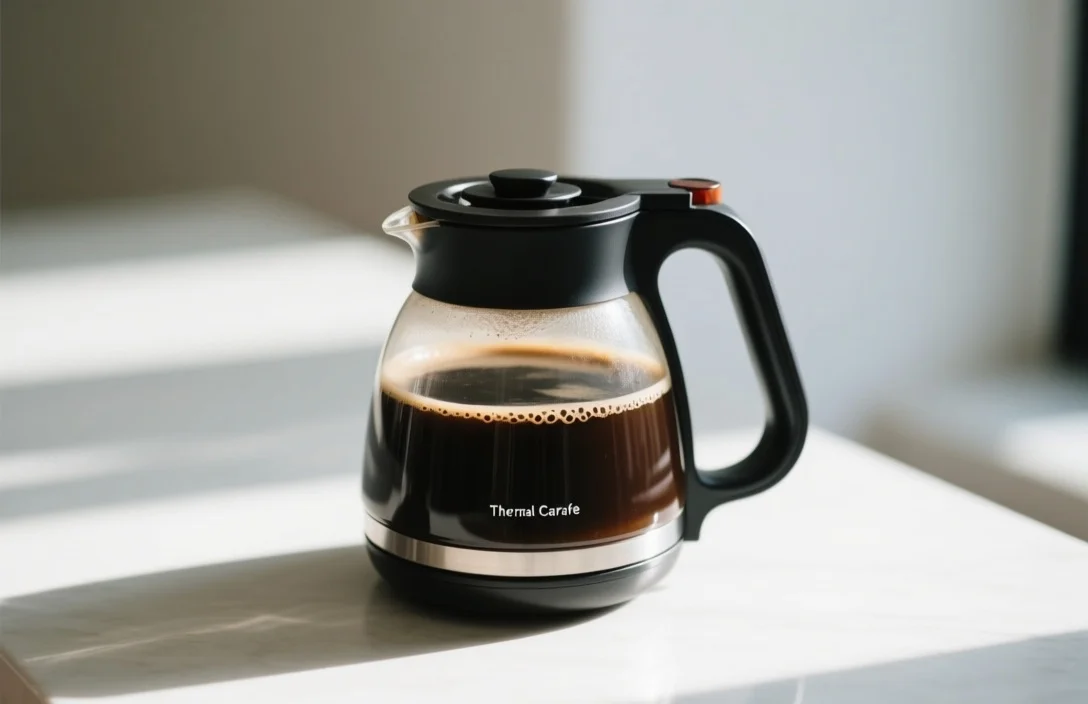
Pre-heating the carafe is the single most effective way to keep your coffee hot. If you brew hot coffee into a cold steel container, the steel will immediately suck the heat out of the liquid to reach equilibrium. This can drop your coffee temperature by 10 to 20 degrees in the first few minutes.
To prevent this, fill the carafe with hot tap water or a bit of boiled water while the machine is warming up. Dump the water out immediately before you start the brew cycle. This ensures the steel is already warm and the coffee stays at its peak temperature.
Avoid leaving the lid open. Every time you open the carafe to pour a cup, a burst of steam escapes. This “thermal leak” adds up over time. Keep the lid closed and locked between pours to maintain the vacuum seal.
When cleaning, avoid using abrasive steel wool on the interior. While the steel is durable, deep scratches can create pockets where coffee oils collect and turn rancid. Use a soft brush and a mixture of baking soda and water for a deep clean.
For those who find the coffee cools too quickly, check the gasket on the lid. Over time, the silicone seal can wear down or warp. Replacing a worn gasket is a cheap way to restore the heat-retention capabilities of an old machine.
Benefits of what is a thermal carafe coffe
The most immediate benefit is the elimination of “burnt coffee syndrome.” When coffee sits on a warming plate, the water evaporates and the remaining solids concentrate. This creates a thick, bitter liquid that tastes like charcoal. Thermal carafes keep the coffee in a stable state, preserving the original flavor profile of the bean.
Durability is another major advantage. Glass carafes are the most fragile part of a standard coffee maker. Dropping a glass pot usually means buying a new machine or searching for a specific replacement part. A stainless steel carafe can survive a fall from a counter without cracking.
Energy efficiency is a secondary but real benefit. A warming plate draws electricity continuously for as long as it is turned on. A thermal carafe uses zero energy once the brewing process is complete. This reduces the total electricity cost of your morning routine.
Comparison of Thermal vs. Glass Carafes:
| Feature | Thermal Carafe | Glass Carafe (Hot Plate) |
|---|---|---|
| Taste | Stays consistent; no burning | Becomes bitter over time |
| Durability | High (Stainless Steel) | Low (Fragile Glass) |
| Heat Source | Passive Insulation | Active Heating Element |
| Energy Use | Low (Brew cycle only) | Higher (Continuous heating) |
| Visibility | Cannot see liquid level | Clear visibility |

Helpful pick
Zojirushi EC-YTC100XB 10-Cup Coffee Maker (Stainless Steel/Black)
Zojirushi’s premium engineering prevents the burnt taste of hot plates, preserving the coffee’s natural flavor profile.
Options for what is a thermal carafe coffe
Budget-friendly models typically feature a basic plastic housing and a standard stainless steel carafe. These are perfect for small households or those who only brew a few cups at a time. They provide the basic benefit of insulation without extra bells and whistles.
Mid-range options often include programmable timers and strength controls. These allow you to wake up to fresh coffee that is already safely tucked inside the thermal carafe. Many of these models also feature “showerhead” brew baskets that saturate the grounds more evenly for a better extraction.
High-end machines focus on precision. They may include PID temperature controllers to ensure the water hits the exact degree required for optimal flavor. These machines often use higher-grade steel and more sophisticated vacuum seals to extend heat retention to 5 or 6 hours.
When choosing a model, consider these specific needs:
- Small Teams/Couples: Look for a 5-cup or 8-cup capacity to minimize empty air space in the carafe.
- Large Families: A 12-cup capacity is standard, but ensure the carafe has an ergonomic handle for heavy lifting.
- Office Use: Prioritize models with a “gold-tone” permanent filter to reduce the cost and waste of paper filters.
💡 The BUNN Speed Brew Platinum is a durable, high-capacity choice perfect for larger households or busy office environments. BUNN 55200 CSB3T Speed Brew Platinum Thermal Coffee Maker Stainless Steel, 10-Cup, Black.
Expert Advice on what is a thermal carafe coffe
The biggest mistake people make is treating a thermal machine like a glass one. If you leave a thermal carafe on the counter and forget about it, the coffee will eventually go cold, and the oils will begin to oxidize. However, unlike a hot plate machine, there is no risk of the coffee boiling dry or creating a fire hazard.
For the best flavor, use a medium-coarse grind. Because thermal carafes are often paired with machines that have slightly slower brew times to ensure saturation, a grind that is too fine can lead to over-extraction. This results in a bitter taste that the thermal carafe will then “lock in” and preserve.
Invest in a digital thermometer if you are serious about your coffee. The ideal serving temperature is between 155 and 175 degrees Fahrenheit. If your coffee is dropping below 140 degrees too quickly, it is a sign that your pre-heating routine is insufficient or your carafe seal is failing.
Also, be mindful of the “air gap.” Heat escapes faster when there is a large volume of air inside the carafe. If you only brew four cups in a twelve-cup carafe, the coffee will cool significantly faster than if the vessel were full. If you frequently brew small amounts, buy a smaller machine.
Helpful pick
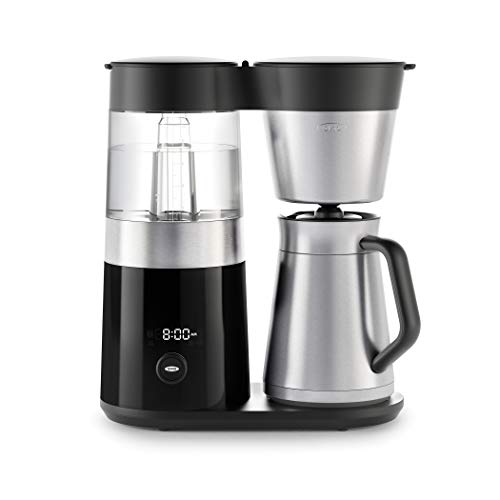
OXO Brew 9-Cup Drip Coffee Maker – Programmable Coffee Machine
OXO Brew’s precision design helps users avoid common mistakes by optimizing the brewing process for maximum freshness.
what is a thermal carafe coffe?
In a typical home office setting, a thermal carafe is the ideal choice. A user can brew a full pot at 8:00 AM and still have a hot cup of coffee at 10:30 AM without the machine running a heater for two and a half hours. This prevents the kitchen from smelling like burnt coffee throughout the morning.
For a brunch gathering, a thermal machine allows the host to brew the coffee once and set it on the table. Guests can serve themselves over the course of an hour without the host having to restart the brew cycle or worry about the coffee becoming lukewarm in a ceramic pitcher.
In a professional breakroom, these machines reduce the frequency of “burnt pot” complaints. Since multiple people are drinking from the same source over several hours, the vacuum insulation ensures that the person arriving at 11:00 AM gets the same quality as the person who arrived at 9:00 AM.
Consider these common scenarios:
- The Slow Sipper: Someone who likes a large mug but drinks it over an hour.
- The Early Riser: Someone who programs the machine for 6:00 AM but doesn’t actually pour their first cup until 7:00 AM.
- The Budget-Conscious: Someone looking to lower their monthly electricity bill by removing a constant heating element.
FAQ On What Is A Thermal Carafe Coffee Maker
Does a thermal carafe keep coffee hot as long as a warming plate?
No, it keeps coffee hot longer and better. A warming plate maintains heat by continuing to cook the coffee, which ruins the taste. A thermal carafe uses vacuum insulation to trap existing heat, keeping the coffee at a drinkable temperature for 2 to 4 hours without altering the flavor.
Can I put a thermal carafe in the dishwasher?
It depends on the brand, but most should be hand-washed. The high heat and pressure of a dishwasher can damage the vacuum seal between the inner and outer walls. Once that seal is broken, the carafe loses its ability to hold heat. Use a bottle brush and warm soapy water instead.
Why is my coffee not as hot in my thermal carafe?
The most common reason is a cold carafe. If the stainless steel is cold, it absorbs the heat from the coffee immediately. To fix this, rinse the carafe with boiling or hot tap water for 30 seconds before starting the brew cycle to pre-heat the metal.
Do thermal carafe machines brew faster than glass ones?
They generally brew at the same speed. The heating element that boils the water is the same in both types of machines. The only difference is the storage vessel. Some high-end thermal models may brew slightly slower to ensure a more precise extraction, but the difference is usually negligible.
Is stainless steel better than glass for coffee?
For heat retention and durability, stainless steel is superior. It does not break and it keeps liquids hot for hours. Glass is only better if you prefer to see exactly how much coffee is left in the pot without having to pour it or check a marker.
If you value the flavor of your coffee and hate the taste of burnt beans, switch to a thermal carafe. Your first step should be to check if your current machine has a removable carafe that can be replaced with a thermal version, or browse for a dedicated thermal drip machine with a 12-cup capacity.
Disclosure: As an Amazon Associate, I may earn from qualifying purchases at no extra cost to you. Amazon and the Amazon logo are trademarks of Amazon.com, Inc, or its affiliates.
