
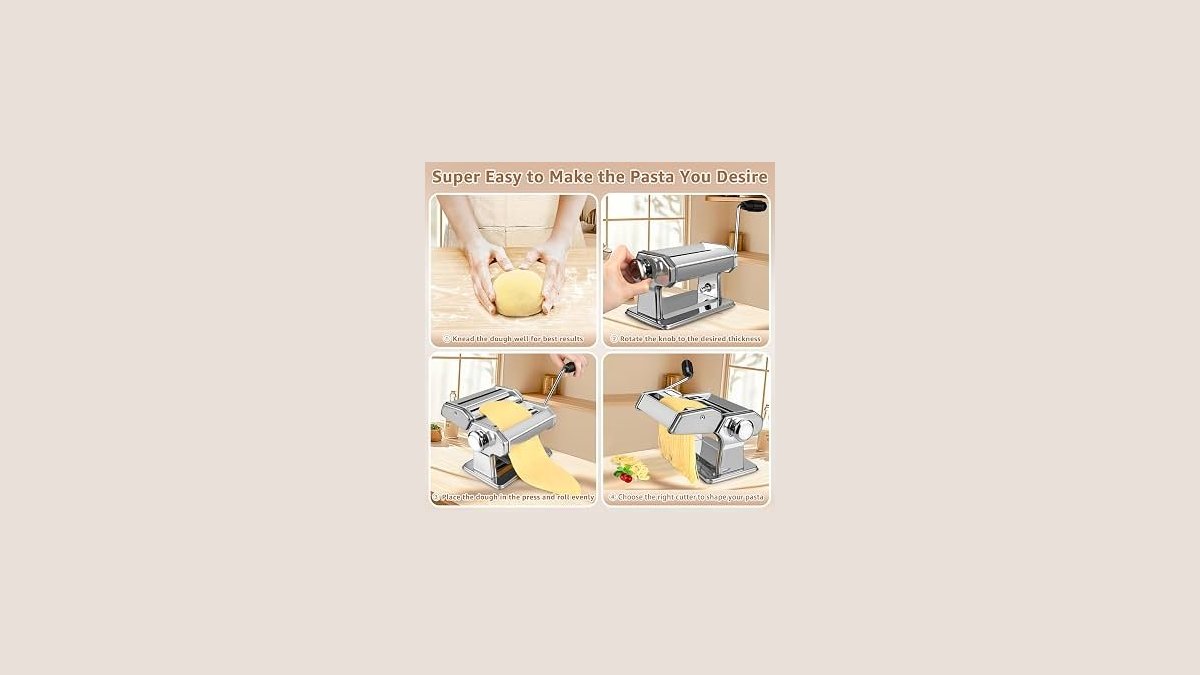
Making fresh pasta at home sounds simple until you try it. You’ve got flour, eggs, maybe a recipe passed down from your nonna. But rolling dough by hand takes forever, and store-bought just doesn’t taste the same. That’s when you start searching for a manual stainless steel pasta maker machine: something sturdy, easy to crank, and built to last.
But not all pasta makers are alike. Some roll wider sheets, others offer more thickness settings. A few work with extra attachments; others stick to basics. And while they all promise “Italian quality,” their materials and design vary in ways that change how they feel on your counter—and how long they’ll last. This guide cuts through the noise and tells you which one actually fits your kitchen, your hands, and your cooking habits.
Exclusive Amazon Early Sales & Discounts!
Save big with limited-time price drops across top-rated kitchen essentials, tools, auto parts, and accessories on Amazon.
⚡ Shop Prime Big Deal Days
- 100% made in Italy
- 3 pasta shapes: sheets up to 150mm, fettuccine 6.5mm, tagliolini 2mm
- compatible with Pasta Facile 4600 motor
- expandable with DUPLEX, SIMPLEX, and RAVIOLAMP accessories

- hand wash recommended
- makes lasagne, fettuccine, tagliolini
- anodized aluminium colored through oxidation
- chrome-plated steel construction, made in Italy

- material: nickel-plated steel, chrome-plated steel, ABS
- includes user manual
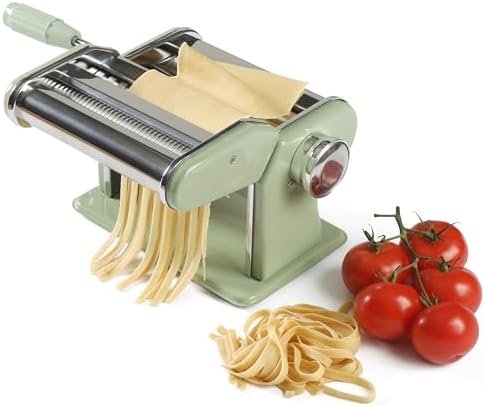
- includes stainless steel pasta maker, shaper, handle, clamp
- 9 adjustable thickness settings (0 to 9)
- detachable shaper for fettuccine and spaghetti
- manual hand-crank operation

- heavy-duty stainless steel and food-grade materials
- 7 thickness levels for various pasta types
- 2 cutter heads: fettuccine 4.5mm, spaghetti 2mm
- non-slip clamp, easy cleanup with brush or cloth
1. Imperia Pasta Maker Machine- 100% Made in Italy
Right for: Home cooks who want versatility and classic Italian craftsmanship.
The Imperia Pasta Maker is 100% made in Italy and features solid steel construction with high-quality chromed steel rollers; the listing specifies ‘durable, high-quality chromed steel’ for the roller and ‘heavy duty steel construction’ overall. It rolls dough up to 150mm wide and offers six adjustable thickness settings—from 0.5mm to 5mm—so you can fine-tune lasagna sheets or delicate tagliolini. It comes with a crank handle, cleaning brush, storage pouch, and non-slip base. Plus, it’s compatible with electric motors and add-on accessories like ravioli makers.
On an ordinary day, this means you can switch from fettuccine to lasagna without swapping tools. If you love experimenting—trying piadina or Arabic bread—the solid build holds up under repeated use. The clamp keeps it steady on most countertops, and cleanup is quick with the included brush. It’s made for people who see pasta-making as a ritual, not just a task.
What works:
- Made in Italy with chromed steel
- Six precise thickness settings
- Works with motor and ravioli attachments
- Includes storage pouch and cleaning brush
- Handles bread doughs too
Where it gives ground:
- Requires table space for clamping
Skip it if: You only make spaghetti once a month and need something ultra-simple.
2. MARCATO Made in Italy Atlas 180 Classic Manual Pasta Machine
Right for: Serious pasta lovers who prioritize durability over extras.
The Marcato Atlas 180 is made of chrome-plated steel with rollers made of anodized aluminum alloy, and the listing states the materials are designed to be safe for health. It makes lasagna, fettuccine, and tagliolini, and its entire frame is built to resist wear. The design is minimalist: no frills, just function. Hand washing is recommended to preserve finish and performance.
In daily use, this machine feels solid under pressure. The wide rollers (180mm) let you process larger dough portions in fewer passes—ideal if you cook for a crowd or batch-prep. Because it’s all metal with no plastic parts, it won’t flex or crack. But you won’t find extra cutters or motor compatibility here; it does three shapes, and it does them well.
What works:
- Full chrome-plated steel body
- Wide 180mm rollers for efficiency
- Anodized aluminum rollers (food-safe)
- Made and assembled in Italy
- Minimalist, long-lasting design
Where it gives ground:
- No included cutters beyond basic pair
- Not expandable with accessories
Skip it if: You want to make ravioli or need motor support—this one stays manual and focused.
3. MARCATO Atlas150 Manual Pasta Maker Machine-LASAGNA
Right for: Those who value tradition and compact size.
The Marcato Atlas 150 shares the brand’s Italian heritage but uses a mix of nickel-plated steel, chrome-plated steel, and ABS plastic in its construction. It produces lasagna, fettuccine, and tagliolini, just like its bigger sibling. The narrower 150mm width makes it easier to store, and the classic silhouette fits neatly in smaller kitchens.
Day-to-day, it’s reliable for standard pasta needs. The crank turns smoothly, and the roller adjustment is intuitive. However, the inclusion of ABS plastic (likely in the handle or housing) means it’s not all-metal like the Atlas 180. It’s still durable, but not quite as rugged for heavy weekly use. It’s perfect if you make pasta occasionally and don’t need bells and whistles.
What works:
- Authentic Italian design
- Compact 150mm width
- Simple operation
- Trusted Marcato build quality
Where it gives ground:
- Contains some ABS plastic parts
- Fewer expansion options
Skip it if: You demand an all-metal build or plan to attach a motor later.
4. Sur La Table Kitchen Essential Va Bene Manual Pasta Maker
Right for: Beginners who want clear settings and fuss-free shaping.
This model stands out with nine adjustable thickness settings (labeled 0 to 9), giving you finer control than most competitors. It includes detachable cutters for fettuccine and spaghetti, plus a sturdy clamp and removable handle. The body is stainless steel with a juniper green accent, blending function with a touch of style. Cleanup is hand-wash only, and the design emphasizes ease over complexity.
For someone new to pasta-making, those numbered settings remove guesswork. You can start thick and gradually thin your dough without counting clicks. The detachable shaper snaps on cleanly, so switching between lasagna sheets and noodles feels seamless. It’s stable, smooth, and forgiving—great for learning without frustration.
What works:
- Nine clear thickness settings
- Detachable cutters for easy switching
- Stable clamp and secure handle
- Stainless steel construction
Where it gives ground:
- No mention of motor compatibility
- Limited to two cutter types
Skip it if: You already own multiple pasta tools and need advanced modularity.
5. AceChef Pasta Maker
Right for: Apartment cooks or small-space users needing portability.
The AceChef model is compact yet fully functional, with seven thickness settings and two cutter heads (fettuccine at 4.5mm, spaghetti at 2mm). Built from heavy-duty stainless steel and food-grade materials, it promises durability despite its smaller footprint. The non-slip clamp keeps it steady, and cleanup is quick with a brush or dry cloth. It’s designed to tuck away easily after use.
In a tight kitchen, this matters. You can pull it out for a quick dinner, crank out fresh noodles, and stow it in a drawer. The seven settings cover everything from lasagna to wonton wrappers, making it surprisingly versatile. While it lacks accessory support, it delivers core functions without bulk—ideal for weeknight meals or solo cooks.
What works:
- Compact and cabinet-friendly
- Seven thickness levels
- Dual cutters included
- Smooth hand-crank operation
- Quick cleanup
Where it gives ground:
- No motor or ravioli attachment support
Skip it if: You regularly feed six or more and need wide-sheet capacity.
How to Think Before You Choose
Roller Width vs. Kitchen Space
Wider rollers let you process more dough per pass, saving time when making large batches. The Marcato Atlas 180’s rollers are wider than those on the Atlas 150 or Imperia (150mm), based on their stated max sheet widths. But they also need more counter depth and storage room. Before buying, measure your countertop clearance and cabinet height. If you’re short on vertical space, a compact model like the AceChef or Atlas 150 may fit better.
All-Metal Build vs. Mixed Materials
Machines with ABS plastic or composite parts may save weight but can crack under stress or degrade near heat. If you plan to make pasta weekly or gift it often, metal lasts longer. Check the product description: if it lists “nickel-plated steel” alongside “ABS,” it’s not fully metal. For occasional use, mixed materials are fine—but for heirloom quality, go all steel.
Expandability vs. Simplicity
Some machines, like the Imperia, accept motors and ravioli attachments. Others, like the Sur La Table Va Bene, focus on core rolling and cutting. Ask yourself: will you really use extras? Many buyers never attach a motor. If you just want spaghetti and lasagna, simplicity wins—fewer parts mean less to clean and store. But if you dream of stuffed pasta or hate cranking, expandability adds real value. Only choose it if you’ll actually use it.
Who Should Skip These Altogether
You might not need a manual stainless steel pasta maker machine at all.
- If you already own a stand mixer with a pasta roller attachment, adding another tool duplicates function without benefit.
- If your kitchen has no flat, stable surface to clamp onto—like a narrow RV counter or glass-top table without edge grip—these machines won’t stay secure.
- If you’re buying for a child’s cooking project or a single holiday meal, a basic hand-crank plastic model (or even rolling pin method) suffices.
Related guides
- Espresso Machine With Adjustable Grind Size Settings: 2026 Buyer’s Guide
- Espresso Machine With Compact Footprint for Counters: 2026 Buyer’s Guide
- Espresso Machine With Adjustable Temperature Control Settings: Top Picks 2026
FAQs Of Stainless Steel Pasta Maker Machine
What surfaces can I clamp these machines to?
These pasta makers need a solid, flat table edge at least 1.5 inches thick to clamp securely. They won’t hold on glass tops, laminate with no overhang, or narrow shelves. The clamp grips from below, so your surface must have accessible underside space. Always test stability before cranking—any wobble risks uneven sheets or slipping.
Do I need special flour or dough recipes?
No special flour is required, but Italian ’00’ flour is commonly used for its fine texture and elasticity. Standard all-purpose works too, though it may tear more easily at thin settings. Dough should be firm—not sticky—so it feeds cleanly through rollers. Resting dough before rolling helps gluten relax, reducing breakage. None of these machines include recipes, but basic ratios (100g flour per large egg) are widely documented.
What part wears out first?
On well-maintained machines, nothing wears quickly—but improper cleaning causes issues. Leaving dried dough on rollers can scratch chrome plating. The Marcato Atlas 180’s anodized aluminum rollers resist corrosion, but all models require brushing after use, not soaking. Plastic gears (if present, as in some non-listed brands) may strip, but the models reviewed here use metal gearing or direct crank-to-roller drive, which lasts longer.
Is the simplest model enough for regular use?
Yes, if “regular” means 1–2 times per month. The Sur La Table Va Bene or AceChef handles routine spaghetti, fettuccine, and lasagna without issue. Their stainless steel bodies resist rust, and seven to nine thickness settings cover most needs. You only need Imperia-level expandability if you plan ravioli, motor use, or bread doughs. Simpler models clean faster and store easier, making them sustainable for consistent, modest use.
Should I confirm anything before ordering?
Yes, check two things: your table’s edge thickness and your storage space. Also, measure cabinet depth: the Imperia and Marcato Atlas 180 extend significantly front-to-back. Finally, verify that the model includes cutters—some brands sell them separately. All five listed here include at least one cutter pair, but double-check the “package contents” in the listing.
Closing
For readers seeking a durable, Italian-made steel pasta maker with six thickness settings and real expandability without overwhelming complexity, the Imperia Pasta Maker offers the best balance. If you’re feeding a crowd weekly or want a machine that could last decades, the Marcato Atlas 180 is the tougher, purer choice. Whichever you lean toward, check your countertop’s edge depth before ordering—most require at least 1.5 inches to clamp securely. Then grab some ’00’ flour, crack an egg, and start rolling.
Disclosure: As an Amazon Associate, I may earn from qualifying purchases at no extra cost to you. Amazon and the Amazon logo are trademarks of Amazon.com, Inc, or its affiliates.
