
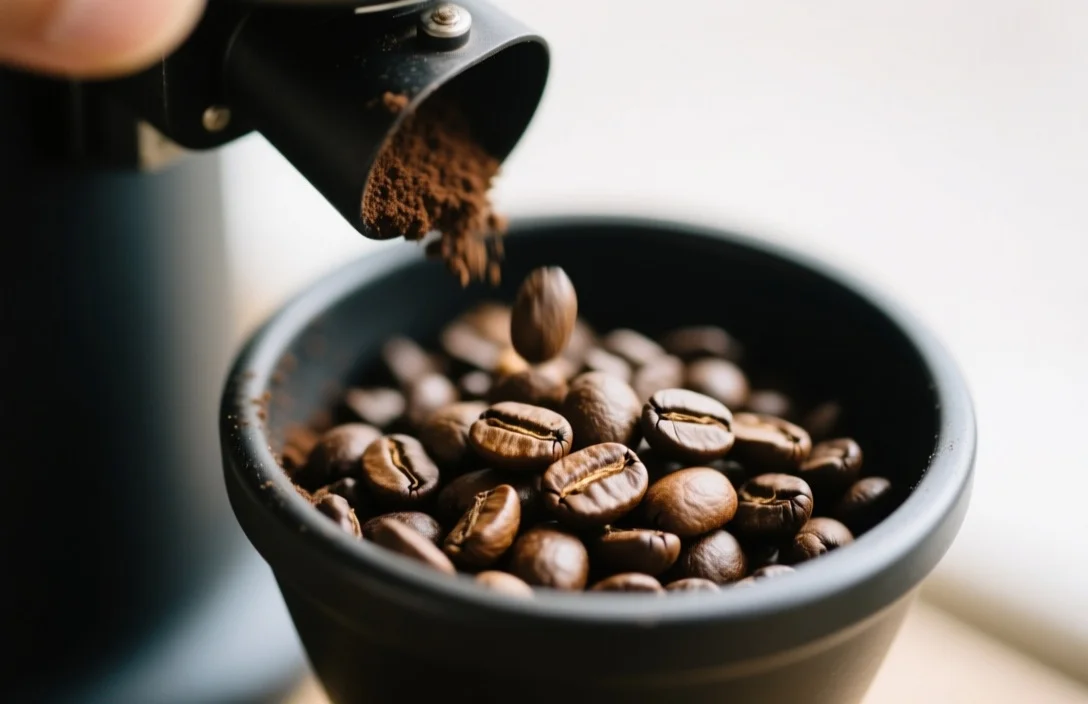
You can still get a fresh, flavorful cup of coffee using common kitchen tools. Breaking down whole beans with a blender, mortar and pestle, or rolling pin produces a coarse or medium grind suitable for French press or drip coffee. This process preserves the volatile oils responsible for aroma and flavor, which pre-ground coffee loses quickly.
Use a blender or food processor for fast, coarse grinds suitable for cold brew.
Mortar and pestle offers the best control for fine or Turkish-style coffee.
Rolling pin in a bag works well for coarse French press grinds.
Never fill tools more than a quarter full to ensure an even grind.
Pulse blades to prevent heating the beans and burning the flavor.
Match your grind size to your specific brewing method for proper extraction.
How to begin
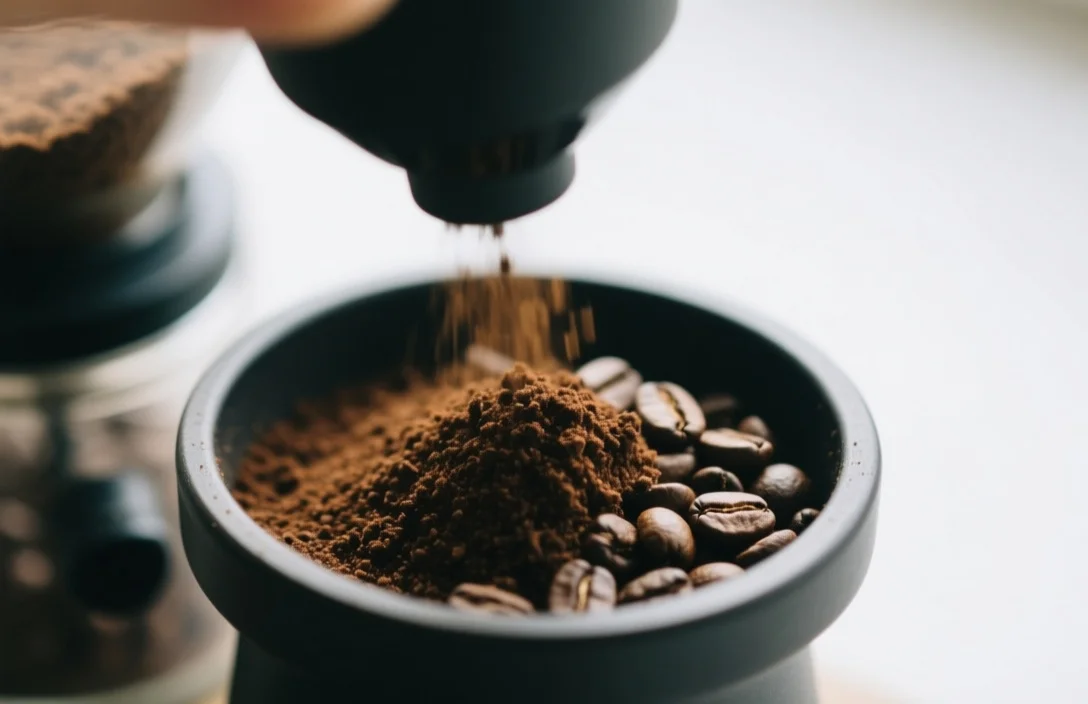
You need only a few basic tools to break down whole coffee beans into a usable powder or coarse grounds. The goal is to fracture the hard outer shell of the bean to release the oils inside without overheating the bean itself. This manual process requires patience and a bit of technique, but it yields results comparable to a machine grinder for most home brewing methods.
Freshly ground coffee tastes significantly better than pre-ground options because the grinding process exposes the bean’s surface area to oxygen. This exposure releases the aromatic compounds that give coffee its signature smell and complex flavor profile. Pre-ground coffee begins to stale within minutes of being exposed to air, whereas a whole bean stays fresh for weeks. You can replicate the quality of a professional barista’s cup at home by mastering these manual techniques.
What Grind Size actually involves
Grind size dictates how quickly water extracts flavor from the coffee during brewing. A coarse grind exposes less surface area, slowing extraction, which is ideal for immersion methods like French press. A fine grind exposes more surface area, speeding up extraction, which is necessary for high-pressure methods like espresso. Without a grinder, achieving the right texture is the biggest challenge, but you can approximate these sizes using household tools.
Consistency matters more than raw speed when you grind by hand. If your grounds contain chunks mixed with dust, the chunks will over-extract and taste bitter, while the dust will under-extract and taste sour. A real burr grinder produces a uniform texture, but a manual method requires you to break the beans down until they look like a specific texture, such as sea salt or sand. You must visualize the target texture for your chosen brew method before you begin crushing the beans.
Step-by-Step: Mortar and Pestle Method
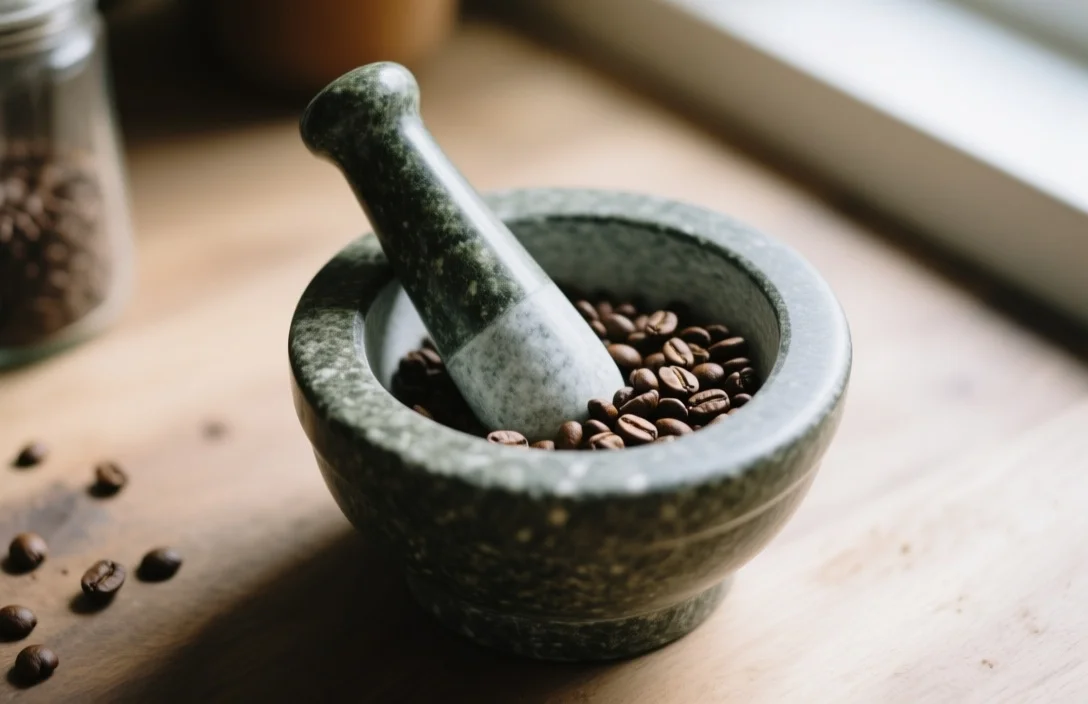
The mortar and pestle method provides the most reliable control over grind size. Start by measuring out no more than 1/4 cup of whole beans. Overfilling the mortar makes it nearly impossible to crush the beans effectively, as they will just roll around the sides. Place the beans in the bowl of the mortar and use the pestle to apply firm, downward pressure in a circular motion.
Once the beans are crushed into small pieces, switch to a hammering motion. Pull the pestle out and bring it down vertically to crack the cracked pieces further. Repeat this process, alternating between swirling and hammering, until you reach your desired texture. For a coarse French press grind, stop when the beans look like coarse sea salt. For a finer drip coffee grind, continue until the texture resembles table salt.
💡 A manual coffee grinder with ceramic burrs for precise control over grind size. PARACITY Manual Coffee Bean Grinder with Ceramic Burr, Hand Coffee Grinder Mill Small with 2 Glass Jars( 11OZ per Jar) Stainless Steel Handle for Drip Coffee, Espresso, French Press, Turkish Brew.
Comparing Methods
Different tools produce different results, and understanding these differences helps you choose the right method for your needs. A blender or food processor works well for larger batches but generates heat that can damage the beans. A rolling pin in a bag is excellent for coarse grinds but lacks the precision of a mortar. You must select the tool that matches the grind size you need for your specific coffee maker.
| Method | Grind Consistency | Best For (Brew Type) | Speed | Effort & Mess |
|---|---|---|---|---|
| Blender | Poor to Fair (Inconsistent) | Drip Coffee, Cold Brew | Very Fast | Low Effort, Low Mess |
| Food Processor | Uneven | Cold Brew, Large Batches | Very Fast | Low Effort, Low Mess |
| Mortar & Pestle | Very Good to Excellent | Turkish Coffee, Espresso-style | Slow | High Effort, Low Mess |
| Rolling Pin | Poor to Fair (Chunky) | French Press, Cold Brew | Medium | Medium Effort, High Mess |
| Hammer | Poor (Very Inconsistent) | Cold Brew (in a pinch) | Fast | Medium Effort, Very High Mess |
| Kitchen Knife | Very Poor (Uneven Chunks) | Not Recommended | Very Slow | High Effort, Medium Mess |
Helpful pick
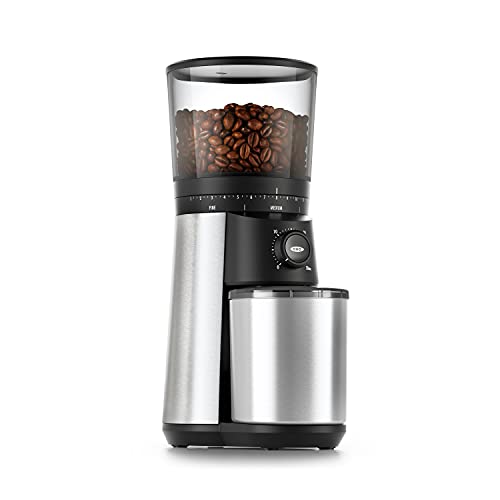
OXO Brew Conical Burr Electric Coffee Bean Grinder – 12 Oz Capacity
If you are tired of inconsistent manual methods, this conical burr grinder offers the precision and uniformity that your coffee deserves.
What works in practice
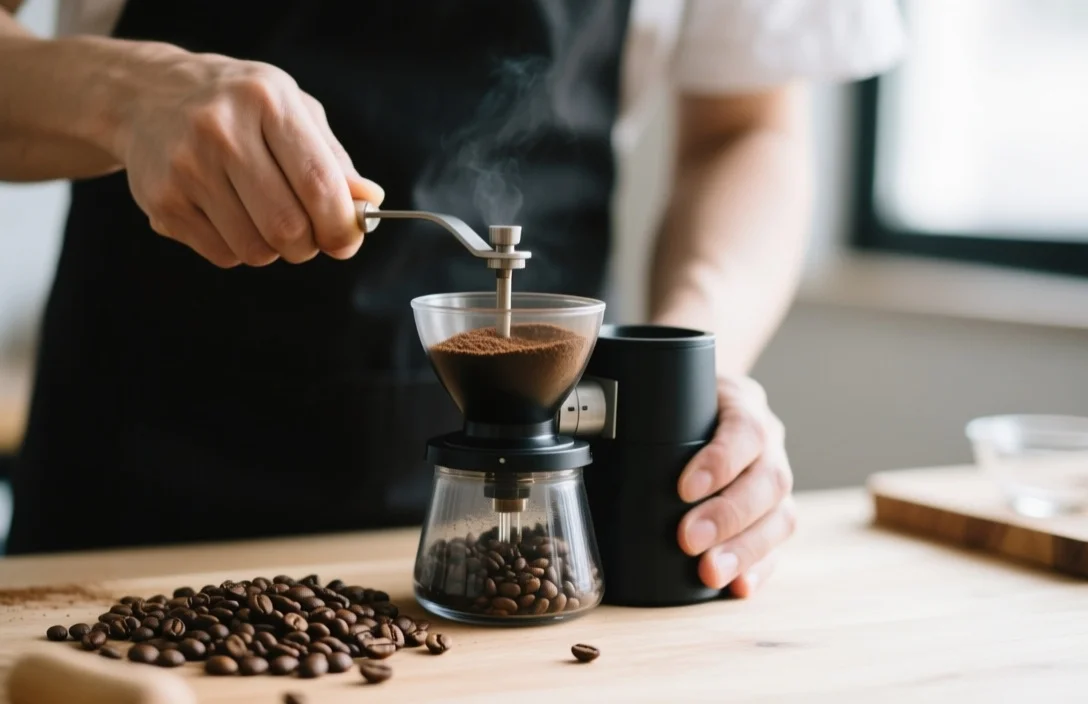
You should always work in small batches to maintain control over the grind texture. Whether using a blender or a mortar, filling the container more than a quarter full leads to uneven crushing and excessive heat. If you need a large amount of coffee, grind it in multiple small batches and mix them together. This approach ensures that every particle receives the same amount of force and exposure.
Read More: What Is A Coffee Maker With Grinder
Cleaning your equipment immediately after grinding is crucial. Coffee oils and grounds can stick to plastic blades and food processors, creating a stubborn residue that affects the taste of your next meal. A quick rinse and scrub with hot soapy water removes the grounds and prevents the buildup of rancid odors. For a mortar and pestle, a quick wipe with a damp cloth is usually sufficient.

Helpful pick
Mini Manual Coffee Grinder with 40 Adjustable Settings, Portable Hand Coffee Bean Mill with 30g Capacity, Conical Burr Coffee Grinder with Crank for Travel, Camping, Office, Espresso, Pour Over, etc
This manual grinder lets you control small batches precisely, ensuring even texture without overheating.
Mistakes that waste time
One of the most common errors is blending the beans for too long. High-speed blades generate significant friction, which can heat up the beans and “cook” the oils inside. This heat results in a burnt, bitter taste that is difficult to mask. You must use short pulses and check the texture frequently to ensure you do not over-process the beans.
Using a dull kitchen knife is also a risky move. A knife requires a sawing motion that tears the beans rather than cutting them cleanly. This tearing process creates jagged edges and uneven particles that lead to an unbalanced extraction. Furthermore, holding a heavy knife over a countertop while trying to saw through hard coffee beans poses a safety hazard that outweighs the convenience of the method.
Helpful pick
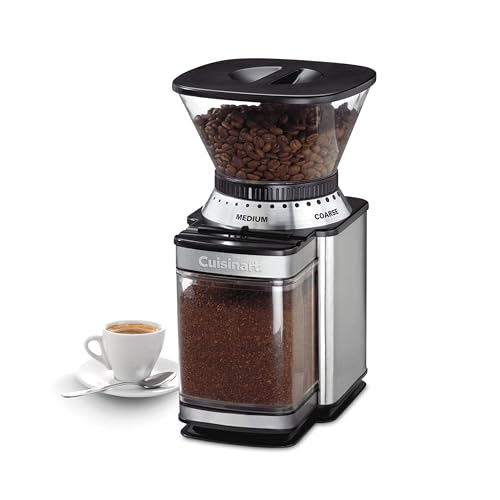
Cuisinart Electric Burr Coffee Grinder, 18-Position Selector, 4-18 Cups
Use a burr grinder to avoid high-speed blades and heat buildup.
Pro Tips
A clever trick for coarse grinds involves using a durable freezer-quality ziploc bag. Place about 1/2 cup of whole beans into the bag and seal it tightly. Lay the bag flat on a cutting board and use a rolling pin to gently tap or press down across the bag. This action cracks the hard outer shells without rolling the beans, which prevents them from flying out of the bag.
Once the beans are cracked, you can roll them back and forth to break them into smaller pieces. This method is excellent for French press or cold brew because it produces a chunky, consistent texture without the mess of a mortar and pestle. Just remember to remove as much air as possible from the bag before sealing it to prevent the beans from shooting out when you apply pressure.
FAQ About Grind Coffee Beans Without Grinder
Can I use a blender to make espresso?
No, a standard kitchen blender cannot produce the fine, powdery texture required for espresso. Blenders generate heat and create an inconsistent, chunky grind that will not extract properly under the pressure of an espresso machine. You should reserve blenders for coarse grinds like cold brew or French press.
Is a mortar and pestle better than a blender?
A mortar and pestle is generally better for control and precision. While blenders are faster, they often leave uneven chunks of bean. A mortar and pestle allows you to feel the texture of the grind and stop exactly when you achieve the desired consistency, which is essential for brewing methods that require specific textures.
Does grinding coffee by hand taste different?
Grinding by hand does not inherently change the flavor of the coffee, but it can affect the consistency. If you achieve a consistent grind size by hand, the flavor profile will be very similar to using a machine. However, if the grind is too uneven, you may notice a slight imbalance in the cup, with some notes being more bitter or sour than others.
How do I know when the grind is fine enough?
You must compare the texture to a reference point. For a medium drip coffee grind, the coffee should look like regular sand. For a fine espresso grind, it should look like table salt or powdered sugar. You can also rub the grounds between your fingers; a fine grind will feel gritty, while a coarse grind will feel rough.
Why is my coffee bitter when I use a blender?
Bitterness usually comes from overheating the beans. High-speed blenders generate heat through friction, which can cook the oils in the coffee beans. If your coffee tastes burnt or bitter, you likely blended the beans for too long or used too high a setting. Switch to short pulses to preserve the coffee’s natural flavor.
Disclosure: As an Amazon Associate, I may earn from qualifying purchases at no extra cost to you. Amazon and the Amazon logo are trademarks of Amazon.com, Inc, or its affiliates.
