
Butter cookies and butter crackers are two popular snacks found in homes and stores worldwide. They look similar at first glance both are golden, crisp, and often come in decorative tins or boxes. But once you taste them, the differences become clear.
Each has its own texture, flavor, and uses. This article will help you understand the unique qualities of butter cookies and butter crackers, so you can choose the right snack for every occasion.
What Are Butter Cookies?
Butter cookies are classic sweet treats made mainly from butter, sugar, and flour. They originated in Denmark and are often called “Danish butter cookies.” The high butter content gives them a rich, creamy taste and a crumbly texture that melts in your mouth. Many butter cookies are shaped into rings, stars, or simple rounds. They are usually enjoyed as a dessert or with tea and coffee.
Key Ingredients
- Butter: Provides flavor and tenderness
- Sugar: Adds sweetness and structure
- Flour: Gives body and shape
- Eggs (sometimes): Improve texture and help bind ingredients
- Vanilla or other flavors: For aroma and taste
A typical butter cookie recipe contains about 30% butter by weight, which is much higher than most other cookies. This is why butter cookies are so rich.
Texture And Flavor
Butter cookies are known for their crisp edges and tender centers. When you bite into one, it breaks cleanly but doesn’t crumble into dust. The flavor is sweet and buttery, sometimes enhanced with vanilla or almond extract. The sweetness is balanced and never overpowering.
Common Shapes And Packaging
Many butter cookies come in decorative tins, especially during holidays. They are often shaped by machines, which makes them uniform. Some brands, like Royal Dansk, have become famous for their blue tins and perfectly shaped cookies.
What Are Butter Crackers?
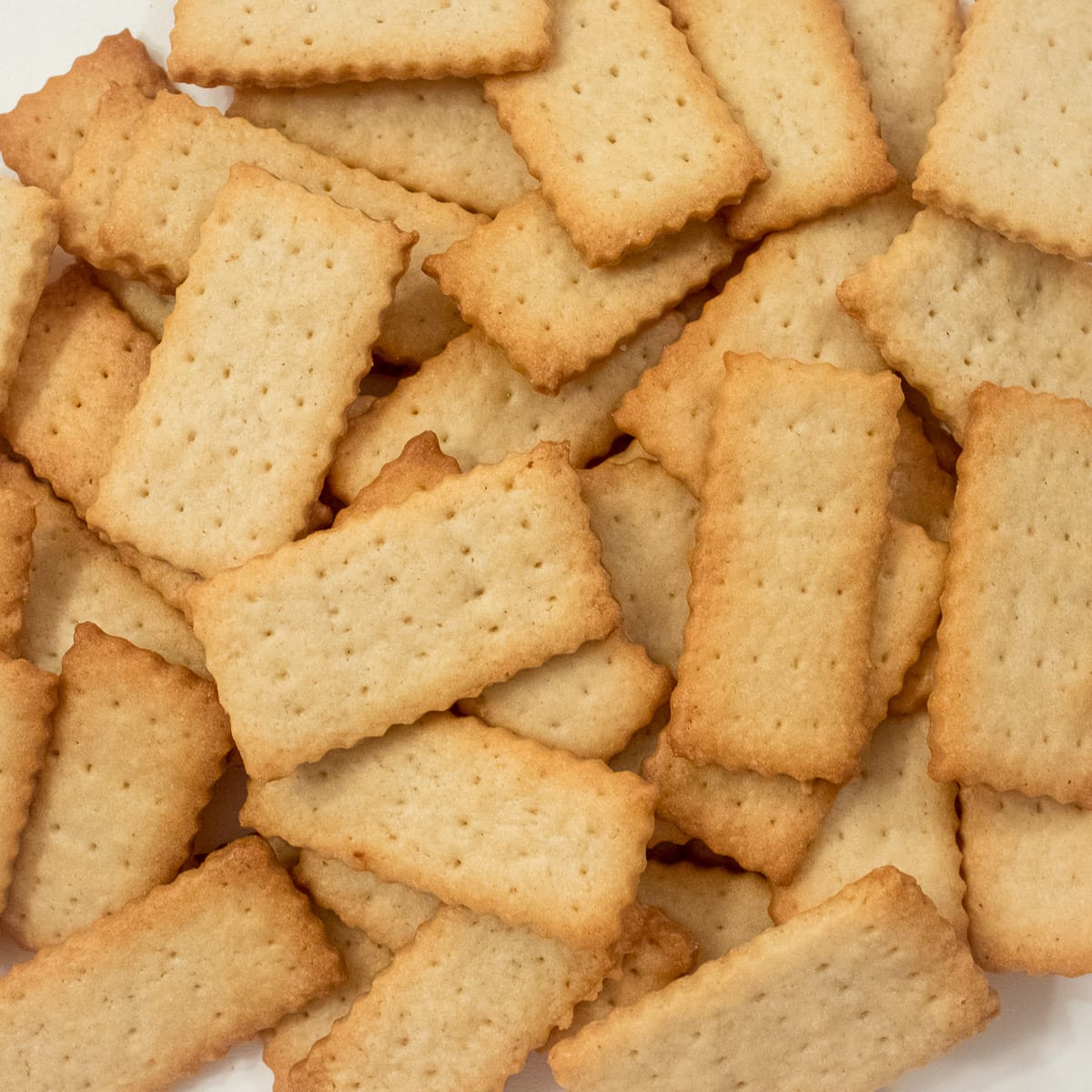
Butter crackers are savory snacks made from flour, butter (or oil), salt, and sometimes leavening agents like baking powder. They are crisp and light, with a mild buttery taste but much less sweetness than cookies. Butter crackers are usually rectangular or round, with small holes (“docking”) on the surface to prevent them from puffing up during baking.
Key Ingredients
- Flour: Main structure
- Butter or vegetable oil: Adds flavor and crispness
- Salt: For taste
- Baking powder or yeast (sometimes): Helps make them light and airy
Unlike butter cookies, butter crackers contain less butter (often 10–15% by weight) and more flour. They are designed to be thin and crunchy, not soft.
Texture And Flavor
Butter crackers have a dry, crisp bite. They snap easily and can be eaten plain or with toppings. The flavor is mild, slightly salty, and buttery. They are not sweet, making them a good base for cheese, spreads, or dips.
Shapes And Packaging
Butter crackers are usually packed in sleeves or boxes. They are often uniform in shape, with a pale golden color. Brands like Ritz and Town House are well known for their buttery crackers.
Butter Cookies Vs Butter Crackers: Key Differences
Let’s look at how butter cookies and butter crackers compare in several important ways.
| Feature | Butter Cookies | Butter Crackers |
|---|---|---|
| Sweetness | Sweet | Not sweet |
| Texture | Crumbly, tender | Dry, crisp |
| Main Uses | Dessert, snack | Appetizer, snack |
| Shapes | Rings, stars, rounds | Rectangles, rounds |
| Serving Style | Plain, with tea | With cheese, dips |
This table shows the most basic differences. But there are more details to consider.
Nutrition Comparison
Butter cookies and butter crackers have different nutritional profiles. Butter cookies are higher in sugar and fat, while butter crackers are lower in calories but higher in salt.
| Nutrient (per 30g) | Butter Cookies | Butter Crackers |
|---|---|---|
| Calories | 150–160 | 120–130 |
| Total Fat | 7–9g | 4–6g |
| Sugar | 7–9g | 0–1g |
| Sodium | 60–80mg | 150–200mg |
| Protein | 2–3g | 2–3g |
If you are watching your sugar intake, butter crackers are a better choice. But if you want a sweet treat, butter cookies are the answer.
Credit: cakebycourtney.com
How They Are Made
Both snacks use similar basic ingredients, but the process is quite different. Here’s a simple overview:
Butter Cookies
- Cream butter and sugar until light and fluffy.
- Add flour and any flavors (vanilla, almond).
- Shape the dough (by rolling, piping, or pressing).
- Bake at 350°F (180°C) for 10–15 minutes.
- Cool and store in an airtight container.
The dough for butter cookies is rich and soft, making it easy to shape. The high butter content means cookies spread and brown nicely.
Butter Crackers
- Mix flour, butter, salt, and water into a firm dough.
- Roll out thinly (about 1/8 inch).
- Cut into shapes and dock with a fork.
- Bake at 375°F (190°C) for 10–12 minutes.
- Cool and store in a dry place.
Butter cracker dough is tougher and less sticky. Docking prevents air pockets and ensures even baking.
Serving Ideas
Butter cookies and butter crackers are versatile snacks. Here are some ways to enjoy them:
Butter Cookies
- Serve with tea or coffee
- Add to ice cream for crunch
- Dip in chocolate for extra flavor
- Use as a base for mini desserts
Butter Crackers
- Pair with cheese or meats
- Spread with hummus or peanut butter
- Top with tomatoes, cucumber, or herbs
- Use for party platters or appetizers
Butter crackers can be used in recipes as a crust for pies or as a crunchy topping for casseroles.
Popular Brands
Some brands are famous for their butter cookies and crackers. Here are a few examples:
Butter Cookies
- Royal Dansk: Danish butter cookies in blue tins
- Walkers: Scottish shortbread (similar style)
- Kjeldsens: Danish butter cookies, popular in Asia
Butter Crackers
- Ritz: Round, buttery, and light
- Town House: Rectangular, ideal for toppings
- Tuc: Popular in Europe
Each brand has its own unique recipe and packaging style.
How To Choose: Butter Cookies Or Butter Crackers?
Choosing between butter cookies and butter crackers depends on your needs:
- For a sweet treat: Go with butter cookies. They are perfect for dessert or a midday snack.
- For savory snacks or appetizers: Butter crackers are better. They pair well with spreads and toppings.
- For calorie control: Butter crackers have fewer calories and less sugar.
- For gifting: Butter cookies in decorative tins make a great present.
Many people keep both in their pantry for different occasions.
Credit: pastrieslikeapro.com
Non-obvious Insights
- Texture changes with storage: Butter cookies can become stale or soft if exposed to air, while butter crackers can lose crispness and become chewy. Always store them in airtight containers.
- Hidden ingredients: Some butter crackers use vegetable oil instead of real butter, which affects flavor. Always check the label if you want true buttery taste.
- Butter cookies can be used for pie crusts: Crush butter cookies and mix with a little melted butter for a sweet, rich pie base. This works well for cheesecakes and tarts.
- Butter crackers can be made gluten-free: Many brands now offer gluten-free versions. These use rice flour, chickpea flour, or other alternatives, but may have a slightly different texture.
Health Considerations
Butter cookies are high in saturated fat and sugar, which can be a concern for those with diabetes or heart conditions. Butter crackers are lower in sugar but often higher in salt. Moderation is key for both snacks.
If you have allergies, check for milk, eggs, and wheat in both products. Some cookies may contain nuts or nut flavoring.
For more details on the nutritional content of these snacks, you can visit the Wikipedia Butter Cookie page.
Making Butter Cookies And Butter Crackers At Home
Many people enjoy making butter cookies and crackers at home. Here’s a quick recipe for each:
Simple Butter Cookies
- Ingredients: 1 cup butter, 2/3 cup sugar, 2 cups flour, 1 tsp vanilla
- Instructions: Cream butter and sugar. Add flour and vanilla. Shape and bake at 350°F for 12 minutes. Makes about 24 cookies.
Simple Butter Crackers
- Ingredients: 1 cup flour, 1/4 cup butter, 1/4 tsp salt, 4 tbsp water
- Instructions: Mix ingredients, roll thin, cut, dock, bake at 375°F for 10 minutes. Makes about 30 crackers.
Homemade versions let you control the ingredients and flavor.
Butter Cookies And Butter Crackers In Different Cultures
Butter cookies are popular in Europe and Asia, often given as gifts during holidays. In the US, butter crackers are common at parties and in lunchboxes. The global spread of these snacks shows their universal appeal.
In China, Danish butter cookies are a luxury gift, especially during Lunar New Year. Butter crackers are popular in South America, often served with cheese and fruit.
Credit: www.veggieinspired.com
Storage And Shelf Life
| Snack | Shelf Life (unopened) | Storage Tips |
|---|---|---|
| Butter Cookies | 6–12 months | Cool, dry place; airtight tin |
| Butter Crackers | 4–8 months | Dry pantry; sealed box |
Opened packages should be consumed within 1–2 weeks for best taste and texture.
FAQs Of Butter Cookies Vs Butter Crackers
What Is The Main Difference Between Butter Cookies And Butter Crackers?
The main difference is sweetness. Butter cookies are sweet and rich, while butter crackers are savory, dry, and crisp.
Are Butter Crackers Healthier Than Butter Cookies?
Butter crackers have less sugar and fewer calories, but often more salt. Healthier depends on your needs—watch for hidden fats and sodium.
Can Butter Cookies Be Used In Recipes?
Yes! You can crush butter cookies to make pie crusts or use them in ice cream toppings and layered desserts.
Do All Butter Crackers Contain Real Butter?
No. Some brands use vegetable oil instead of real butter. Always check the ingredients list for true buttery flavor.
How Should I Store Butter Cookies And Crackers?
Both should be kept in airtight containers in a cool, dry place. This keeps them crisp and prevents spoilage.
Butter cookies and butter crackers each offer unique flavors and textures. Whether you prefer sweet or savory, understanding their differences will help you pick the right snack for any occasion. Both are easy to find, fun to share, and simple to make at home.
Choose wisely, and enjoy your treat!
Disclosure: As an Amazon Associate, I may earn from qualifying purchases at no extra cost to you. Amazon and the Amazon logo are trademarks of Amazon.com, Inc, or its affiliates.
