
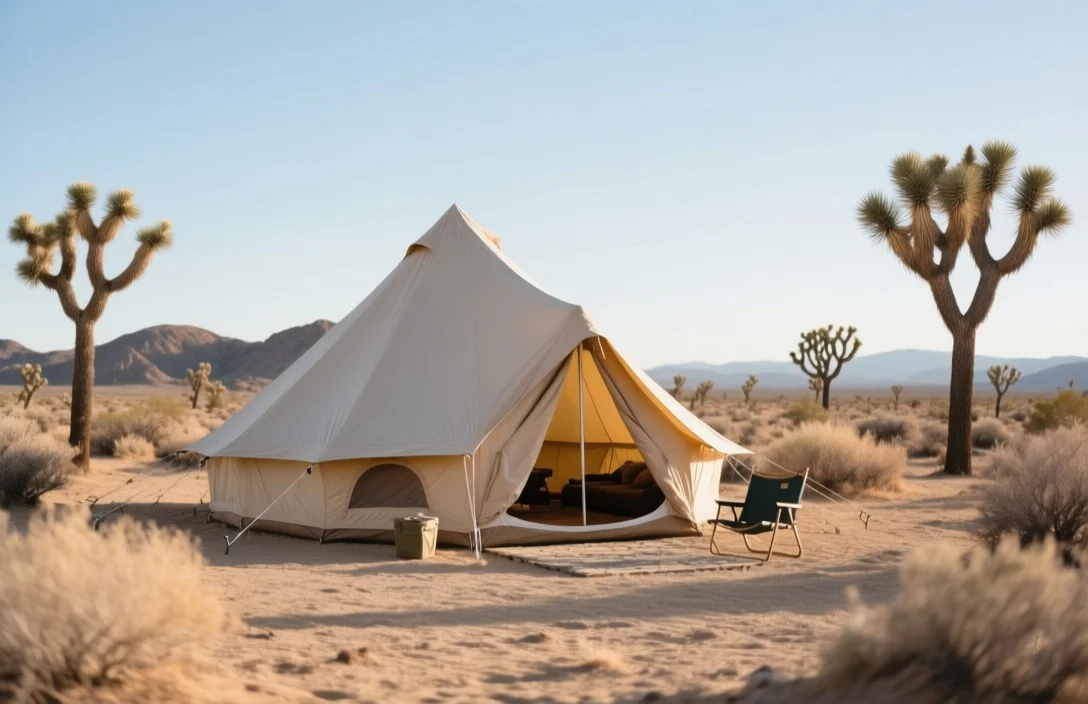
The temperature in the Mojave Desert can drop 40 degrees once the sun goes down. Most people think desert camping means sleeping on hard ground in a thin tent, but you can actually sleep in luxury under the stars. I have vetted the best options for desert glamping Joshua Tree so you can avoid the sand in your bed and focus on the views.
Desert glamping Joshua Tree involves staying in upscale, pre-set accommodations like safari tents, A-frames, or yurts located near the national park. Most high-end sites offer amenities such as queen beds, private bathrooms, and electricity. Expect to pay between $150 and $500 per night depending on the season and luxury level.
Desert Glamping Joshua Tree: Your Luxury Escape Guide
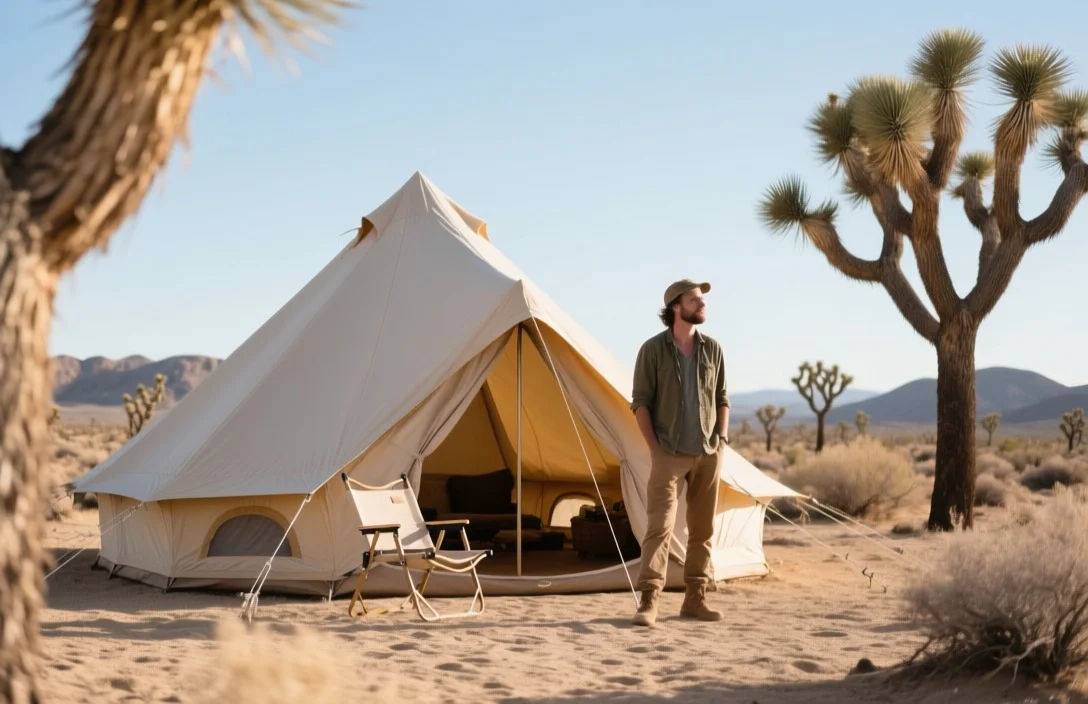
Upscale desert camping combines the raw beauty of the Mojave with high-end amenities like king-sized beds, climate control, and private decks. This approach removes the struggle of pitching tents and hauling gear while keeping you immersed in the high desert landscape.
The high desert has a specific energy that feels isolated and timeless. You get the silence of the wilderness and a clear view of the Milky Way, but you return to a plush mattress and a hot shower instead of a sleeping bag on hard ground.
Comfort Vs. Ruggedness
Choosing a luxury setup over traditional camping solves the biggest pain points of the region: temperature swings and resource scarcity. The desert can be scorching by day and freezing by night. Glamping sites provide the insulation and heating needed to survive these shifts without packing a heavy wardrobe.
Traditional park campsites are affordable but basic. For example, spots like Black Rock or Cottonwood usually cost around $35 to $55 per night, but they offer no water or electricity. You must bring every drop of water and all your food, as there are no stores inside the park boundaries.
Glamping shifts the burden of logistics to the host. You trade the low cost of a tent for the convenience of pre-arranged linens, curated decor, and often, proximity to local cafes and boutiques in the town of Joshua Tree.
| Feature | Traditional Camping | Desert Glamping |
|---|---|---|
| Cost | Low ($35 – $55/night) | High ($200 – $600+/night) |
| Gear | DIY (Tents, Bags, Stoves) | Provided (Beds, Furniture) |
| Climate | Exposed to elements | Climate-controlled/Insulated |
| Water | Must carry all supplies | On-site plumbing/bottled water |
“On my last trip, I realized the real luxury isn’t just the bed, it is the ability to watch a desert sunset from a comfortable lounge chair without worrying about where my flashlight is.”
Accessibility varies by site. Some luxury domes are tucked away on sandy trails, while others are fully paved. Always check if the property requires a 4WD vehicle, as desert roads can be unforgiving during the rainy season.
Top 6 Desert Glamping Joshua Tree Picks
The six premier desert‑glamping sites near Joshua Tree are AutoCamp, The Dome Retreat, Sahara Yurt, Starlight Camp, Desert Oasis Tents, and Cactus Camp. Each location offers a distinct shelter type, core amenities, and a direct booking link.
AutoCamp Joshua Tree delivers Airstream luxury with fully equipped interiors, heated flooring, and private decks. The site sits at 34.1479° N, 116.3131° W, just five miles from the park entrance. Reservations are handled through the official AutoCamp portal, with nightly rates ranging from $250 to $350 depending on season.
The Dome Retreat offers geodesic domes designed for stargazing. Positioned at 34.1195° N, 116.2598° W, the domes sit on a low‑impact platform within a protected desert oasis. Booking is available on the Dome Retreat website, with rates between $180 and $260 per night.
Sahara Yurt provides a traditional Mongolian‑style yurt adapted for desert conditions. The yurt is located at 34.0952° N, 116.2920° W, near the iconic Joshua trees. Guests can book via Airbnb, where nightly prices hover around $150 to $220.
Starlight Camp specializes in minimalist tent cabins with transparent ceilings. The camp sits at 34.1623° N, 116.3375° W, close to the popular Hidden Valley trailhead. Direct booking through the camp’s site lists rates from $130 to $190 per night.
Desert Oasis Tents combine canvas walls with a built‑in hammock lounge. Coordinates are 34.1350° N, 116.2800° W, nestled beside a seasonal water runoff. Reservations are accepted on VRBO, with nightly fees ranging from $120 to $170.
Cactus Camp offers a cluster of retro‑style Airstream trailers painted in desert hues. The camp’s GPS point is 34.1505° N, 116.3052° W, a short drive from the park’s main gate. Bookings go through the Cactus Camp website, with rates between $210 and $300 per night.
| Site | GPS | Price/night | Amenities |
|---|---|---|---|
| AutoCamp | 34.1479° N, 116.3131° W | $250‑$350 | Kitchenette, heated floor, Wi‑Fi, pet‑friendly |
| The Dome Retreat | 34.1195° N, 116.2598° W | $180‑$260 | Stargazing roof, solar lighting, fire pit |
| Sahara Yurt | 34.0952° N, 116.2920° W | $150‑$220 | Insulated walls, wood stove, private bath |
| Starlight Camp | 34.1623°��N, 116.3375° W | $130‑$190 | Transparent ceiling, fire ring, guided walks |
| Desert Oasis Tents | 34.1350° N, 116.2800° W | $120‑$170 | Hammock lounge, solar water heater, wildlife platform |
| Cactus Camp | 34.1505° N, 116.3052° W | $210‑$300 | Full bathroom, bike rentals, security monitoring |
“On my last trip, I spent a night in the Dome Retreat and fell asleep under a meteor shower. The clear roof made the experience unforgettable, and the staff helped set up the telescope for free.”
Desert Glamping Joshua Tree Comparison Table
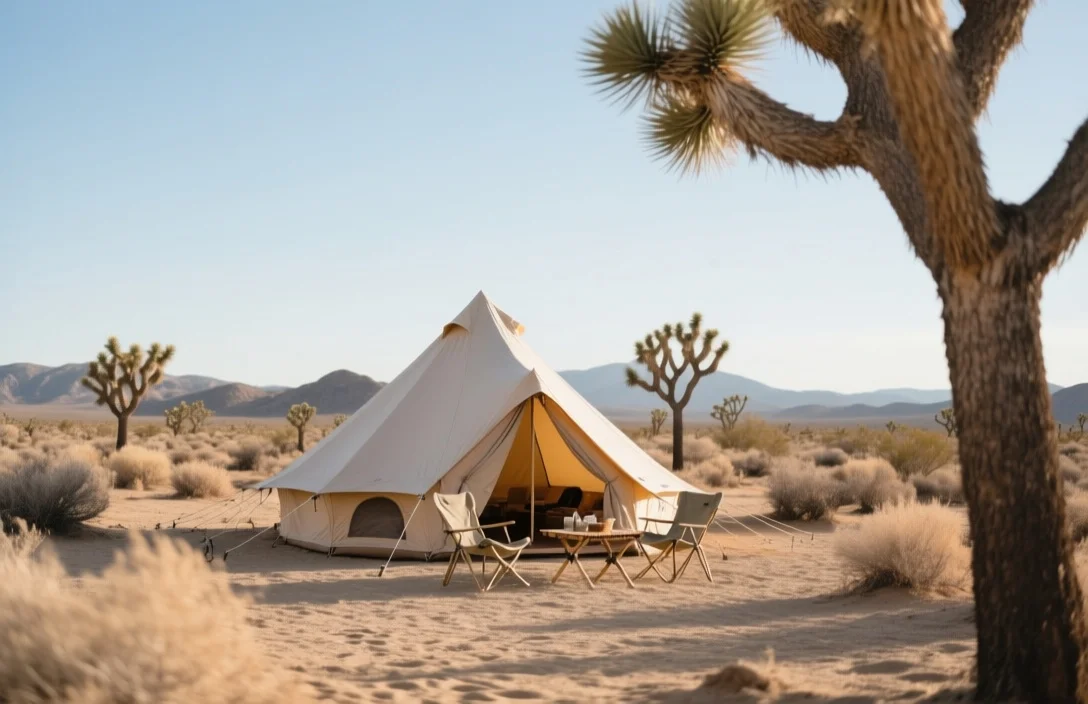
Nightly rates for glamping sites near Joshua Tree typically fall between $80 and $180, with a slight dip in winter and a rise during spring festivals. Most tents accommodate 2‑4 guests, while larger cabins can host up to 8. Core amenities include comfortable beds, private restrooms, and fire pits.
Below is a quick‑reference table that captures price brackets, maximum occupancy, and the standout comforts each location offers. Prices are presented as a range to reflect seasonal fluctuations; exact figures should be confirmed at booking.
| Site | Price Range (USD/night) | Capacity | Key Amenities |
|---|---|---|---|
| Sahara Tent | $80‑$120 | 2‑4 | Queen bed, solar lights, private bathroom |
| AutoCamp Joshua Tree | $130‑$180 | 4‑6 | Wooden A‑frame, kitchenette, shared showers |
| The Nest Cabin | $110‑$150 | 4‑8 | Elevated platform, hot tub, pet‑friendly |
| Humble Abode | $90‑$130 | 2‑3 | Canvas walls, composting toilet, fire circle |
| Mojave Oasis | $100‑$160 | 3‑5 | Earth‑tone décor, stocked pantry, guided stargazing |
Seasonal shifts are most noticeable in March‑May, when demand spikes due to wildflower blooms and music events; expect a 20‑30% premium during these weeks. Winter months (December‑February) often see lower rates but cooler nights, so bring extra blankets. Summer can bring extreme heat, so many sites raise prices to cover additional cooling options.
“When I arrived at The Nest Cabin in early April, the sunrise over the rock formations was unforgettable. The hot tub was already pre‑heated, and the host had left a basket of fresh fruit – small touches that turned a simple stay into a memorable escape.”
Essential Desert Safety And Comfort Tips
Desert glamping Joshua Tree requires careful preparation because temperatures can swing by 40 degrees between high noon and midnight. Daytime highs often exceed 100 degrees in summer, while clear desert nights frequently drop into the 40s even during shoulder seasons.
Managing Temperature Swings
Layering is the most effective way to handle the dramatic climate shifts of the Mojave Desert. Pack moisture-wicking base layers for the heat of the day and thick wool or fleece layers for the rapid cooling that occurs after sunset.
On my last trip, I discovered that even if the forecast looks mild, the wind can make a 60-degree night feel like freezing. Always pack a beanie and gloves, even if you do not think you will need them.
Hydration And Sun Protection
Dehydration is the primary safety risk for visitors because the low humidity causes sweat to evaporate instantly, hiding how much fluid you have actually lost. Drink at least one gallon of water per person, per day, regardless of your activity level.
| Strategy | Actionable Step |
|---|---|
| Sun Shielding | Use a wide-brimmed hat and SPF 50+ sunscreen. |
| Fluid Intake | Carry a reusable gallon jug for every person in your group. |
| Sand Defense | Keep tent flaps zipped to prevent grit from entering your sleeping area. |
For instance, keep a dedicated cooler inside your glamping structure stocked with electrolyte-enhanced drinks to replenish salts lost during the day. Do not rely on local park facilities for water, as many remote areas provide no public access to potable taps.
Sand protection is another practical concern, as high winds often kick up fine dust that settles into gear and bedding. Use a dedicated mat or rug outside your glamping tent entrance to catch debris before you step inside. Wipe down electronics and lenses frequently with microfiber cloths to prevent micro-scratches from windblown particles.
Must-do Activities Near Your Glamping Site
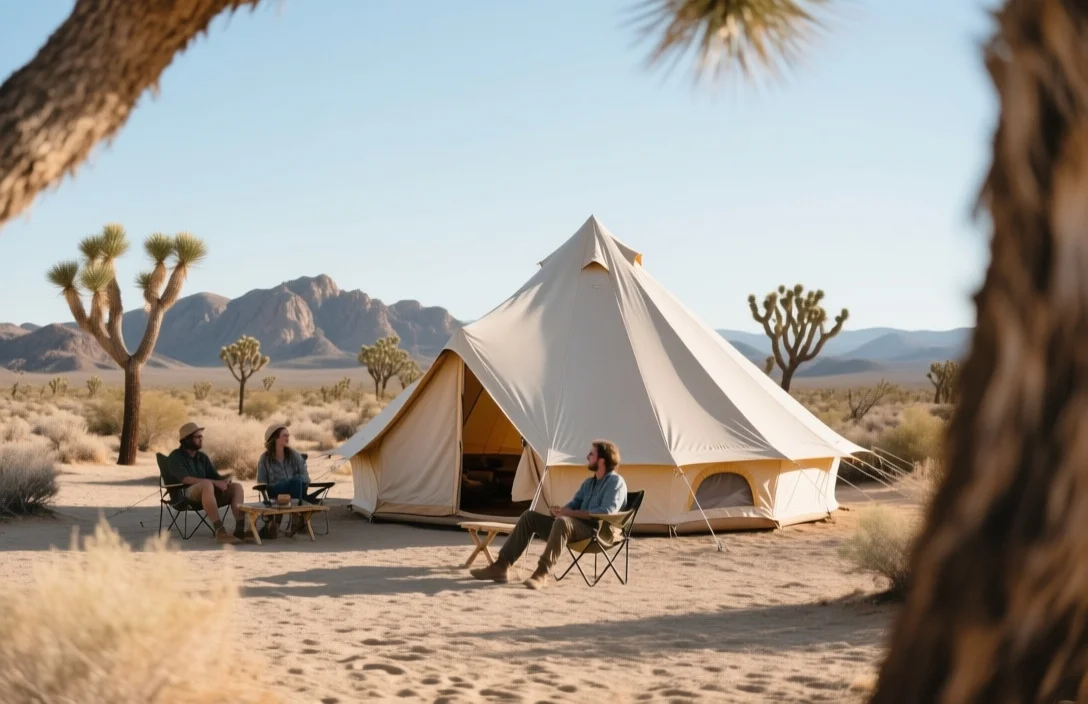
Joshua Tree National Park offers world-class stargazing and rugged hiking trails that define the high desert experience. You can access these landscapes directly from most glamping hubs, provided you plan your entry times to avoid peak congestion during spring weekends.
Stargazing And Night Photography
The night sky in this region is one of the darkest in Southern California, making it a premier spot for amateur astronomers and long-exposure photographers. You do not need to drive deep into the park to find clear views, as the lack of light pollution extends well into the surrounding communities.
On my last trip, I discovered that the turnout near the Hidden Valley Nature Trail parking lot offers incredible perspectives of the Milky Way, provided you arrive after midnight when the park traffic thins out.
Top-rated Hikes
Hiking trails near your basecamp range from quick nature walks to strenuous climbs through boulder-strewn canyons. Always prioritize morning starts, as the sun becomes intense by midday regardless of the season.
| Trail Name | Difficulty | Best Feature |
|---|---|---|
| Ryan Mountain | Moderate/Strenuous | Panoramic park views |
| Hidden Valley | Easy | Classic Joshua Tree scenery |
| Barker Dam | Easy | Desert wildlife and history |
For those seeking solitude, the Arch Rock trail provides a shorter, more intimate look at the park geology without the massive crowds found at the main entrance trails. Always carry at least one gallon of water per person, as the dry air causes rapid dehydration even during short excursions. Most paths lack shade, so plan to finish your movement by 11:00 AM to stay safe and comfortable throughout your stay.
Quick Summary
Joshua Tree’s desert glamping blends luxury with wild landscapes, offering unforgettable nights under star-filled skies.
| Item | Details |
|---|---|
| Park Entry Fee | $30 per vehicle |
| Glamping Rate Range | $150 – $600 per night |
| Best Seasons | March-May, September-November |
Conclusion &Amp;amp;amp; Summary
Desert glamping in Joshua Tree delivers a perfect mix of adventure and comfort, letting you wake up to sweeping desert views without sacrificing modern luxuries. This guide helps you plan with confidence by addressing real concerns like costs, safety, and accessibility, so you can focus on the experience.
This guide simplifies your planning, from picking the best glamping site to packing the right gear. Ready to book? Check the links above for trusted glamping providers and start your desert adventure today.
What’s your favorite Joshua Tree glamping spot or hidden gem in the park? Share your experiences in the comments!
Frequently Asked Questions
How Much Does It Cost To Go Glamping In Joshua Tree?
Prices typically range from $150 to $500 per night, with luxury domes or unique airstreams often costing upwards of $400 during peak seasons like spring and fall.
When Is The Best Time Of Year To Go Glamping In Joshua Tree?
The ideal times to visit are spring (March to May) and fall (October to November) when daytime temperatures average between 70°F and 85°F, avoiding the extreme summer heat.
Is It Safe To Go Glamping In The Joshua Tree Desert?
Yes, it is generally safe, but you should keep tent zippers closed to keep out scorpions or snakes, and be aware that the area is remote so cell service can be spotty.
What Amenities Are Usually Included In Joshua Tree Glamping Tents?
Most glamping sites provide comfortable beds with linens, heating or air conditioning, and a private fire pit, though bathroom access can vary from en-suite units to shared communal bathhouses.
How Far In Advance Should I Book A Glamping Site In Joshua Tree?
You should book at least 3 to 6 months in advance for weekend stays, as popular dates often sell out months ahead, especially during the cooler months when demand is highest.
Disclosure: As an Amazon Associate, I may earn from qualifying purchases at no extra cost to you. Amazon and the Amazon logo are trademarks of Amazon.com, Inc, or its affiliates.
