
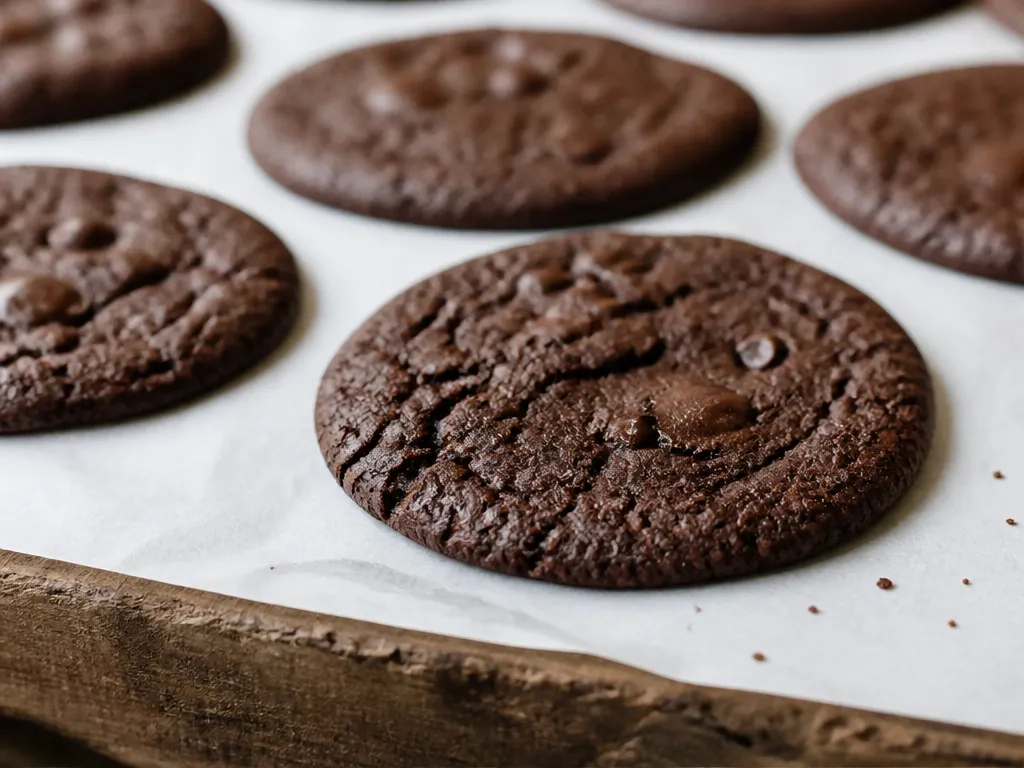
Chocolate cookies turn out flat most often because the dough is too soft. Warm butter, melted butter, too little flour, expired leavening, skipped chill time, or a hot baking sheet can make the dough spread before the fat and flour set. Measure flour consistently, use the leavening the recipe calls for, and manage dough temperature, oven temperature, and bake time. These changes solve most flat-cookie problems.
Flat chocolate cookies usually come from excess spreading. Common causes include warm or melted butter, too little flour, expired baking soda or baking powder, skipping chill time, and baking on a hot sheet that melts the fat immediately. Correct the cause, and the dough firms up before it spreads, giving you thicker cookies.
The Main Causes at a Glance
- Butter temperature matters. Warm or melted butter makes dough too loose, so cookies spread before they set.
- Flour measurement controls spread. Too little flour leaves the dough unable to hold its shape.
- Leavening must be active. Missing or expired baking soda or baking powder reduces lift.
- Chill time helps the dough hold its shape. Skipping it keeps fat liquid longer and increases spreading.
- Oven and sheet temperature matter. An overheated oven or hot sheet can start melting the fat immediately.
- A test cookie prevents a wasted tray. Bake one cookie first, then adjust chilling, spacing, or bake time if the dough spreads too far.
Why Chocolate Cookies Spread and Stay Thin
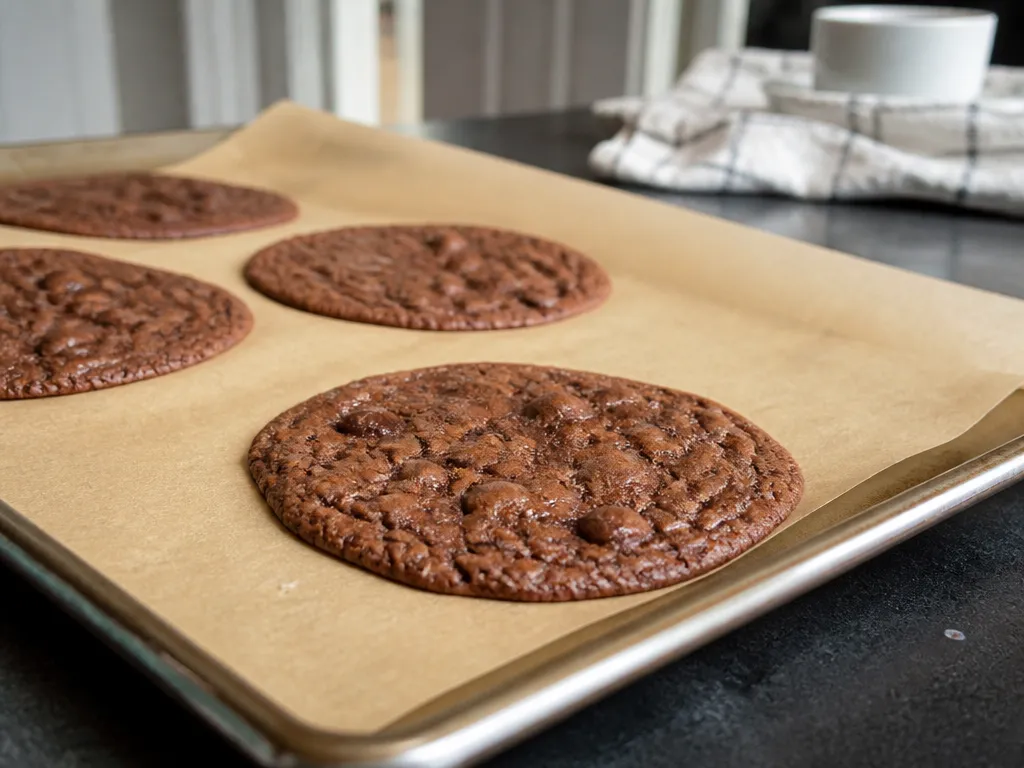
Flat cookies are usually a dough-physics problem, not proof that the recipe is bad. Chocolate chip and other drop cookies spread when the fat melts too quickly and the flour structure is too weak to resist that flow. The result is a thin cookie with edges that bake before the center can hold a thicker shape.
Butter is the key variable in many drop-cookie recipes because it determines how quickly the dough softens. If the butter is too warm, the dough can spread during the first few minutes in the oven, before the cookies have time to set. If the dough is too warm or too wet, it may also lose lift because the leavening has less stable structure to expand into.
Chocolate cookies can feel flat even when they spread normally if the dough does not rise much. Missing baking soda or baking powder, expired leavening, or using the wrong type for the recipe can reduce lift and turn a cookie that should be chewy and thick into a thin one.
Timing also affects the final shape. Underbaking can leave cookies looking thinner because the interior has not finished setting, while overbaking can dry them out and allow the structure to break down further. Cookies continue setting as they cool, so their appearance in the oven is not the whole story.
The Six Causes to Check First
Most flat-cookie problems fall into four groups: fat that is too soft, structure that is too weak, missing lift, or baking conditions that are too aggressive. Once you identify the group, the fix is usually straightforward.
- Warm or melted butter makes the dough loose, so the cookie spreads quickly.
- Too little flour reduces viscosity and weakens the dough’s ability to hold its shape.
- Wrong or inactive leavening lowers lift, so cookies do not puff and thicken.
- No chill time keeps the fat liquid longer, increasing spreading and thinning.
- A hot baking sheet melts the butter immediately, causing the same spread problem even when the dough is otherwise fine.
- An oven that is too hot or bake time that is too short can thin cookies early or prevent them from setting properly.
Look at the cookies during the first few minutes in the oven. If they spread aggressively during the first 3 to 8 minutes, check butter temperature, chill time, flour measurement, and sheet temperature. If they spread only a little but do not rise much, check the leavening, mixing, and moisture level.
The butter-to-flour ratio is another useful clue. More butter relative to flour generally increases spread. Some recipes deliberately use melted butter for a crispier or chewier texture, so follow that method carefully and use the chilling or bake adjustments specified in the recipe.

Helpful pick
Creamy Cookies & Cream Spread – Sweet Chocolate Cookie Dessert Spread, 13 oz
If your cookies turn out flat despite your best efforts, you can still enjoy that signature flavor with this delicious chocolate cookie dessert spread.
Fixes That Make Chocolate Cookies Thicker
- Measure flour correctly. Spoon flour into your measuring cup and level it off. Do not scoop directly from the bag, because that method can pack in too much flour and make your measurements inconsistent. The practical goal is to use the same measuring method every time and avoid accidentally under-measuring.
- Chill the dough long enough. Refrigeration firms the fat and gives the flour time to hydrate, so the dough spreads more slowly and bakes up thicker. If you skipped the chill time in the recipe, that is one of the first changes to make.
- Check the butter temperature. Butter for a creamed dough should be soft, not greasy or melted. If it was very warm, or if you used melted butter in a recipe that expects softened butter, expect more spreading.
- Use fresh leavening. Replace old baking soda or baking powder. “Expired” does not always mean completely inactive, but weak leavening can reduce lift enough to change the cookie’s thickness.
- Start with a cool sheet. A sheet that is still hot from a previous batch can melt the butter during the first minute in the oven. Let pans cool between batches, and watch for uneven baking if the sheet has hot spots.
- Bake until the cookies set. Pull chocolate cookies when the edges look set and the centers are slightly underdone, then let them finish setting on the pan. If you wait until they look fully dry and crisp in the oven, they may already have spread and can become hard as they cool.
- Bake a test cookie. Test one portion of the current dough and evaluate its spread in your oven. This lets you adjust the dough or baking conditions before committing to a full tray.
The most useful controls are dough temperature and flour structure. When the dough is chilled and the flour is measured consistently, the other variables become easier to manage.
Why Fixing Flat Cookies Improves the Batch
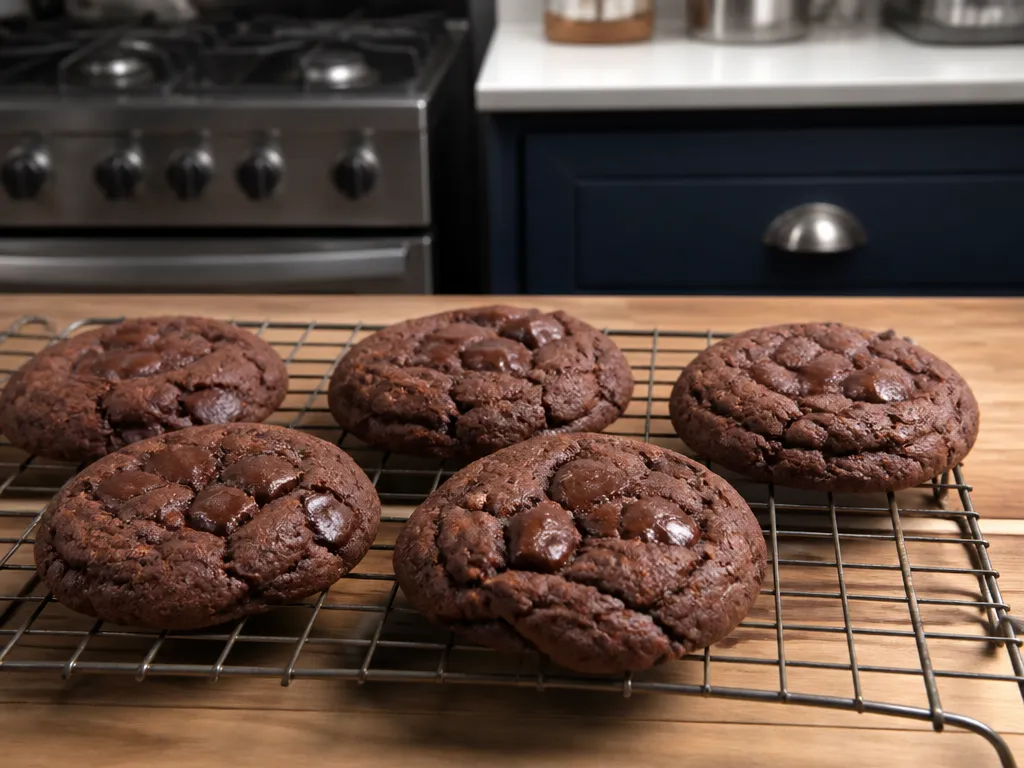
Correcting excess spreading also improves texture. A thicker cookie usually has a better balance between a chewy center and set edges. Proper thickness helps the cookie hold its shape and keeps the chocolate flavor from getting lost in an overly thin layer.
Troubleshooting also reduces waste. Flat cookies are still edible, but repeated batches that spread into thin sheets cost ingredients and time. A quick check of the dough can narrow down the problem quickly.
A test cookie can reveal how your oven behaves. Ovens vary in temperature and hot spots, so the same recipe may bake differently from one kitchen to another. Testing one cookie turns that uncertainty into a variable you can adjust.
Choose the Fix That Matches the Symptom
The right fix depends on how the cookies behave in the oven.
If the Dough Spreads a Lot
- Chill it longer. Even an extra 30 to 60 minutes can change spread because the fat firms up.
- Let sheets cool between batches. Use room-temperature pans so the butter does not start melting on contact.
- Check the flour amount. If you under-measured flour, the dough needs more structure, not more mixing.
If the Cookies Are Thin but Do Not Spread Wildly
- Replace the leavening. Inactive baking soda or baking powder reduces lift and can leave cookies thin.
- Confirm the leavening type. Some recipes are built around baking soda for browning, while others rely on baking powder for lift. Swapping them can change the cookie’s thickness.
- Avoid overmixing after adding flour. Overmixing can develop too much gluten in some doughs and change the texture. It may make the dough thicker while still producing flat cookies if the fat and baking conditions are wrong. Treat this as a secondary check, not the first fix.
If the Recipe Uses Melted Butter
Some cookie recipes use melted butter deliberately for a particular texture. Replacing it with softened butter can change the cookie you intended to make. Follow the recipe’s method, then use the specified chilling instructions and control the bake time closely.
If You Want Thicker Cookies Next Time
Increase the dough’s structural resistance, reduce early melting, or do both:
- Chill the dough consistently.
- Use cool baking sheets.
- Measure flour the same way every time.
- Check that the leavening is fresh.
Reliable Habits for Preventing Flat Cookies
Keep variables steady when troubleshooting. If you change several ingredients and conditions at once, you will not know which change solved the problem. Correct the most likely cause first, then bake again.
Bake a test cookie before filling a full sheet. Adjust the portion size, spacing, chill time, or bake time before you use the rest of the dough. This is especially useful for chocolate drop cookies, which tend to spread more than thicker bar cookies.
Treat pan temperature like part of the recipe. If your kitchen runs hot or your pans hold heat, cooling them between batches makes a noticeable difference.

Helpful pick
Cookies and Cream Spread, Chocolate Cocoa Cookie Pieces, Butter Spread, Snack Snacking Food Gift Treat, 1 bettergood Jar, 13oz
When you are practicing reliable habits to prevent flat cookies, keep a jar of this tasty spread on hand as a quick, satisfying snack.
What Different Flat-Cookie Problems Look Like
If butter has been sitting out until it looks shiny and very soft, the dough may spread into wide discs as soon as it enters the oven. The fat is already close to melting, so the flour structure cannot stabilize the dough before it flows outward.
A different problem occurs when you measure flour with a heavy hand by scooping cupfuls from the bag. The cookies may turn out dry and thin while spreading less than expected. That points to an incorrect structure and moisture balance rather than too little flour. If the dough was also warm or unchilled, early melting can still make the cookies flat.
Chilling the dough overnight will reduce spreading, but old baking soda can still leave the cookies thin. In that case, the firm fat is controlling spread while weak leavening limits lift. Replace the leavening and keep the other variables the same so you can see whether the cookies become thicker.
Oven hot spots can create uneven results from the same recipe. One side of the sheet may produce flat cookies while the other side does not because the hotter area melts the butter sooner. Rotating the sheet halfway through baking can help, and cooling the pan between batches prevents the hot-sheet effect from carrying over.
| Symptom you see | Most likely cause | Fast fix for next batch |
|---|---|---|
| Spreads immediately into a thin puddle | Dough too warm, butter too soft, or hot pan | Chill dough longer, use room-temperature pans |
| Thin cookies, little lift, normal spread | Leavening missing or expired | Replace baking soda or baking powder |
| Flat even after chilling | Flour too low or dough too wet | Measure flour accurately, check recipe ratios |
| Works in one oven, flat in yours | Oven runs hot or uneven | Lower temperature slightly and rotate the tray halfway through baking |
| Flat only on the first tray | Sheet still hot from preheating or a prior batch | Cool pans between batches, preheat, then load carefully |

Helpful pick
Flora Fine Foods Cookies & Cream Crunchy Spread | Imported from Italy | 7.76 oz jar | Spreadable Cookies & Cream Sweet Butter (Single Jar)
Since soft butter often leads to thin, wide discs, consider using this crunchy cookies and cream spread to enjoy the flavor without any baking.
FAQ
What’s the fastest fix if my chocolate cookies turn out flat?
Bake one test cookie next time and watch it during the first 5-10 minutes. Its spread pattern will show whether to adjust the dough or the baking conditions before using the rest.
Does chilling cookie dough actually prevent flat cookies?
Yes. Chilling firms the fat and gives the dough time to hydrate, so it spreads more slowly in the oven. If your dough is already chilled, try chilling it longer next time.
Can I save flat chocolate cookies after they bake?
You can still serve them, especially if they are thin but tasty, but their texture will not fully bounce back. For the next batch, try slightly underbaking so the cookies finish setting on the pan as they cool.
How do I know if my leavening is the problem?
If the cookies are thin with limited lift even though the dough was properly chilled, leavening is a strong suspect. Replace the baking soda or baking powder and keep everything else the same so you can isolate the change.
What’s a common mistake that causes flat cookies?
Using an ingredient or baking condition that makes the dough spread before it sets is a common mistake. Compare the method with the recipe, paying particular attention to butter consistency, chill time, and pan temperature.
Disclosure: As an Amazon Associate, I may earn from qualifying purchases at no extra cost to you. Amazon and the Amazon logo are trademarks of Amazon.com, Inc, or its affiliates.
