
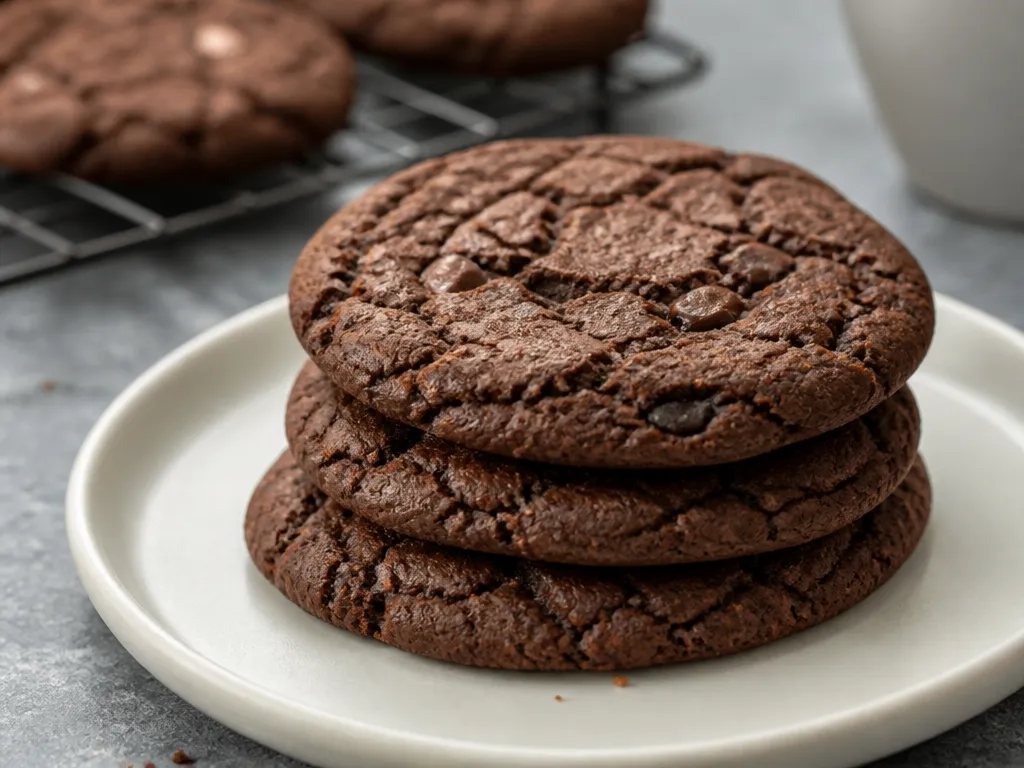
Chocolate cookies often get harder after cooling because their structure continues to set and moisture redistributes after they leave the oven. While hot, the cookie’s fats are fluid, moisture is more mobile, and the center is still finishing. As it cools, butter solidifies, starches and sugars reorganize, and water moves toward the surface and evaporates. The result can be a cookie that shifts from soft and chewy to firm.
Small changes in butter versus oil, sugar type, thickness, and bake time determine how quickly that change happens.
Page Contents
ToggleWhy Chocolate Cookies Firm Up After Cooling
Cookies get hard after cooling because they lose moisture and their internal structure finishes setting. Heat keeps fats fluid and moisture more evenly distributed through the dough, so a hot cookie feels softer than it will at room temperature. As the cookie cools, fats solidify, moisture shifts toward the surface, and the crumb becomes denser and less pliable.
Chocolate dough can be especially sensitive to cooling because cocoa and chocolate do not soften the crumb in the same way as some other ingredients. If you want a chewy bite, the cookie needs to retain enough moisture and avoid overbaking before it reaches room temperature. Cooling naturally pushes the texture toward firmness.
What Happens Inside a Cookie as It Cools
A cookie passes through several stages in the oven, and cooling locks in the final texture. Heat causes starches to gelatinize and proteins to set. When you pull the cookies from the oven, the edges may be finished while the center is still stabilizing.
Cooling then changes the physical state of the fats and starches while water continues to move. Butter-based cookies often feel soft at first, then firm as the butterfat crystallizes. Starches and sugars also reorganize as the temperature drops, making the cookie less springy and more rigid.
A cookie can be perfect 2 minutes after baking and noticeably firmer 30 minutes later. The warm version is still hot and flexible; the room-temperature version has fully set.
How Moisture Migration Makes Cookies Firm
Water does not remain evenly distributed inside a cooling cookie. It moves from the interior toward the surface, driven by temperature differences and evaporation. As the center loses free water, the crumb feels firmer and sometimes drier.
That is why cookies can become hard even when they were not deeply browned. You may pull them from the oven while they still look pale, yet the center can continue losing moisture as the cookies rest on the pan or rack. The surface dries faster than the middle, so the outside may turn crisp while the interior tightens.
To preserve a chewy texture, slow the loss of free water after baking. The goal is not to keep cookies wet forever; it is to prevent them from drying too much during the cooling window.
Butter Versus Oil After Cooling
Butter and oil produce different cooling textures because they respond differently to temperature. Butter contains water and milk solids, and its fat crystallizes into a firmer structure as it cools. Butter-based cookies can therefore go from soft to firm quickly, especially when the dough is relatively lean or the cookies bake slightly too long.
Oil usually stays liquid at room temperature, depending on the type, so oil-based cookies often remain tender longer. The trade-off is a different flavor and chew. Oil can create a more uniformly soft texture instead of the crisp edges and chewy center that butter often provides.
If your cookies become hard soon after reaching room temperature, replacing some butter with a neutral oil can improve softness retention without changing the bake time. The texture will change, though, so this works best when tenderness matters more than a pronounced buttery flavor.
How Sugar Changes Post-Cooling Hardness
Sugar affects cooling texture because different sugars interact with water differently. Some attract and hold moisture in the crumb, which slows firming. Others crystallize more readily or create a firmer set once the cookie is fully cool.
Brown sugar usually adds more moisture than white sugar because it contains molasses. That molasses also affects browning and setting. The extra moisture retention can help slow firming after cooling. Granulated white sugar tends to produce a cleaner, crisper set as moisture redistributes.
Changing the sugar without adjusting bake time or fat can noticeably change the room-temperature texture. A cookie that feels perfect while warm may become firmer and more brittle once cool if the new sugar combination holds less moisture.
Bake Time and Internal Temperature
Bake time is the easiest variable to change, but the cookie’s internal temperature and doneness determine the final texture. When the edges look set, the center may already be close to fully baked. Waiting for the entire cookie to look uniformly done can drive out more water than a chewy cookie can afford.
Without a probe, use visual cues. Remove the cookies when the edges are set and the centers still look slightly underdone, not raw. They will finish setting on the pan and during the first few minutes of cooling. If you wait for uniform browning, you will usually bake away more moisture and end up with a harder cookie.
For a softer result, keep the center from overcooking. Reducing the bake time slightly can make the difference between a cookie that stays chewy and one that turns hard after cooling.
Cookie Thickness and Pan Placement
Thicker cookies have more thermal mass, so their centers stay warm longer and can retain moisture during the critical cooling window. Thin cookies lose moisture quickly and reach room temperature sooner, which makes them firm faster. The same dough can therefore produce very different textures when portioned into different sizes.
Pan placement also affects the result. Cookies near the edges of the oven or close to hot spots may brown and dry out sooner than cookies baked in the center rack position. Uneven baking can leave some areas too dry, giving the whole cookie a firmer bite after cooling.
Use the same scoop size, portion weight, and spacing each time, and keep the pan on a consistent rack. If you have been estimating portions by eye, uneven thickness alone may explain why one tray is soft while another is hard.
How to Adjust the Next Batch
After checking bake time and doneness, adjust sugar or fat if the cookies still harden at room temperature. The center should be set enough to hold together but not so dry that cooling tightens it into a hard crumb.
- Use brown sugar. If the recipe allows, replace part or all of the white sugar with brown sugar.
- Adjust the fat. Replace some butter with neutral oil if the cookies firm too quickly.
- Control portion size. Use the same scoop weight each time to keep thickness consistent.
- Cool them correctly. Move the cookies off the pan quickly so residual heat does not continue drying them.
How to Soften Cookies After They Cool
You can often soften cooled cookies by adding a little moisture or warming them so the moisture redistributes.
- Steam-soften. Place the cookies over, but not touching, gently simmering water for 10 to 20 seconds. Then cool them briefly on a rack. Stop early to avoid making them soggy.
- Microwave with a paper towel. Microwave the cookies for 5 to 10 seconds with a lightly damp paper towel in the microwave-safe area. This warms the cookie and adds a small amount of moisture to the surface.
- Warm them in the oven. Heat the cookies at a low temperature, around 250°F, for 3 to 5 minutes. Warmth can make them taste softer by redistributing moisture, even without steaming them.
- Use a covered rest. If the cookies are crisp outside, warm them briefly and let them rest loosely covered. The cover limits further moisture loss.
Use short intervals at first. Too much steam or heat can make cookies gummy or give them a stewed taste.
How Storage Keeps Cookies Soft
Cookies continue to firm during storage when moisture escapes into the air. The surface dries first, and once it becomes crisp and dry, the entire cookie feels harder.
Store cooled cookies in an airtight container rather than leaving them exposed to room air. Cookies firm faster in a very dry environment, so a tight seal is especially important there. Separate layers with parchment to prevent sticking while keeping the container sealed.
Let the cookies cool fully before storing them. Sealing them while they are still warm can trap steam, soften the surface too much, and create condensation inside the container. Once they are cool, move them into the airtight container right away.
If cookies become hard within a day, check the storage seal and the bake time first. Airtight storage prevents additional moisture loss, but it cannot fully restore cookies that were baked too dry.
FAQ
Why Do Chocolate Cookies Get Hard Even If I Did Not Overbake Them?
Cookies can firm up even when they were not visibly overbaked because they continue cooking slightly on the pan and during cooling. Moisture also moves from the center toward the surface. If the center was already close to fully set in the oven, cooling will tighten it further.
How Long Should I Cool Chocolate Cookies Before Storing Them?
Cool the cookies until they are no longer steaming and the surface feels dry, usually around 20 to 30 minutes for standard cookies. Storing them while warm can trap moisture, change the texture, and create condensation inside the container. Once they are cool, place them in an airtight container right away.
Does Butter Make Cookies Harder Than Oil After Cooling?
Butter often makes cookies feel firmer after cooling because its fat crystallizes into a more solid structure at room temperature. Oil stays softer in many recipes, which helps cookies retain a tender bite. If your butter-based cookies harden too quickly, try replacing part of the butter with neutral oil.
What Is the Fastest Way to Soften Cookies the Same Day?
Gentle steam and quick microwave warming are usually the fastest options. Use 10 to 20 seconds of gentle steam or 5 to 10 seconds in the microwave, then let the cookies rest briefly so the texture can stabilize. Longer heating can make them gummy.
Can Changing the Sugar Prevent Cookies From Hardening?
Yes. Brown sugar generally keeps cookies softer than all-white sugar because its molasses helps retain moisture in the crumb. Changing the sugar can also change how quickly the cookie bakes, so you may need a small adjustment to the bake time. Start by replacing only part of the white sugar and see how the dough responds.
Disclosure: As an Amazon Associate, I may earn from qualifying purchases at no extra cost to you. Amazon and the Amazon logo are trademarks of Amazon.com, Inc, or its affiliates.
