
A chef’s knife, stable cutting board, nonstick skillet, medium saucepan, mixing bowls, measuring tools, whisk, and spatula cover nearly every beginner cooking task. Add a colander and paring knife, and you can handle eggs, pasta, rice, soups, sauces, roasted vegetables, and simple baking without filling your kitchen with gadgets.
For most beginners, I would buy in this order:
- Chef’s knife and stable cutting board for safer, faster prep
- Nonstick skillet for eggs, sautéing, and low-stress weeknight meals
- Medium saucepan for pasta, rice, sauces, and soups
- Measuring cups, spoons, and mixing bowls for consistent recipes
- Whisk, spatula, wooden spoon, and tongs for everyday cooking
- Colander and specialty tools only when a repeated recipe requires them
Key Takeaways
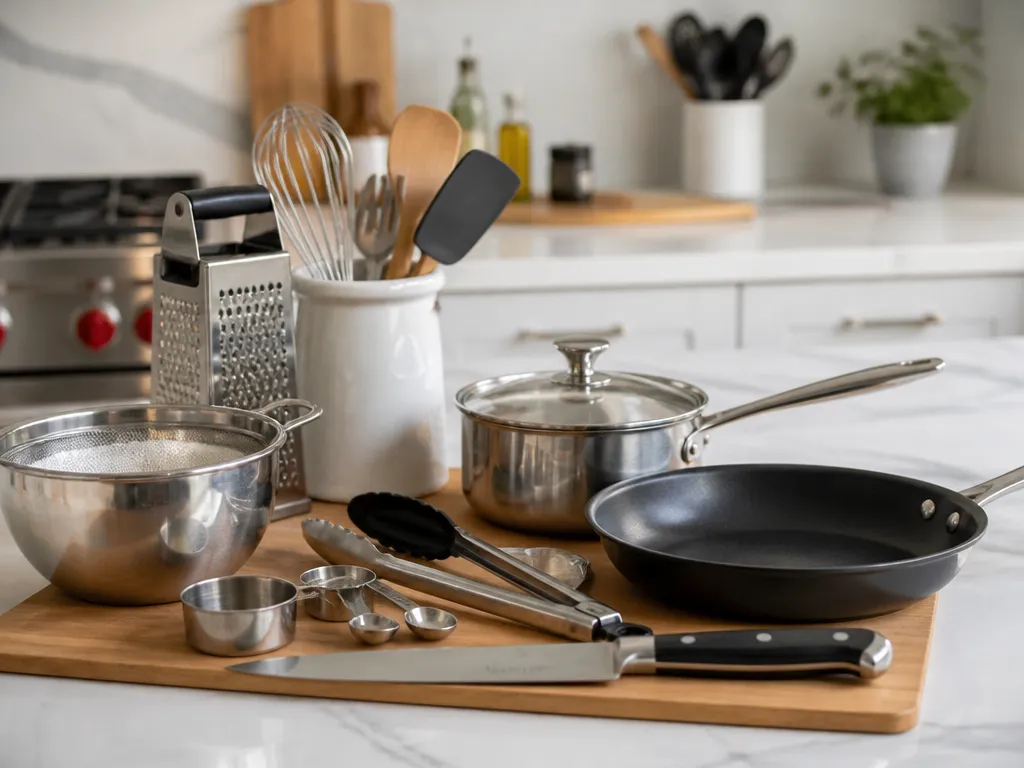
- Start with knives first. A comfortable chef’s knife and stable cutting board make prep faster and safer.
- Pick cookware by frequency. A nonstick skillet and medium saucepan cover eggs, sautéing, sauces, and pasta.
- Measure consistently. Measuring cups, spoons, and a basic kitchen scale improve accuracy for baking and sauces.
- Get versatile utensils. A whisk, tongs, and wooden or silicone spatulas handle most daily tasks.
- Buy for maintenance. Easy-clean surfaces such as nonstick coatings and dishwasher-safe tools reduce daily friction.
The Best Beginner Cooking Tools by Priority
Beginner tools should make results more repeatable. If your knife slips, your pan burns, or your measurements vary, you may blame yourself for problems caused by awkward equipment.
Your first toolkit needs to handle four jobs: chopping, measuring, mixing, and everyday cooking. Most beginner meals fit those categories, so you can skip dozens of specialized gadgets at the start.
1. Chef’s Knife and Cutting Board: Best First Purchase
A comfortable chef’s knife handles most chopping, slicing, and mincing. Choose one you can hold for 10 minutes without wrist strain, with a grip that does not twist in your hand and a blade that feels balanced. Comfort matters more than the brand for a tool you will use constantly.
Pair it with a cutting board that stays put. A sliding board makes even cuts harder and increases the chance of accidental injury. A stable surface also gives you enough room to work without ingredients rolling toward the edge.
A paring knife is useful for peeling and small trimming, but it should come after the chef’s knife and board.
2. Nonstick Skillet
A nonstick skillet is the easiest first pan for eggs, quick sautéing, and other foods that tend to stick while you are learning heat control. It also simplifies cleanup, which makes cooking more appealing on busy weeknights.
Use wooden or silicone utensils, avoid metal tools that can scratch the coating, and clean the pan gently. Do not crank the heat to max while you are learning. Nonstick performance can degrade faster under high heat than stainless steel.
A nonstick skillet is not the only pan you will ever need. Add stainless steel or cast iron later if you want more browning or high-heat searing, but keep the nonstick pan for eggs and other delicate foods.
3. Medium Saucepan
A medium saucepan handles pasta, rice, sauces, and simmering soups. Look for even heating and a handle that feels comfortable when the pan is full. This pan earns its place because it covers several basic cooking methods without taking up much storage space.
The saucepan and skillet make a practical pair: the skillet handles frying and sautéing, while the saucepan handles boiling and simmering. Together, they cover far more meals than a large collection of specialty cookware.
4. Measuring Tools and Mixing Bowls
Measuring cups and spoons improve reliability in everyday recipes, especially baking, sauces, and dishes where too much salt, flour, or liquid can change the result. Choose a set with clear markings that is easy to clean.
Mixing bowls should include at least 2 sizes and feel easy to hold. They work for batters, salad ingredients, marinades, whisked eggs, and nearly any preparation that needs room to combine ingredients.
If you bake more than once a month, add more precise measuring or a basic kitchen scale. For occasional cooking, cups and spoons may be enough.
5. Whisk, Spatula, and Wooden Spoon: Best Everyday Utensils
A whisk handles eggs, dressings, and smooth sauces. Choose one with sturdy wires and a grip that does not slip when wet.
A silicone spatula is useful for scraping bowls and stirring while protecting nonstick surfaces. A wooden spoon works well for mixing and stirring. Tongs are also worth adding for turning food, tossing pasta, and handling ingredients without piercing them.
These tools are more useful than most single-purpose gadgets because each one performs several common tasks.
6. Colander: Best for Pasta and Produce
A colander drains pasta, rinses produce, and washes canned beans. It is inexpensive, easy to store, and difficult to replace with another tool safely. Add one to the starter setup once the knife, board, skillet, and saucepan are covered.
How the Starter Options Compare
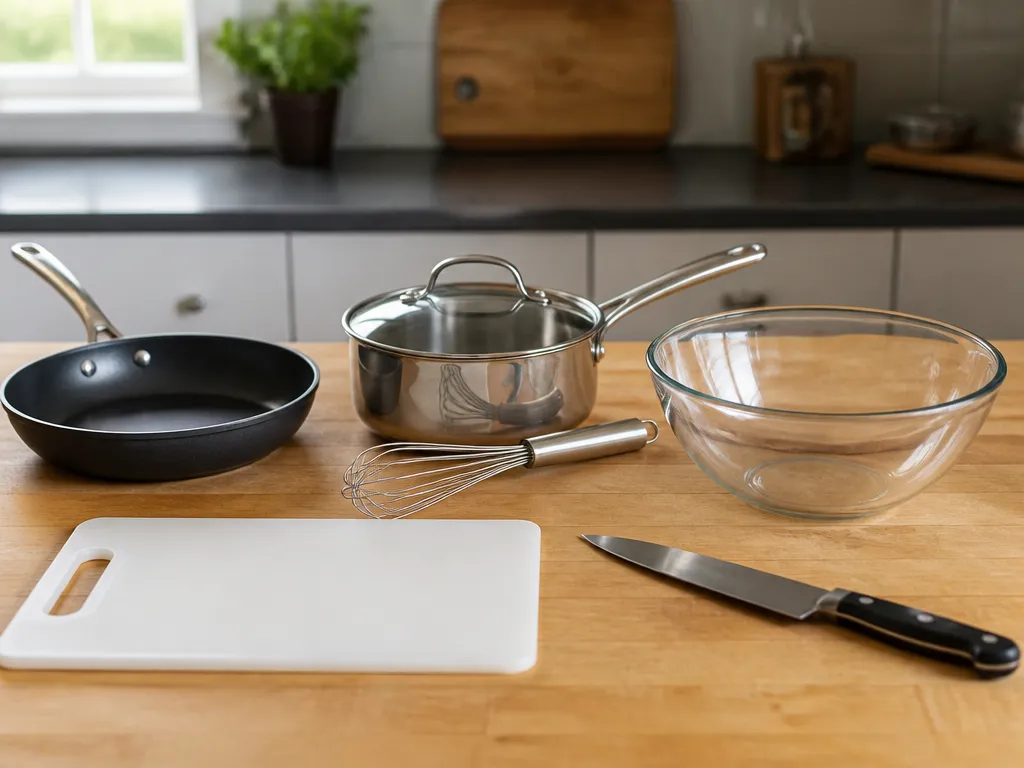
You have three sensible ways to build a first kitchen, depending on what you cook most often.
Minimal Starter: Best for Fast Weeknight Meals
The Minimal Starter keeps the tool count low:
- Chef’s knife
- Cutting board
- Nonstick skillet
- Saucepan
- Mixing bowl
- Whisk
- Spatula
- Measuring cups and spoons
- Colander
Choose this path if you mostly make eggs, sandwiches, simple weeknight dinners, pasta, rice, or basic sauces. It gives you the most useful coverage without demanding much storage.
Beginner-Baking Add-On
Start with the Minimal Starter, then add:
- Reliable baking sheet
- Extra mixing bowl
- More precise measuring tools or a basic kitchen scale
This path makes sense if you bake more than once a month. The extra bowl prevents constant washing between steps, while more precise measuring helps with recipes that depend on consistent ratios.
Sear-and-Simmer Path
Start with the knife, board, measuring tools, nonstick skillet, and saucepan. Add one stainless-steel or cast-iron option later for browning and high-heat searing, while keeping the nonstick pan for eggs.
The trade-off is straightforward: more cookware variety costs more money and requires more storage. If you are unsure which direction to take, start with the Minimal Starter and add one tool after you identify a specific gap.
Helpful pick
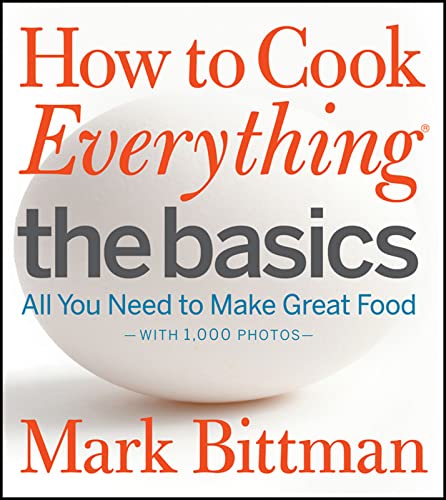
How to Cook Everything: The Basics: All You Need to Make Great Food – With 1,000 Photos: A Beginner Cookbook and Essential Guide to Fundamental Cooking Techniques
This beginner cookbook pairs perfectly with a minimal tool set, teaching fundamental techniques for fast weeknight meals.
Beginner Buying Criteria That Prevent Frustration
Choose tools according to how you cook now, not how you imagine cooking someday. If your usual meals are eggs, sandwiches, and simple weeknight dinners, prioritize a nonstick skillet, spatula, and tongs.
Watch for these common friction points:
- Uncomfortable handles. A knife or pan you avoid using is a poor purchase even if its materials look impressive.
- Thin, wobbly accessories. Cheap tools can feel almost right while making basic tasks slower.
- Unstable cutting boards. A board that slides makes prep less controlled.
- Coatings you will not maintain. Nonstick cookware needs gentler utensils and cleaning habits.
- Too many materials and colors. A simple, consistent set is easier to organize in drawers and on counters.
Comparison Table: Beginner Cooking Tools
| Tool (Beginner Priority) | Key Spec / What to Look For | Best For |
|---|---|---|
| Chef’s knife | Comfortable grip, balanced feel | Daily chopping, slicing, mincing |
| Cutting board | Stable surface, does not slide | Safer prep, cleaner cuts |
| Nonstick skillet | Beginner-friendly release and easy cleanup | Eggs, quick sautéing, low-stress meals |
| Medium saucepan | Even heating, comfortable handle | Sauces, boiling pasta, simmering soups |
| Mixing bowl set | At least 2 sizes, easy to hold | Batters, tossing salads, mixing |
| Whisk | Sturdy wires, easy grip | Eggs, dressings, smooth sauces |
| Measuring cups/spoons | Clear markings, good set | Reliable recipes, especially baking |
| Spatula or wooden spoon | Heat-safe, gentle on pans | Scraping, stirring, flipping |

Helpful pick
SmileTools Sushi Making Kit, 22 in 1 Sushi Roller Sushi Maker Kit with Bamboo Sushi Rolling Mats, Bazooka, Chef’s Knife, Chopsticks, Sauce Dishes, Rice Spreader, Avocado Slicer, Guide Book
This kit includes a beginner-friendly chef’s knife, perfect for practicing daily chopping and slicing techniques at home.
A Practical Beginner Starter Cart
For the average US apartment or starter home, this setup covers the next 6 to 12 months of basic cooking:
- Chef’s knife for most cutting tasks
- Paring knife for peeling and small trimming
- Cutting board that does not slide
- Nonstick skillet for eggs and quick sautéing
- Medium saucepan for pasta, rice, and sauces
- Mixing bowls in at least 2 sizes
- Whisk for eggs and sauces
- Wooden spoon and/or silicone spatula for mixing and scraping
- Measuring cups and measuring spoons
- Colander for draining pasta and rinsing produce
When you make pasta with a basic tomato sauce, the knife and cutting board handle the onion and garlic, the saucepan handles the simmering, the whisk can smooth the sauce, and the colander drains the pasta. You do not need to improvise with a plate, fork, or pot lid.
For eggs, the nonstick skillet and a silicone or wooden spatula can be the difference between food stuck to the pan and eggs that release cleanly. That small improvement can determine whether breakfast feels manageable or frustrating.
Care That Extends the Life of Your Tools
A comfortable knife still needs basic maintenance. Keep it clean and use it on a stable cutting board rather than a hard countertop or plate. Replace or sharpen it when cutting begins to require force.
Stainless steel and cast iron tolerate different kinds of use, but neither needs to replace a nonstick pan if you regularly cook eggs or other delicate foods. Follow the manufacturer’s care instructions for each pan.
Buy fewer tools, but choose ones that feel good in your hands. A mid-range knife you enjoy using beats a premium knife that feels awkward during repetitive tasks such as chopping onions or slicing herbs.

Helpful pick
Tangoowal Culinary Specialty Tools Set,Professional Chef Cooking Plating Kit, 7 Pieces, Stainless Steel
Stainless steel specialty tools resist wear and last longer when you maintain them with proper cleaning and care.
Final Recommendation For Best Cooking Tools For Beginners
Add a paring knife if you regularly peel or trim small ingredients, and add a kitchen scale or baking sheet when baking becomes a regular habit.
The starter setup handles most beginner meals without excessive cost or storage demands. Once you have used it for a while, add stainless steel, cast iron, or specialty gadgets only when a specific cooking task keeps coming up. The best first kitchen is not the one with the most tools. It is the one that makes ordinary meals easier to cook.
FAQ About Essential Cooking Tools For Beginners
What are the 10 essential cooking tools?
A solid beginner list is a chef’s knife, a cutting board, a paring knife, a nonstick skillet, a medium saucepan, mixing bowls, a whisk, measuring cups and spoons, a spatula or wooden spoon, and a colander. This combination covers common meals such as eggs, pasta, soups, and basic sauces without requiring specialty gear.
How much money should I budget for essential cooking tools?
Exact pricing varies by brand and store, so budget by category: knife and board first, core cookware next with a nonstick skillet plus saucepan, then measuring and mixing tools. If you buy a full starter set, compare the items inside the box with your minimum list so you are not paying for gadgets you will never use.
What is the best first tool to buy if I can only get one?
Buy the chef’s knife and a stable cutting board as your first combination. You will use them in nearly every recipe, and reliable prep tools reduce frustration and safety risks because ingredients cut more consistently and you can work faster.
How do I avoid ruining nonstick pans as a beginner?
Use utensils labeled safe for nonstick surfaces and follow the pan’s cleaning instructions. Replace the pan if its coating becomes visibly damaged.
What common beginner mistake should I avoid?
Avoid choosing tools with uncomfortable handles or maintenance requirements you will not follow. A simple tool that feels secure and is easy to clean is more useful than an impressive one that stays in the drawer.
Disclosure: As an Amazon Associate, I may earn from qualifying purchases at no extra cost to you. Amazon and the Amazon logo are trademarks of Amazon.com, Inc, or its affiliates.
