
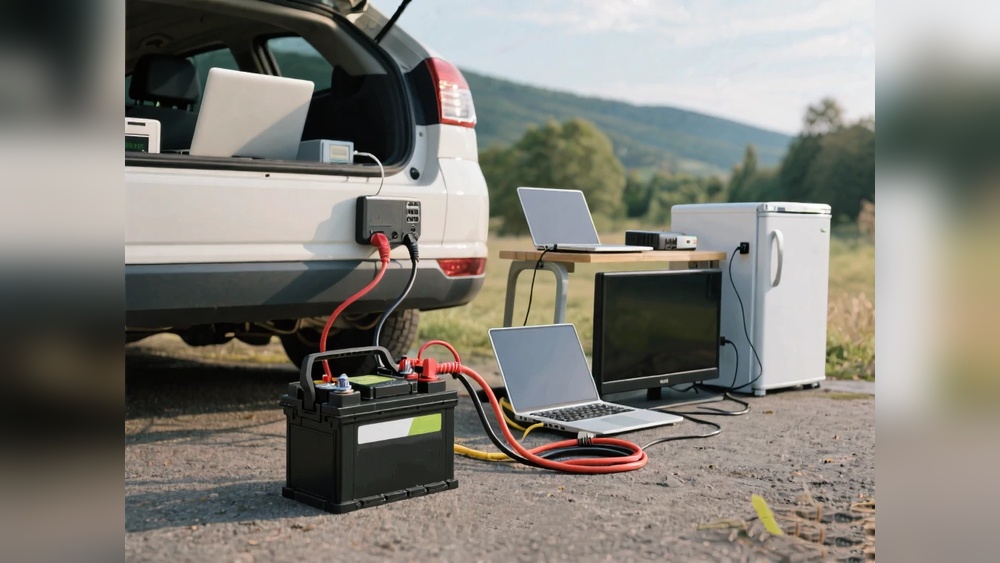
When the power goes out, many people rely on inverters to keep their homes and offices running. But a common question is: can your inverter really run all your appliances, and what happens to your battery drain? This is not just a technical question. It matters for your daily life, comfort, and even the safety of your electrical devices.
Understanding how inverters and batteries work together can help you avoid problems and make your backup system last longer. Many new users are surprised when their battery drains faster than expected, or when their favorite appliances won’t work during a blackout.
Let’s explore how inverters handle different appliances, why battery drain happens, and what you can do to manage it better.
How Inverters Work With Appliances
An inverter changes DC (direct current) electricity from your battery to AC (alternating current) electricity, which most home appliances need. The main job of an inverter is to power your devices when the main grid is not available.
But not all appliances are the same. Some use more power, while others need less. For example, a light bulb and a refrigerator both use AC, but their power demands are very different. The inverter has to match both the wattage and the type of load.
- Resistive loads: These are simple devices like lights, fans, or heaters. They draw a steady amount of power.
- Inductive loads: These include appliances with motors, like refrigerators, pumps, or air conditioners. These can require a high starting power (called surge power) that is much higher than their normal running power.
The inverter’s wattage rating tells you how much total power it can handle at once. For example, if you have a 1000W inverter, you can run appliances that add up to 1000 watts at the same time.
Common Appliances And Their Power Needs
Every appliance uses a different amount of electricity. Understanding these needs is the first step in managing battery drain. Here are some average wattages for common household items:
| Appliance | Average Power (Watts) | Type of Load |
|---|---|---|
| LED Bulb | 10 | Resistive |
| Ceiling Fan | 70 | Resistive |
| Television | 120 | Resistive |
| Refrigerator | 180 (running), 600 (start) | Inductive |
| Desktop Computer | 150 | Resistive |
| Air Conditioner (1 Ton) | 1200 | Inductive |
As you can see, some appliances need much more power than others. Starting motors (like in refrigerators or air conditioners) can require 2–3 times their normal running power for a few seconds.
Why Battery Drain Happens
Battery drain means the battery’s stored energy is used up, and it happens faster when more or bigger appliances run at the same time. The main reasons are:
- High Power Loads: Running high-wattage devices uses more energy per hour.
- Long Use Time: Keeping appliances on for many hours drains the battery faster.
- Inefficiency: Inverters lose about 10–20% of energy as heat. So not all battery power reaches the appliances.
- Battery Age and Health: Old or poorly maintained batteries hold less charge.
Let’s look at a quick calculation. If you have a 150Ah 12V battery, you have about 1800 watt-hours (150 x 12) of stored energy. If you run a 200W TV and a 70W fan, you use 270W per hour. In theory, your battery could run them for about 6 hours (1800/270), but in real life, inverter loss and battery aging mean it may last only about 4–5 hours.
Can Inverter Run All Appliances?
Many people ask: can an inverter run all my home appliances? The short answer is no. Here’s why:
- Power Limit: If your inverter is rated for 800W, you cannot run devices that need more than 800W together.
- Surge Power: Some appliances like fridges or pumps need extra power to start. If the inverter’s surge rating is too low, it may trip or fail.
- Type of Inverter: Pure sine wave inverters can run sensitive electronics and all types of loads. Modified sine wave inverters may not work well with certain appliances (like medical equipment or some motors).
Large appliances like air conditioners or washing machines often need inverters above 1500W and strong batteries. Most home inverters are designed for lights, fans, TVs, and small devices.

Credit: www.anernstore.com
Battery Size And Backup Time
Choosing the right battery size is key for good backup. The battery’s capacity (measured in Ah, amp-hours) tells you how much energy it can store. The bigger the battery, the longer your inverter can run your appliances.
Here’s a simple guide:
- Calculate total load: Add up the wattage of all appliances you want to run.
- Estimate backup time: Decide how many hours you want these devices to run.
- Choose battery size: Multiply total load (in watts) by backup time (in hours), then divide by battery voltage (usually 12V or 24V).
For example, if you want to run 300W load for 5 hours on a 12V system:
300W x 5h = 1500Wh; 1500 / 12 = 125Ah battery needed (plus at least 10% more for inverter loss).
| Appliances | Total Load (W) | Backup Time (hours) | Battery Size (Ah at 12V) |
|---|---|---|---|
| 3 bulbs + 2 fans | 200 | 4 | 75 |
| 1 fridge + 2 bulbs | 220 | 5 | 100 |
| TV + laptop + fan | 250 | 6 | 125 |
Remember, using old or low-quality batteries reduces backup time and can damage appliances.
Factors That Increase Battery Drain
Many users are surprised by fast battery drain. Besides running big appliances, here are some less obvious reasons:
- Standby Power Draw: Even when not in use, TVs, microwaves, and routers can draw small amounts of power. This adds up over time.
- Inverter Quality: Cheap inverters may waste more energy as heat. High-quality inverters have lower losses.
- Temperature: Batteries work best at room temperature. High heat or cold reduces their capacity.
- Wiring Losses: Long, thin wires lose power as heat, making the system less efficient.
One non-obvious tip: unplug chargers and electronics when not in use. Even standby mode slowly drains your battery during an outage.
Matching Inverter, Battery, And Appliances
For the best experience, your inverter, battery, and appliance load must match. Here’s how to pair them:
- Check total appliance wattage.
- Choose an inverter that can handle the total wattage plus any surge required.
- Pick a battery that can support the load for the desired backup time.
- Use pure sine wave inverter for sensitive electronics or motor loads.
If you mismatch (e. g. , small inverter with a big fridge), you risk overloading the inverter, damaging the battery, or even fire hazards.
How To Reduce Battery Drain
To make your battery last longer, consider these tips:
- Use energy-efficient appliances like LED bulbs and inverter fans.
- Limit the number of appliances running at the same time.
- Switch off appliances when not needed.
- Maintain your battery by checking water level (for lead-acid) and cleaning terminals.
- Upgrade to higher capacity batteries if you need longer backup.
Switching to LED lights alone can reduce power use by 80% compared to old bulbs.
Real-life Example
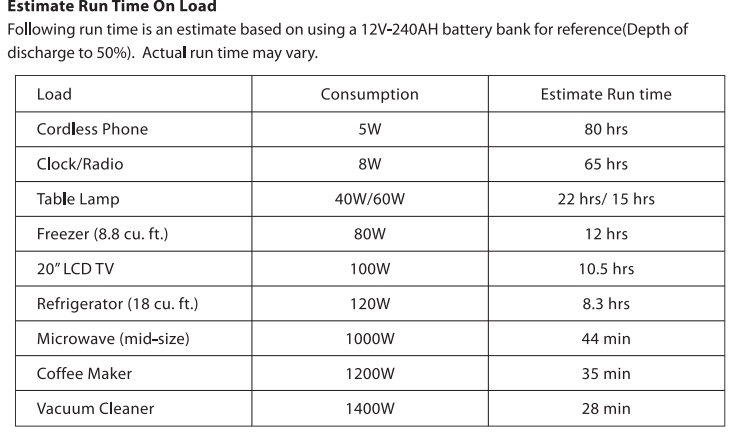
Suppose you use a 100Ah battery and a 600W inverter. During a power cut, you run two fans (140W), three LED bulbs (30W), and your Wi-Fi router (10W). Total load = 180W.
- Battery energy = 100Ah x 12V = 1200Wh
- Real backup time (considering 15% inverter loss): 1200 x 0.85 / 180 = about 5.6 hours
If you add a fridge (running 180W, starting 600W), your inverter may handle the load, but backup time drops to about 3 hours.
Common Mistakes When Using Inverters With Appliances
Many first-time users make these errors:
- Ignoring surge ratings: Appliances with motors need high starting power. Always check inverter surge capacity.
- Underestimating total load: Small devices add up. Forgetting phone chargers, routers, or small lights can reduce backup time.
- Using old batteries: Batteries lose storage over time. Replace them every 3–4 years for best results.
- Overloading the inverter: Running too many devices at once can cause the inverter to shut down suddenly.
It’s better to run fewer devices for longer backup than to overload the system and risk damage.
Credit: enerdrive.com.au
Should You Use All Appliances On Inverter Power?
You should not use every appliance during a power outage. High-power devices like air conditioners, irons, or microwaves need a large inverter and battery bank, which are expensive and not practical for most homes.
Focus on running essential appliances: lights, fans, internet, and maybe a small fridge. This keeps your battery from draining too fast and ensures backup power lasts until the main supply returns.
How Different Inverter Types Affect Battery Drain
There are two main types of inverters: pure sine wave and modified sine wave.
- Pure sine wave: Best for all appliances, especially sensitive electronics and motors. More efficient, so less battery drain.
- Modified sine wave: Cheaper, but less efficient. Some devices (like fridges, laptops, or medical equipment) may not work properly or may wear out faster.
Choosing the right inverter type reduces battery waste and protects your appliances.

Credit: www.portablepowertech.com
Battery Maintenance And Its Impact
A well-maintained battery lasts longer and gives more reliable backup. Poor maintenance increases battery drain and risk of failure.
- Check water levels (for lead-acid batteries) every month.
- Clean terminals to prevent rust and poor connections.
- Avoid deep discharge: Don’t let battery go below 50% if possible. Deep discharge shortens battery life.
- Charge fully after each use: Incomplete charging leads to less stored energy.
Investing a few minutes in maintenance can add years to your battery’s life.
Comparing Inverter Systems For Battery Drain
Let’s look at how different inverter systems affect battery drain:
| System Type | Efficiency (%) | Suitable For | Battery Drain (per hour @ 200W load) |
|---|---|---|---|
| Pure Sine Wave | 90 | All Appliances | ~222Wh |
| Modified Sine Wave | 80 | Basic Loads | ~250Wh |
| Low-Quality Inverter | 70 | Small Loads | ~285Wh |
A more efficient inverter gives longer backup from the same battery. That’s why it pays to buy quality.
Final Thoughts
An inverter can make life easier during power cuts, but it cannot run every appliance for unlimited time. Battery drain depends on the total load, how long you use your devices, inverter efficiency, and battery health. By choosing the right combination of inverter and battery, using energy-efficient appliances, and maintaining your system well, you can enjoy reliable backup power without surprises.
If you plan to upgrade your inverter or battery, check the latest guides and product reviews to find the best fit for your needs. For more technical details, you can visit this Wikipedia page on power inverters.
Frequently Asked Questions
How Do I Calculate Which Appliances My Inverter Can Run?
First, add up the wattage of all appliances you want to use at the same time. Make sure the total is less than your inverter’s power rating. Also, check if any device (like a fridge) needs extra surge power when starting.
Does Running A Fridge On Inverter Drain The Battery Fast?
Yes, fridges use more power, especially at startup. They can drain the battery quickly, so only run a fridge if your inverter and battery are large enough.
Why Does My Inverter Battery Not Last As Long As Expected?
Common reasons include running too many appliances, an old or weak battery, poor maintenance, or using an inefficient inverter. Hidden loads like chargers also use power even when not in active use.
Can I Run My Air Conditioner On An Inverter?
Most home inverters cannot run air conditioners unless they are very high-powered models (above 1500W) with big battery banks. Running an AC will drain the battery very fast.
How Can I Make My Inverter Battery Last Longer?
Use only essential appliances, switch to LED bulbs, keep your battery well maintained, and choose a high-quality, efficient inverter. Reducing the load and using energy-saving devices makes a big difference.
Disclosure: As an Amazon Associate, I may earn from qualifying purchases at no extra cost to you. Amazon and the Amazon logo are trademarks of Amazon.com, Inc, or its affiliates.
