
Building a sleeping platform for your SUV can change road trips forever. Imagine having a cozy, flat bed inside your vehicle, ready for camping, overnight stops, or long journeys. It saves hotel costs, increases privacy, and brings flexibility to your travel plans.
Many people think only experts can build these platforms, but with the right guidance and materials, almost anyone can do it. This article will walk you through every step, from planning and material choices to building, installing, and optimizing your SUV sleeping platform.
You’ll also learn helpful tips, common mistakes to avoid, and answers to frequent questions. If you want to sleep comfortably in your SUV, you’re in the right place.
Planning Your Suv Sleeping Platform
A successful project starts with clear planning. Before you buy anything or cut wood, you need to understand your SUV’s space, your needs, and your budget.
Measuring Your Suv
First, measure the interior of your SUV. Check the length from the back seat (when folded down) to the tailgate, the width between the wheel wells, and the height to the roof. Write these numbers down. Most SUVs have a cargo length between 65–85 inches and width between 40–52 inches.
Height varies, but always consider headroom for sitting up.
Non-obvious insight: Many beginners forget to check if the seats fold completely flat. Even a small bump can affect your sleeping comfort and platform design.
Deciding Platform Features
Think about your needs. Do you want storage under the platform? Will you sleep solo or with a partner? Do you need a platform that folds or slides? Make a list of must-have features. For example, storage drawers, folding panels, or a removable platform are common requests.
Budgeting
Prices can vary. Simple platforms may cost $100–$200. More advanced designs (with drawers, high-quality plywood, and hardware) can reach $300–$500. Decide how much you want to spend. Set aside extra for tools or unexpected costs.
Choosing Materials And Tools
Picking the right materials makes your platform strong and safe. Here’s what you need:
Core Materials
- Plywood: Most platforms use ½” or ¾” plywood. Choose birch plywood for strength and smooth finish. One sheet (4×8 feet) covers most SUVs.
- 2×4 lumber: Used for support legs or framing.
- Carpet or foam: For a soft surface. Carpet protects wood and improves comfort.
- Screws and brackets: To secure pieces together.
- Wood glue: Adds strength.
Tools
You’ll need:
- Circular saw or jigsaw: To cut plywood.
- Drill and bits: For screws and holes.
- Tape measure: For accuracy.
- Sandpaper: To smooth edges.
- Stapler: For attaching carpet.
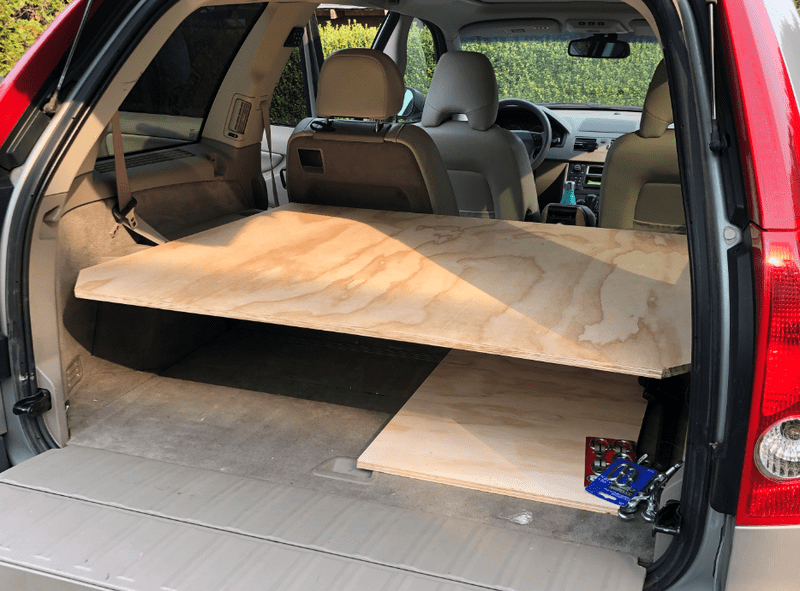
Non-obvious insight: Some SUVs have uneven floors. Consider adjustable legs or shims for leveling.
Credit: getpackup.com
Designing Your Platform
A good design balances comfort, storage, and flexibility. Here are popular designs:
Simple Flat Platform
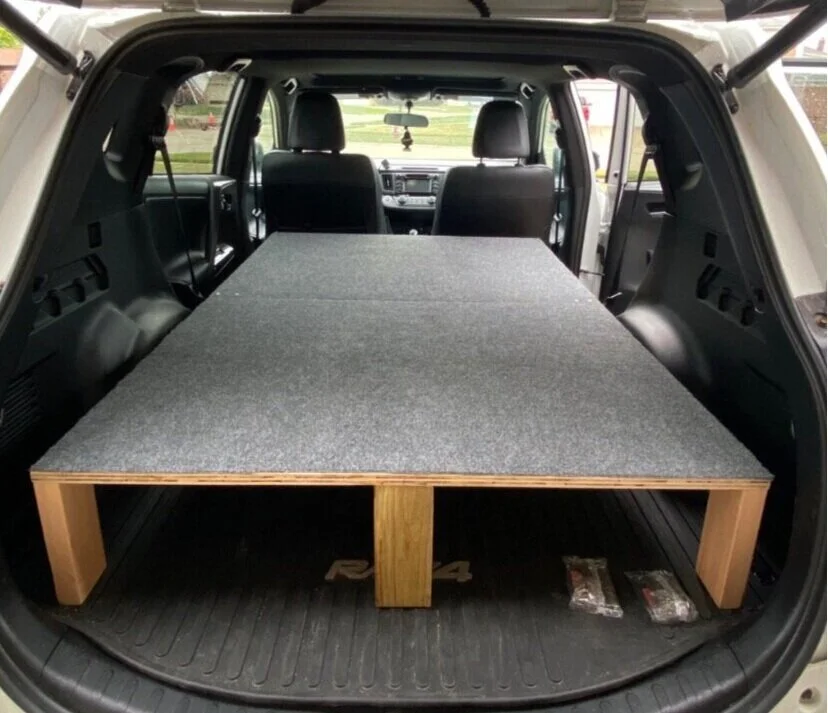
This is just a flat board across your SUV’s cargo area. It’s easy to build, affordable, and best for solo travelers or minimal storage.
Platform With Storage Drawers
Add drawers or bins under the bed. This is perfect for gear, clothes, and food storage. Drawers should slide easily and be strong enough to hold weight.
Foldable Platform
Some platforms fold up, slide out, or split into sections. This gives you access to the back seats when needed. Hinges and locking mechanisms help with folding designs.
Removable Platform
If you use your SUV for work or family, a removable platform is best. Design it in parts that fit together without permanent screws.
Below is a comparison of basic designs:
| Design | Build Difficulty | Storage | Flexibility |
|---|---|---|---|
| Flat Platform | Easy | Minimal | Low |
| Drawers Platform | Moderate | High | Medium |
| Foldable Platform | Advanced | Medium | High |
| Removable Platform | Moderate | Medium | High |
Building The Platform Step-by-step
It’s time to build. Here’s a step-by-step guide, with practical advice and examples.
Step 1: Sketch Your Design
Draw your platform on paper. Mark where supports, storage, and hinges go. Use your SUV’s measurements. This helps visualize and avoid mistakes.
Step 2: Cut Materials
Lay plywood on a flat surface. Mark your cut lines. Use a circular saw for straight cuts; a jigsaw for curved corners. Sand all edges after cutting.
Practical tip: Always double-check measurements before cutting. It’s better to cut slightly larger than needed, then trim.
Step 3: Build The Frame
If you want extra strength, build a frame using 2×4 lumber. Attach the frame to the plywood using screws and wood glue. Make sure the frame fits between the wheel wells.
Step 4: Add Supports And Legs
Some SUVs have uneven floors. Add legs or blocks to support the platform. Legs should be placed near corners and in the middle for stability. Adjustable legs are useful for leveling.
Step 5: Install Storage
If you’re adding drawers, build them separately. Use wood glue and screws to assemble. Install drawer slides or simple bins. Make sure drawers open easily and don’t block access.
Step 6: Finish Surface
Cover the platform with carpet or foam. Use a stapler to attach carpet. Carpet reduces noise and adds comfort.
Step 7: Install In Suv
Carefully place the platform inside your SUV. If your platform is removable, assemble it in parts. Make sure nothing blocks seat belts or emergency exits.
Step 8: Test For Comfort
Lie down on the platform. Check for bumps, uneven spots, or squeaks. Adjust legs or add foam if needed. Test drawers and storage.
Example: Building For A Toyota Rav4
A Toyota RAV4 has a cargo length of about 71 inches and width of 48 inches. A single sheet of plywood fits well. Drawers work best if placed behind the wheel wells. Foldable panels allow access to back seats.
Practical Tips For Comfort And Safety
A platform is only part of the equation. Comfort and safety matter too.
- Use a foam mattress or sleeping pad on top. 2–4 inches of foam works well.
- Ventilate your SUV while sleeping. Crack a window for airflow. Use mesh screens to keep bugs out.
- Keep a flashlight, water, and emergency kit within reach.
- Block windows with curtains or reflective covers for privacy and insulation.
- Don’t overload drawers—weight can damage slides or supports.
Non-obvious insight: Many people forget to check battery drain from using lights or fans overnight. Use portable battery packs for electronics.
Mistakes To Avoid
Building a sleeping platform can be fun, but common mistakes can ruin your plans.
- Ignoring seat shape: Some seats do not fold flat. Test before building.
- Using thin plywood: Plywood under ½” may bend or break.
- Overcomplicating design: More moving parts mean more things that can break.
- Blocking access: Make sure you can reach spare tire, tools, and seat belts.
- Skipping ventilation: Poor airflow makes sleeping uncomfortable or unsafe.
Credit: feliciafullwood.com
Comparing Popular Suvs For Platforms
Some SUVs are more platform-friendly than others. Here’s a comparison:
| SUV Model | Cargo Length (inches) | Cargo Width (inches) | Seat Fold Flat? |
|---|---|---|---|
| Toyota RAV4 | 71 | 48 | Yes |
| Honda CR-V | 75 | 49 | Yes |
| Ford Escape | 68 | 47 | No |
| Subaru Forester | 72 | 48 | Yes |
Choose an SUV that fits your height and gear. Measure before buying materials.
Optimizing Your Sleeping Platform
Once built, you can upgrade and personalize your platform:
- Add LED lights for reading or nighttime setup.
- Install USB chargers using portable power packs.
- Use velcro straps to secure drawers and panels.
- Attach hooks under the platform for hanging bags or clothes.
- Paint or stain wood for durability and style.
Non-obvious insight: Modular upgrades (like removable bins or panels) make cleaning and maintenance easier.
Real-world Example: Weekend Camper Setup
Jane, a weekend camper, built a platform for her Honda CR-V. She used ¾” birch plywood, three adjustable legs, and two storage bins. The platform cost $170 and took one weekend. Jane added a 3-inch foam mattress, LED lights, and window covers. She reports sleeping comfortably even during cold nights. Jane’s tip: “Test your layout before screwing anything. Small changes made a big difference.”
Safety Considerations
Safety is critical when sleeping in your SUV.
- Always park in safe, legal locations.
- Keep emergency exits clear.
- Avoid blocking airbags or seat belts.
- Install smoke or carbon monoxide detectors if using portable heaters.
- Don’t store heavy objects above your head—these can fall during sudden stops.
For more details on vehicle camping safety, visit National Park Service.

Credit: www.youtube.com
Frequently Asked Questions
Is It Legal To Sleep In My Suv?
Laws depend on location. Many places allow overnight parking, but some cities restrict sleeping in vehicles. Always check local rules and park in safe areas.
How Thick Should The Plywood Be?
Most builders use ½” to ¾” plywood. Thicker plywood is stronger but heavier. For most SUVs, ¾” is safe for two adults.
Can I Build A Platform Without Tools?
Basic tools are needed: a saw, drill, and tape measure. Borrow or rent tools if you don’t own them. Simple designs require fewer tools.
Will A Platform Fit In Any Suv?
Most SUVs can fit a platform, but cargo space and seat shape matter. Measure carefully and check if seats fold flat.
How Do I Keep The Platform From Moving?
Use velcro straps, bolts, or non-slip pads to secure the platform. Removable designs use snug fits and blocks to prevent shifting.
Building your own SUV sleeping platform brings freedom and comfort to road trips and camping. With careful planning, smart material choices, and practical building steps, you can create a space that matches your needs and budget. Don’t rush—measure twice, build once, and test for comfort.
Soon, you’ll enjoy restful nights wherever your adventures take you.
Disclosure: As an Amazon Associate, I may earn from qualifying purchases at no extra cost to you. Amazon and the Amazon logo are trademarks of Amazon.com, Inc, or its affiliates.
