
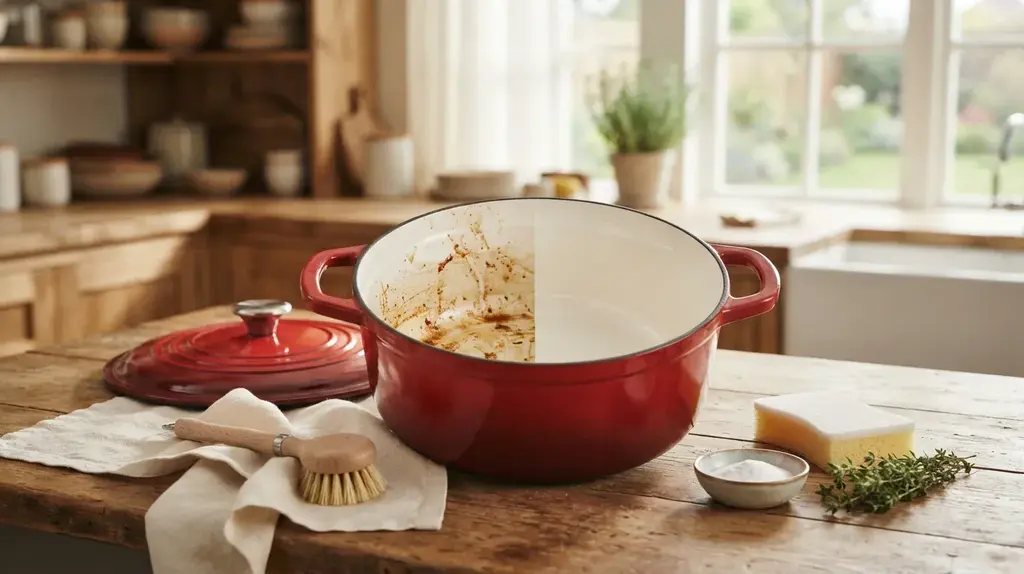
A Dutch oven is made for cooking hearty meals, from slow-cooked beef stew and homemade soups to roasted chicken and fresh sourdough bread. But after a good meal, there is often one less enjoyable job waiting in the kitchen: cleaning the pot.
Burnt food, greasy residue, dark stains, and stuck-on sauce can make a Dutch oven look much worse than it really is. If you have an expensive enameled pot, you may also worry about scratching the surface while trying to remove stubborn marks.
The good news is that cleaning a Dutch oven usually does not require harsh chemicals or aggressive scrubbing. The right method depends mainly on whether your cookware is made from bare cast iron or enameled cast iron.
These two materials need different care. Bare cast iron needs protection from rust, while enameled cookware needs protection from scratches, chips, and sudden temperature changes.
In this guide, you will learn how to clean a Dutch oven after everyday cooking, remove burnt food, deal with stubborn stains, clean the exterior, and maintain your cookware for years of use. We will also look at useful cleaning accessories that can make the job easier.
How Do You Clean a Dutch Oven?
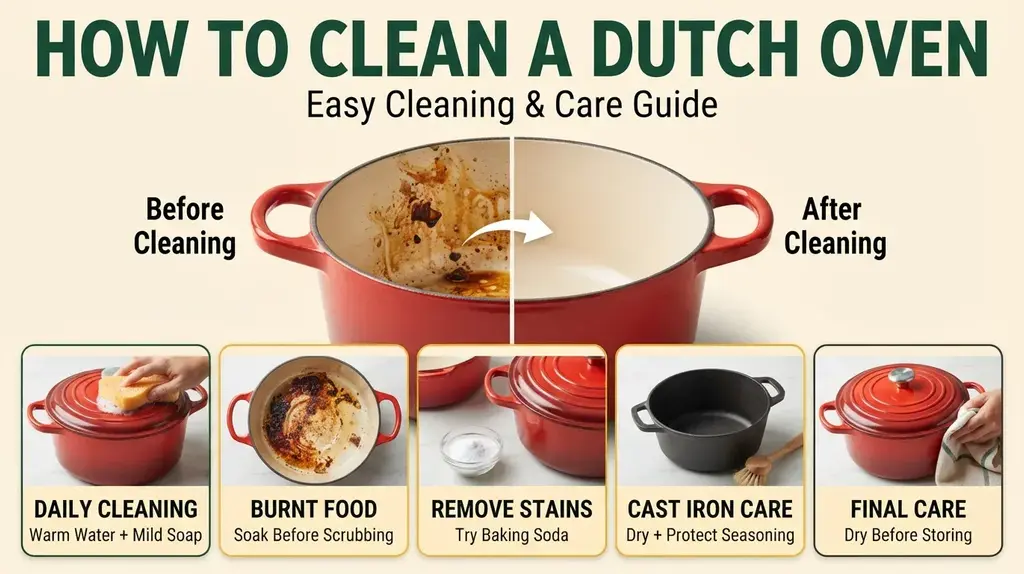
To clean a Dutch oven, allow it to cool, remove leftover food, wash it using warm water and an appropriate cleaning tool, rinse thoroughly, and dry it completely.
The exact method depends on the material:
- Enameled Dutch oven: Use warm water, mild dish soap, and a soft sponge or nylon brush. For burnt food, try soaking or simmering water with baking soda according to the manufacturer’s instructions.
- Bare cast iron Dutch oven: Use warm water and a suitable brush or scraper. Wash without prolonged soaking, dry immediately, and apply a very thin layer of cooking oil when appropriate.
Avoid metal scouring pads on enamel, sudden temperature changes, and leaving bare cast iron wet after cleaning.
First, Identify Your Dutch Oven Type
Before reaching for a sponge or cleaning product, take a look inside your cookware. The surface will tell you which cleaning method to use.
This guide may help you more: What Size Dutch Oven for Sourdough
1. Enameled Cast Iron Dutch Oven
An enameled Dutch oven has a smooth, glass-like coating bonded to the cast iron underneath. The coating is available in different colours, although cream and white interiors are especially common.
Because the enamel covers the iron cooking surface, you do not need to season it like traditional bare cast iron.
It is generally easier to clean because food residue can often be removed using warm water, mild dish soap, and a non-abrasive sponge.
However, the enamel can become scratched or chipped if you use aggressive cleaning tools or expose it to sudden temperature changes.
2. Traditional Bare Cast Iron Dutch Oven
A traditional cast iron Dutch oven has a dark, seasoned cooking surface without an enamel coating.
Its seasoning is created through layers of polymerized cooking oil. This protective surface helps reduce sticking and protects the iron from rust.
Cleaning this type of Dutch oven requires a slightly different approach. You can use a little dish soap when needed, but you should avoid prolonged soaking and dry the cookware promptly.
After cleaning, a very thin layer of cooking oil may help maintain the seasoning.
| Cleaning Feature | Enameled Cast Iron | Bare Cast Iron |
|---|---|---|
| Dish soap | Yes | Yes, when needed |
| Soaking | Generally suitable | Avoid prolonged soaking |
| Soft sponge | Recommended | Suitable |
| Metal scrubber | Avoid | Use only appropriate tools carefully |
| Drying | Dry thoroughly | Dry immediately and completely |
| Seasoning | Not required | Required for bare cast iron |
| Rust prevention | Protect exposed iron edges | Maintain seasoning and keep dry |
How to Clean an Enameled Dutch Oven
Enameled cast iron is popular because it combines the heat retention of cast iron with a relatively easy-to-maintain cooking surface.
For everyday cleaning, you usually need only a few basic supplies.
What You Will Need
- Warm water
- Mild dish soap
- Soft non-scratch sponge
- Soft nylon cleaning brush
- Clean microfiber or dish towel
- Non-abrasive pan scraper, if necessary
Step 1: Allow the Dutch Oven to Cool
After cooking, remove the Dutch oven from the heat and allow it to cool before washing.
Never pour cold water into a very hot enameled pot. A sudden temperature change can cause thermal shock, potentially damaging the enamel.
Step 2: Remove Leftover Food
Empty the pot and remove leftover food using a wooden, silicone, or suitable plastic utensil.
Avoid scraping the surface with sharp metal tools. Even a small scratch can affect the appearance of the enamel.
Step 3: Wash with Warm Soapy Water
Fill the Dutch oven with warm water and add a small amount of mild dish soap.
Use a soft sponge or nylon brush to clean the interior and exterior. Pay attention to the bottom, sides, rim, and areas around the handles.
Step 4: Rinse Thoroughly
Once the residue is removed, rinse the pot with clean water.
Make sure no soap remains around the edges or inside the handles.
Step 5: Dry Completely
Use a clean dish towel to dry the entire pot.
Pay particular attention to the exposed cast iron rim, handles, and lid edges, where moisture may collect.
Store the Dutch oven only after it is completely dry.
Helpful tip: Hand washing is generally the better choice for preserving the appearance of enameled cookware, even when the manufacturer lists a model as dishwasher-safe.
How to Clean a Bare Cast Iron Dutch Oven
Traditional cast iron needs a little more attention, but the cleaning process is straightforward once you understand how seasoning works.
The goal is to remove food residue without unnecessarily stripping away the protective seasoning layer.
Step 1: Remove Leftover Food
After cooking, allow the Dutch oven to cool enough for safe handling.
Use a suitable pan scraper, wooden spatula, or cast iron brush to remove leftover food.
Step 2: Wash with Warm Water
Use warm water and a suitable cleaning brush or sponge.
A small amount of mild dish soap is fine when needed. Modern dish soaps do not automatically destroy properly maintained cast iron seasoning.
Avoid leaving the pot submerged in water for an extended period.
Step 3: Remove Stuck-On Food Gently
If food is stuck to the surface, add some warm water and allow it to soften briefly.
A pan scraper or appropriate cast iron cleaning brush can help remove the residue.
Step 4: Rinse and Dry Immediately
Rinse the Dutch oven and dry it thoroughly with a towel.
For additional protection, place it over low heat briefly to evaporate remaining moisture. Do not leave it unattended.
Step 5: Apply a Thin Layer of Oil
Once dry, apply a very thin layer of suitable cooking oil to the cooking surface when needed.
Wipe away excess oil with a clean paper towel. The surface should look lightly conditioned rather than wet or sticky.
Step 6: Store in a Dry Place
Store your cast iron Dutch oven in a dry cupboard.
If you keep the lid on, allow airflow between the lid and pot to reduce trapped moisture.
Remember: A properly maintained bare cast iron Dutch oven does not need aggressive cleaning after every use. The important things are removing food residue, preventing rust, and maintaining its seasoning.
How to Remove Burnt Food from a Dutch Oven
Burnt food is one of the most frustrating Dutch oven cleaning problems. Cheese, tomato sauce, caramelized onions, and thick gravies can leave stubborn residue at the bottom of the pot.
Instead of immediately reaching for a metal scrubber, try a gentler approach first.
Method 1: Soak with Warm Soapy Water
This is a good starting point for enameled cast iron.
- Allow the pot to cool.
- Add warm water and mild dish soap.
- Leave it to soak for approximately 15–20 minutes.
- Use a soft sponge or nylon brush to loosen the residue.
- Rinse and dry thoroughly.
If the food is still firmly attached, move on to the baking soda method.
Method 2: Use Baking Soda and Water
Baking soda can help loosen stubborn food residue inside an enameled Dutch oven.
- Allow the cookware to cool before adding water.
- Add enough water to cover the affected area.
- Mix in approximately one or two tablespoons of baking soda.
- Bring the mixture to a gentle simmer for around 8–10 minutes, if approved for your model.
- Turn off the heat and allow the mixture to cool.
- Gently loosen softened food using a wooden utensil or non-abrasive scraper.
- Wash, rinse, and dry the pot.
Follow your cookware manufacturer’s instructions before heating a cleaning solution inside the pot.
Method 3: Baking Soda Paste for Stubborn Marks
For certain surface stains on enamel, a simple baking soda paste may help.
- Mix baking soda with a little water to form a paste.
- Apply it to the stained area.
- Allow it to sit briefly.
- Gently rub using a soft sponge.
- Rinse thoroughly and dry.
Avoid aggressive scrubbing. If the mark does not disappear easily, check the manufacturer’s recommended cookware cleaner.
How to Remove Brown or Black Stains from an Enameled Dutch Oven
Sometimes your Dutch oven looks dirty even after all the food has been removed.
Brown, grey, or dark marks can develop on enamel over time. These marks may come from cooking oils, heat exposure, mineral deposits, or food ingredients.
Not every stain means the enamel is damaged.
1. Start with a Normal Wash
Wash the pot with warm water and mild dish soap.
Some stains become less noticeable after removing grease and surface residue.
2. Try Baking Soda
For light stains, use a small amount of baking soda and water to create a gentle paste.
Apply it carefully and wipe with a soft sponge. Rinse thoroughly afterward.
3. Consider a Cookware-Specific Cleaner
If the stains remain, consider a cleaner designed for enameled cast iron or ceramic cookware.
Follow the product instructions carefully and check whether the cleaner is suitable for your specific enamel finish.
4. Understand When a Stain Is Only Cosmetic
Some discoloration is normal with regular use. A small amount of staining does not necessarily affect the cooking performance of an enameled Dutch oven.
However, visible chips, cracks, or exposed iron on the cooking surface are different issues. Do not treat structural enamel damage as an ordinary stain.
Important: Do not mix bleach, vinegar, ammonia, or other household cleaners. Some combinations can release dangerous gases. Only use a manufacturer’s specifically approved stain-removal method and never improvise chemical mixtures.
How to Clean the Outside and Bottom of a Dutch Oven
The exterior of your Dutch oven can collect grease, cooking splashes, and dark residue, especially when you use it frequently on the stovetop.
Cleaning the outside requires care because the exterior finish may have different cleaning requirements from the cooking surface.
For Enameled Exterior Surfaces
- Allow the cookware to cool.
- Use warm water and mild dish soap.
- Wipe the surface with a soft sponge or cloth.
- Use an approved cookware cleaner for persistent marks.
- Rinse and dry completely.
For Bare Cast Iron Exterior Surfaces
- Remove loose grease and food residue.
- Clean using an appropriate brush or cloth.
- Avoid prolonged water exposure.
- Dry thoroughly.
- Maintain the seasoning where required.
Do not use the same aggressive cleaning method on every surface. Check the manufacturer’s care instructions, especially if your pot has a decorative finish or exposed iron edges.
Best Cleaning Tools for a Dutch Oven
You do not need an expensive cleaning kit to maintain a Dutch oven. However, a few useful accessories can make everyday cleanup easier and reduce the temptation to scrub too aggressively.
1. Non-Scratch Cleaning Sponge
A non-scratch sponge is one of the most useful accessories for enameled Dutch ovens.
It helps remove ordinary grease and food residue without using the harsh abrasive surface of a metal scouring pad.
Look for a sponge specifically labelled safe for delicate or non-stick cookware surfaces.
2. Nylon Cleaning Brush
A soft nylon brush can reach corners, edges, and areas around handles that a flat sponge may miss.
It is especially useful for cleaning around the curved bottom of a Dutch oven.
3. Plastic or Silicone Pan Scraper
A suitable non-metal scraper helps remove stuck-on food without relying on excessive pressure.
Choose a scraper designed for cookware and check that it is safe for your particular surface.
4. Microfiber Cleaning Cloth
A microfiber cloth is useful for drying cookware and removing remaining water marks.
It can also help clean the exterior and lid without scratching the finish.
5. Cast Iron Cleaning Brush
If you own a bare cast iron Dutch oven, a brush designed for traditional cast iron can help remove food residue while maintaining a practical cleaning routine.
Choose a brush appropriate for the seasoning and follow the manufacturer’s maintenance guidance.
Recommended Dutch Oven Cleaning Products
If you want to make cleaning easier, these product categories and established brands are worth comparing before purchasing.
1. Lodge Cast Iron Scrub Brush
Best for: Traditional bare cast iron cookware
Lodge is a well-known American cast iron cookware brand. Its cast iron cleaning accessories are worth considering if you regularly use traditional cast iron Dutch ovens and skillets.
A suitable cast iron brush can help remove food residue without requiring excessive scrubbing by hand.
Pros
- Designed for cast iron cleaning
- Useful for stuck-on food
- Reusable accessory
- Convenient for regular maintenance
Cons
- Not necessary for every pot
- Check suitability for enamel
- Needs cleaning after use
2. Non-Scratch Kitchen Sponges
Best for: Everyday enameled Dutch oven cleaning
Non-scratch kitchen sponges are useful for removing ordinary grease, food residue, and light stains from delicate cookware surfaces.
Choose a product that specifically states it is suitable for enamel or other delicate cookware.
Pros
- Useful for daily cleaning
- Gentle on suitable enamel surfaces
- Easy to use
- Usually inexpensive
Cons
- May not remove heavy burnt residue alone
- Needs regular replacement
- Quality varies by product
3. Nylon Cookware Cleaning Brush
Best for: Cleaning corners and difficult areas
A nylon cleaning brush can be useful when food residue collects around the bottom edges, handles, or curved surfaces of a Dutch oven.
Look for soft, non-metal bristles suitable for your cookware finish.
Pros
- Reaches difficult corners
- Useful for regular washing
- Reusable design
- Easy to rinse
Cons
- Brush stiffness varies
- Not all brushes suit enamel
- Needs proper drying
Check Cleaning Brushes on Amazon
4. Enameled Cast Iron Cookware Cleaner
Best for: Persistent stains and surface marks
A cookware-specific cleaner can help remove certain stubborn stains, grease residue, and marks from compatible enameled cast iron surfaces.
Le Creuset and Lodge offer cookware care products designed for their respective product ranges. Check the label and manufacturer instructions before choosing a cleaner for another brand.
Pros
- Designed for cookware care
- Useful for certain stubborn marks
- Convenient for occasional deep cleaning
- Brand-specific options available
Cons
- Extra purchase cost
- Not necessary for everyday cleaning
- Compatibility varies by finish
Check Cookware Cleaners on Amazon
Common Dutch Oven Cleaning Mistakes to Avoid
Some cleaning habits can shorten the life of your cookware or make stubborn stains even harder to remove.
1. Washing a Hot Enameled Dutch Oven with Cold Water
Sudden temperature changes can cause thermal shock and damage the enamel.
Allow the pot to cool before washing.
2. Using Steel Wool on Enamel
Steel wool and aggressive metal scrubbers can scratch or damage the enamel finish.
Choose a soft sponge, nylon brush, or manufacturer-approved cleaner instead.
3. Leaving Bare Cast Iron Wet
Moisture can cause rust on uncoated cast iron.
Dry the pot immediately after washing and store it in a dry place.
4. Soaking Bare Cast Iron Overnight
Extended water exposure can weaken the protective seasoning and encourage rust.
Use a brief cleaning process instead.
5. Using Harsh Cleaners Without Checking Compatibility
Some cleaning products may damage enamel, exterior coatings, or other cookware components.
Always check the manufacturer’s instructions before using specialist cleaners.
6. Scrubbing Harder Than Necessary
More pressure does not always mean better cleaning.
Soaking and gently loosening residue is often more effective than aggressively scrubbing the surface.
How to Maintain Your Dutch Oven for Years
Cleaning after each use is important, but good storage and everyday habits also help maintain cookware.
- Clean the pot after use rather than allowing food residue to remain for extended periods.
- Avoid sudden temperature changes.
- Use appropriate utensils for the cookware surface.
- Dry the pot completely before storing.
- Keep bare cast iron lightly protected with seasoning.
- Use protective pads when stacking enameled cookware.
- Store the lid with a little airflow where possible.
- Check the enamel regularly for chips or cracks.
A small amount of normal staining or discolouration does not necessarily mean that an enameled Dutch oven needs replacing. However, exposed or damaged enamel on the cooking surface deserves attention. Follow the manufacturer’s guidance if you notice chips or cracks.
Where to Buy Dutch Oven Cleaning Accessories
Once you know which cleaning tools you need, comparing products is easier. Amazon offers a range of kitchen sponges, nylon brushes, cookware scrapers, and specialist cleaning products.
Shop from Your Local Amazon Store
Whether you are shopping from the United States, United Kingdom, or Canada, you can use the Amazon product links in this guide to explore cleaning accessories available in your region.
With Amazon OneLink enabled, eligible visitors may be redirected to their local Amazon storefront when they click an affiliate link. This can help shoppers view local product listings, prices, and delivery options.
Availability, product specifications, prices, and shipping costs can vary between countries. Always review the final listing before purchasing.
Buying in the USA
US shoppers can compare cleaning accessories on Amazon.com. Check the product description to make sure the brush, sponge, or cleaner is suitable for the specific Dutch oven material.
Buying in the UK
UK shoppers can explore cookware cleaning products on Amazon.co.uk. Compare product sizes, materials, and manufacturer care recommendations before ordering.
Buying in Canada
Canadian shoppers can compare available options on Amazon.ca. Check the final price in Canadian dollars, delivery charges, and product availability.
Frequently Asked Questions Of How to Clean a Dutch Oven
What is the best way to clean a Dutch oven?
The best method depends on the cookware material. For an enameled Dutch oven, use warm water, mild dish soap, and a soft sponge. For bare cast iron, remove food residue with a suitable brush, wash when needed, dry immediately, and maintain the seasoning.
Can you use dish soap on a Dutch oven?
Yes. Mild dish soap is suitable for both enameled and properly seasoned bare cast iron Dutch ovens when used appropriately. Avoid harsh cleaners that may damage the cookware finish.
How do you remove burnt food from an enameled Dutch oven?
Allow the pot to cool, then soak it with warm soapy water. For stubborn residue, simmer water with one or two tablespoons of baking soda for approximately 8–10 minutes if the manufacturer permits this method. Let it cool and gently remove the softened food with a non-abrasive scraper or sponge.
Can you put an enameled Dutch oven in the dishwasher?
Some enameled Dutch ovens are labelled dishwasher-safe, but frequent dishwasher use may dull the finish over time. Hand washing with mild dish soap and a soft sponge is generally recommended for maintaining the appearance of the cookware.
How do you clean a cast iron Dutch oven without damaging the seasoning?
Remove food residue using a suitable brush or scraper, wash with warm water and a little mild soap when needed, and dry the pot immediately. Apply a very thin layer of cooking oil when appropriate to help maintain the seasoning and protect the surface from rust.
Why does my enameled Dutch oven have brown or black stains?
Brown or black marks can develop from cooking oils, burnt food, heat exposure, and food residue. Some staining is normal and does not necessarily affect cooking performance. Try gentle cleaning with baking soda or a compatible cookware cleaner rather than using aggressive metal scrubbers.
Final Thoughts: Keep Your Dutch Oven Clean and Ready to Use
Learning how to clean a Dutch oven is much easier once you understand the difference between bare cast iron and enameled cast iron.
For an enameled pot, gentle cleaning with warm water, mild dish soap, and a non-abrasive sponge is usually enough. Stubborn residue can often be loosened with soaking or a baking soda cleaning method approved by the manufacturer.
For traditional bare cast iron, focus on removing food residue, avoiding prolonged moisture exposure, drying the cookware completely, and maintaining the seasoning.
You do not need an expensive collection of cleaning products to keep your Dutch oven in good condition. A quality sponge, a suitable brush, and a little patience are enough for most everyday cleaning tasks.
Take care of your Dutch oven after every meal, and it can remain a useful part of your kitchen for many years.
Disclosure: As an Amazon Associate, I may earn from qualifying purchases at no extra cost to you. Amazon and the Amazon logo are trademarks of Amazon.com, Inc, or its affiliates.
