
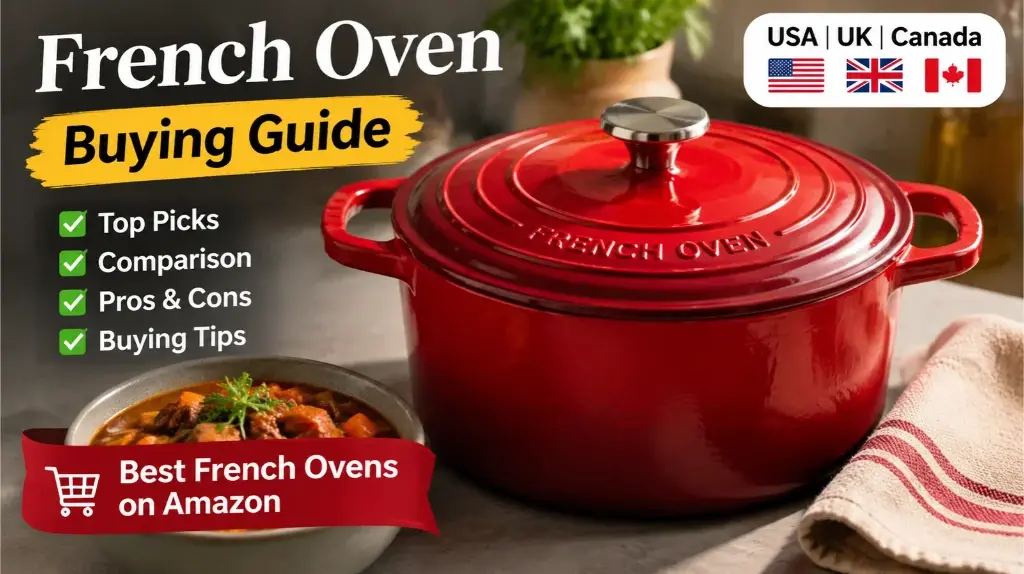
A good French oven can transform the way you cook. From slow-cooked beef stew to homemade sourdough bread, this versatile piece of cookware helps you prepare flavorful meals with less effort. Its heavy construction holds heat well, while the tight-fitting lid helps keep moisture inside.
However, choosing the right French oven is not always easy. There are many brands, sizes, materials, and price points to consider. Some models are designed for everyday cooking, while others focus on premium craftsmanship and long-term durability.
So, which one should you buy?
In this guide, we compare four popular enameled cast iron options, explain what makes a good French oven, and help you choose the right size and style for your kitchen. Whether you live in the United States, the United Kingdom, or Canada, you will find practical advice to make a confident buying decision.
Page Contents
ToggleQuick Answer: What Is the Best French Oven?
For most home cooks, a 5.5- to 6-quart enameled cast iron French oven is a practical starting point.
The Le Creuset Signature Round Dutch Oven is a strong premium choice for everyday cooking. The Staub Round Cocotte is an excellent alternative for cooks who prefer a dark interior and a moisture-retaining lid.
For shoppers with a smaller budget, the Lodge Enameled Cast Iron Dutch Oven and Goldilocks 6-Quart Dutch Oven are worth comparing.
Your best choice depends on your budget, cooking habits, preferred interior finish, and the amount of food you usually prepare.
Best French Ovens at a Glance
| Product | Best For | Main Advantage |
|---|---|---|
| Le Creuset Signature Round | Best overall premium choice | Excellent everyday versatility |
| Staub Round Cocotte | Best premium alternative | Dark interior and self-basting lid |
| Lodge Enameled Dutch Oven | Best budget-friendly option | Accessible price and practical design |
| Goldilocks 6-Quart Dutch Oven | Best value alternative | Wide cooking surface and generous capacity |
Product availability, sizes, colours, and prices can vary between Amazon US, UK, and Canada.
1. Le Creuset Signature Round Dutch Oven – Best Overall
Le Creuset Signature Round Dutch Oven
Best for: Premium everyday cooking
The Le Creuset Signature Round Dutch Oven is an excellent choice for home cooks who want premium cookware that can handle many different recipes.
Le Creuset is a well-known French cookware brand with a long history of producing enameled cast iron products. Its round Dutch oven combines traditional cast iron construction with a smooth enamel finish.
Key Features
- Enameled cast iron construction
- Light-coloured interior enamel
- Tight-fitting lid
- Multiple sizes and colours
- Compatible with induction and other common cooktops
- Suitable for stovetop and oven cooking
- Limited lifetime warranty, subject to applicable terms
What Makes It Worth Considering?
One of its biggest advantages is the light-coloured interior.
When you brown onions, sear meat, or prepare a sauce, a light cooking surface makes it easier to monitor colour changes. This can be helpful when developing flavour through browning.
The wide cooking surface also gives ingredients room to brown before you add liquid. That makes it useful for recipes such as beef bourguignon, chicken casserole, and slow-cooked short ribs.
Another advantage is its versatility. You can use it for stovetop cooking and transfer it to the oven when your recipe requires longer cooking at a controlled temperature.
Pros
- Premium construction and finish
- Excellent heat retention
- Light interior makes browning easier to monitor
- Available in different sizes and colours
- Suitable for many cooking techniques
Cons
- More expensive than most budget alternatives
- Heavy compared with stainless steel cookware
- Light enamel can develop visible staining over time
- Requires careful handling to protect the enamel
Best for: Home cooks who want a premium, versatile French oven for regular use.
Buying tip: Compare the 5.5-quart version with the larger sizes before purchasing. A bigger pot is not automatically better if you mostly prepare meals for two or three people.
2. Staub Round Cocotte – Best Premium Alternative
Staub Round Cocotte
Best for: Slow cooking and braising
Staub is another respected French cookware brand. Its Round Cocotte is an attractive alternative to the Le Creuset Signature Dutch Oven.
The Staub Cocotte uses enameled cast iron and has a distinctive dark interior. It also features a lid designed with small raised points that help condensation return to the food during cooking.
Key Features
- Enameled cast iron construction
- Dark, textured interior enamel
- Heavy, close-fitting lid
- Self-basting lid design
- Multiple sizes and colours
- Suitable for induction and other cooktops
- Limited lifetime warranty, subject to applicable terms
Why Consider the Staub Cocotte?
The dark interior is one of its most noticeable differences.
Unlike a light enamel surface, the dark finish is less likely to make everyday discolouration stand out. Some cooks also prefer its appearance when preparing rich sauces and deeply browned ingredients.
The lid design is another interesting feature. Its raised points are intended to encourage condensation to drip back onto the food.
This can be useful when preparing slow-cooked recipes that benefit from a moist cooking environment.
The Staub Cocotte is suitable for dishes such as:
- Beef stew
- Slow-cooked lamb
- Chicken casserole
- Braised short ribs
- Homemade bread
- Vegetable stews
Its heavy construction helps maintain steady cooking temperatures, making it suitable for recipes that require longer cooking times.
Pros
- Premium French cookware design
- Dark interior hides some visible staining
- Lid features a self-basting design
- Excellent heat retention
- Suitable for slow cooking and braising
Cons
- Premium price
- Heavy construction
- Dark interior makes browning harder to monitor
- Smaller handles may be less convenient for some users
Best for: Experienced home cooks who regularly prepare braised meals, soups, stews, and slow-cooked dishes.
Buying tip: Compare the 5.5-quart Round Cocotte with smaller models if you usually cook for one or two people.
3. Lodge Enameled Cast Iron Dutch Oven – Best Budget-Friendly Option
Lodge Enameled Cast Iron Dutch Oven
Best for: Affordable everyday cooking
Not everyone wants to spend several hundred dollars on premium cookware.
If you want the benefits of enameled cast iron without paying a luxury-brand price, Lodge is worth considering.
Lodge has a long history of manufacturing cast iron cookware in the United States. Its enameled cast iron Dutch ovens provide another option for people who want a versatile pot for everyday cooking.
Key Features
- Enameled cast iron construction
- Multiple size and colour options
- Suitable for soups, stews, and braising
- Heavy construction for heat retention
- No seasoning required for the enamel cooking surface
Why Consider Lodge?
The biggest attraction is value.
A Lodge enameled Dutch oven can offer many of the practical features people want in a French oven without the premium price of some European brands.
Its design makes it suitable for preparing everyday family meals.
You can use it for:
- Cooking vegetable soup
- Preparing homemade chilli
- Braising chicken
- Making beef stew
- Cooking pasta sauces
- Preparing casseroles
The enamel coating also makes maintenance easier than traditional bare cast iron because you do not need to season the cooking surface.
However, you should still handle the pot carefully. Enamel can chip if the cookware is dropped, knocked against a hard surface, or exposed to sudden temperature changes.
Pros
- More affordable than many premium options
- Versatile everyday cookware
- Enameled surface does not require seasoning
- Available in different colours and sizes
- Good option for budget-conscious households
Cons
- Heavy construction
- Quality and finish may vary by model
- Enamel still requires careful handling
- May not offer the same premium finishing as luxury alternatives
Best for: Beginners, families, and shoppers looking for practical enameled cast iron cookware at a more accessible price.
Buying tip: Check the exact model, capacity, oven temperature rating, and warranty before ordering. Lodge sells both bare cast iron and enameled cookware, so make sure you select the correct product.
4. Goldilocks 6-Quart Dutch Oven – Best Value Alternative
Goldilocks 6-Quart Dutch Oven
Best for: Families and larger meals
Goldilocks is another brand worth comparing if you want an enameled cast iron Dutch oven without moving directly into the most expensive premium category.
Its 6-quart Dutch oven offers a generous capacity for everyday cooking and larger recipes.
Key Features
- 6-quart capacity
- Enameled cast iron construction
- Light-coloured interior
- Wide cooking surface
- Large handles
- Oven-safe rating should be checked before buying
Why Consider This Model?
The capacity is a major advantage.
A 6-quart pot gives you enough room for many family meals, batch cooking, and recipes that require several ingredients.
The wider cooking surface can also be useful when browning meat before adding liquid. More space can help prevent ingredients from crowding together.
This matters because overcrowding can cause ingredients to release moisture and steam instead of browning properly.
Its large handles are another practical feature. They can make lifting and moving the pot easier, although the cookware itself remains heavy.
Pros
- Generous 6-quart capacity
- Wide cooking surface
- Large handles
- Enameled cooking surface
- Worth comparing with premium alternatives
Cons
- Newer brand with a shorter long-term track record
- Limited product range compared with established cookware brands
- Heavy construction
- Availability may vary by country
Best for: Families and home cooks who want a generously sized enameled cast iron pot.
Buying tip: Check whether the product is available through your local Amazon marketplace. Also review the manufacturer’s warranty and return conditions before purchasing.
French Oven Comparison: Which One Should You Buy?
Choosing between these four options becomes easier when you compare their strengths.
| Feature | Le Creuset | Staub | Lodge | Goldilocks |
|---|---|---|---|---|
| Category | Premium | Premium | Budget-friendly | Value alternative |
| Material | Enameled cast iron | Enameled cast iron | Enameled cast iron | Enameled cast iron |
| Interior | Light | Dark | Varies by model | Light |
| Capacity discussed | 5.5 qt | 5.5 qt | Multiple sizes | 6 qt |
| Best feature | Everyday versatility | Lid design | Affordability | Wide cooking surface |
| Ideal buyer | Premium buyers | Slow-cooking enthusiasts | Budget shoppers | Families |
Our recommendation: Choose Le Creuset if you want an established premium option. Choose Staub if you prefer its dark interior and lid design. Consider Lodge if price is your main concern. Goldilocks is worth comparing if you want a wider 6-quart cooking surface.
French Oven vs Dutch Oven: What’s the Difference?
This is one of the most common questions among cookware shoppers.
In many cookware listings, the terms French oven and Dutch oven describe essentially the same type of pot.
Both generally refer to a heavy, thick-walled cooking vessel with a tight-fitting lid. It is commonly made from cast iron and designed to retain heat.
A French oven usually refers to an enameled cast iron Dutch oven. The enamel coating provides a smooth cooking surface and removes the need for seasoning.
A traditional Dutch oven can refer to either bare cast iron or enameled cast iron.
| Feature | French Oven | Dutch Oven |
|---|---|---|
| Common material | Enameled cast iron | Bare or enameled cast iron |
| Seasoning | Not required for enamel | Required for bare cast iron |
| Appearance | Often colourful enamel | Traditional black iron or enamel |
| Maintenance | Relatively easy | Depends on material |
| Cooking uses | Similar | Similar |
The important point is that the name alone does not determine cooking performance. Always check the actual material, size, lid design, and manufacturer instructions before buying.
What Can You Cook in a French Oven?
A French oven is one of the most versatile pieces of cookware you can own.
Its heavy construction and close-fitting lid make it particularly useful for recipes that need steady heat and controlled moisture.
1. Soups and Stews
French ovens are excellent for preparing homemade soups and stews. The thick walls help maintain a steady temperature, while the lid reduces moisture loss during simmering.
You can prepare vegetable soup, chicken soup, beef stew, and many other one-pot meals.
2. Braised Meat
Braising involves browning meat and then cooking it slowly with a small amount of liquid.
A French oven is ideal for this method because it can move from the stovetop to the oven.
Popular recipes include beef bourguignon, braised short ribs, lamb shanks, and pot roast.
3. Sourdough Bread
Many home bakers use Dutch ovens or French ovens to bake sourdough bread.
When the pot is properly preheated and suitable for the recipe, its enclosed environment helps retain steam during the early stage of baking.
Steam supports crust development and helps bread expand before the crust sets.
However, always check the manufacturer’s temperature limits and lid-knob specifications before using a French oven for high-temperature bread baking.
4. Chicken and Vegetable Dishes
A French oven can also be used for one-pot chicken recipes.
You can brown chicken on the stovetop, add vegetables and seasoning, and finish cooking in the oven. This reduces the number of dishes you need to wash.
5. Pasta Sauces
The pot is also useful for preparing slow-simmered tomato sauces, meat sauces, and other dishes. Enameled cast iron is particularly practical for recipes containing acidic ingredients because the enamel separates the food from the underlying iron.
How to Choose the Best French Oven
Before purchasing, consider these important factors.
1. Choose the Right Size
Capacity is one of the most important buying decisions.
A pot that is too small may not provide enough room for family meals. A pot that is too large may take up unnecessary storage space.
| Capacity | Suitable For |
|---|---|
| 2–3 quarts | One or two people |
| 4–5 quarts | Couples and small families |
| 5.5–6 quarts | Most households |
| 7–8 quarts | Large families and batch cooking |
| 9+ quarts | Entertaining and large meals |
These are general guidelines rather than strict serving limits. Actual capacity depends on the recipe and the amount of usable cooking space.
For many households, a 5.5- or 6-quart French oven is a sensible starting point.
2. Check the Material
Enameled cast iron is popular because it combines heat retention with relatively simple maintenance.
The enamel coating means you do not need to season the pot.
However, not all cookware marketed as French ovens uses the same materials. Some products may use aluminium, stainless steel, or ceramic-coated construction. Read the product specifications carefully.
3. Consider the Lid Design
A good lid should fit properly and help retain moisture.
Some brands use traditional smooth lids, while others feature raised condensation points.
Neither design automatically guarantees better cooking results. Consider the overall construction, fit, weight, and ease of handling.
4. Check Cooktop Compatibility
If you have an induction cooktop, confirm that the product is explicitly listed as induction-compatible.
Most enameled cast iron French ovens are suitable for induction, but it is always better to check the exact model.
- Gas cooktops
- Electric cooktops
- Ceramic cooktops
- Induction cooktops
- Oven use
5. Consider Weight and Handles
Cast iron is heavy. Remember that the weight increases when you add food and liquid.
Look for handles that are large enough to grip safely with oven mitts.
If you have limited storage space or find heavy cookware difficult to lift, a lighter alternative may be more practical.
6. Review the Warranty
A premium French oven can be a long-term purchase.
Before buying, read the warranty conditions carefully. Check whether the warranty covers manufacturing defects, enamel problems, or other issues.
Also confirm whether coverage differs between the USA, UK, and Canada.
A warranty should never be assumed to cover accidental damage, misuse, or normal wear.
Pros and Cons of Buying a French Oven
Advantages
- Excellent heat retention
- Suitable for many cooking techniques
- Useful for stovetop and oven cooking
- Great for soups, stews, and braised recipes
- Enameled models do not require seasoning
- Attractive designs and colours
- Can last for many years with proper care
Disadvantages
- Heavy compared with many other pots
- Premium models can be expensive
- Enamel can chip if mishandled
- Requires careful temperature management
- Takes up considerable storage space
- Large models may be unnecessary for small households
How to Clean and Maintain a French Oven
Proper care can help protect your investment.
Although enameled cast iron is relatively easy to maintain, it still requires a few precautions.
1. Let the Pot Cool Before Washing
Avoid placing a very hot French oven under cold running water. Sudden temperature changes can cause thermal shock and may damage the enamel. Allow the cookware to cool before cleaning.
2. Use Warm Water and Mild Dish Soap
For everyday cleaning, warm water, mild dish soap, and a soft sponge are usually sufficient. Avoid aggressive cleaning tools that may damage the enamel.
3. Remove Stubborn Food Carefully
If food sticks to the bottom, add warm water and allow the residue to soften. You can also simmer water gently in the pot to loosen stubborn food. Follow the manufacturer’s cleaning instructions.
4. Avoid Metal Utensils
Wooden, silicone, and other manufacturer-approved utensils are generally safer choices. Avoid scraping the enamel aggressively with metal tools.
5. Dry the Pot Properly
After washing, dry the pot with a soft towel. Make sure the rim and lid are dry before storing the cookware.
6. Store It Carefully
Avoid stacking heavy cookware directly on the enamel surface. If you need to stack pots, use protective padding between them. Good storage habits help reduce scratches and accidental chips.
Where to Buy a French Oven in the USA, UK, and Canada
French ovens are available through several cookware retailers and online marketplaces.
Amazon is a convenient option because shoppers can compare models, colours, sizes, customer feedback, and delivery options. However, availability and pricing can vary between marketplaces.
Buying in the USA
If you live in the United States, compare the following:
- Amazon.com
- Official cookware brand stores
- Major kitchenware retailers
Pay attention to product dimensions, shipping costs, and return policies.
Buying in the UK
UK shoppers should compare:
- Amazon.co.uk
- Official UK cookware stores
- Established kitchenware retailers
Check capacity in litres as well as quart measurements. Also verify oven temperature ratings in both Fahrenheit and Celsius where possible.
Buying in Canada
Canadian shoppers can compare:
- Amazon.ca
- Official Canadian cookware stores
- Local kitchenware retailers
Check the final Canadian dollar price, delivery costs, and warranty coverage.
Important International Buying Tip
Do not assume that a product listed on Amazon.com will have the same price, delivery options, or warranty coverage in the UK and Canada. Use the relevant local Amazon marketplace whenever possible.
Frequently Asked Questions Of Best French Ovens
1. Is a French oven the same as a Dutch oven?
In most cookware contexts, yes. A French oven generally refers to an enameled cast iron Dutch oven. Both are used for braising, soups, stews, roasting, and bread baking.
2. What size French oven is best for a family of four?
A 5.5- to 6-quart French oven is a good starting point for many families of four. It offers enough space for everyday meals, soups, and stews.
3. Is an enameled French oven better than bare cast iron?
Neither is automatically better. Enameled cast iron requires less maintenance and does not need seasoning. Bare cast iron is often less expensive and can handle demanding cooking tasks, but it needs regular seasoning and careful cleaning.
4. Can you use a French oven on an induction cooktop?
Yes, most enameled cast iron French ovens are induction-compatible. However, check the specifications of the exact product before buying.
5. Can you bake sourdough bread in a French oven?
Yes, many French ovens are suitable for sourdough baking. The heavy pot retains heat and helps create a steam-rich environment. Check the manufacturer’s temperature limits, especially for the lid and knob.
6. Are French ovens worth the money?
They can be worth the investment if you regularly prepare soups, stews, braised meat, casseroles, and homemade bread. If you rarely use these cooking methods, a less expensive pot may be sufficient.
7. Why are Le Creuset French ovens so expensive?
The price reflects the brand’s manufacturing processes, enamel finish, design, quality control, and long-standing reputation. Whether the extra cost is worthwhile depends on your budget and cooking habits.
8. Is Staub better than Le Creuset?
Both brands make premium enameled cast iron cookware. Le Creuset offers a light interior that makes browning easier to monitor. Staub has a dark interior and a distinctive self-basting lid design. Your preferred cooking style should guide the decision.
9. Do French ovens need seasoning?
No. Enameled cast iron French ovens do not require seasoning. Bare cast iron Dutch ovens do require seasoning to protect the cooking surface.
10. Can you put a French oven in the dishwasher?
Some manufacturers list their cookware as dishwasher-safe, but hand washing is often recommended to preserve its finish. Always follow the instructions for your specific model.
11. Can a French oven go from the freezer to the oven?
Do not assume it is safe. Sudden temperature changes can cause thermal shock and damage the enamel. Follow the manufacturer’s temperature and handling instructions.
12. How long does a French oven last?
A well-made enameled cast iron French oven can last for many years with proper care. Its actual lifespan depends on construction quality, usage, cleaning habits, and how well the enamel is protected.
Final Verdict: Which French Oven Should You Buy?
The best French oven depends on how you cook, how much you want to spend, and the size of your household.
If you want premium everyday cookware, the Le Creuset Signature Round Dutch Oven is an excellent option to consider.
If you prefer a dark interior and a distinctive lid design, the Staub Round Cocotte is worth comparing.
If you want a more affordable option, consider the Lodge Enameled Cast Iron Dutch Oven. For shoppers looking for a wider 6-quart design, the Goldilocks Dutch Oven is another option.
For most households, a 5.5- to 6-quart enameled cast iron model provides a useful balance of capacity and versatility.
Before making your final decision, compare the current price, exact model specifications, customer reviews, shipping costs, and warranty conditions in your local marketplace.
Disclosure: As an Amazon Associate, I may earn from qualifying purchases at no extra cost to you. Amazon and the Amazon logo are trademarks of Amazon.com, Inc, or its affiliates.
