
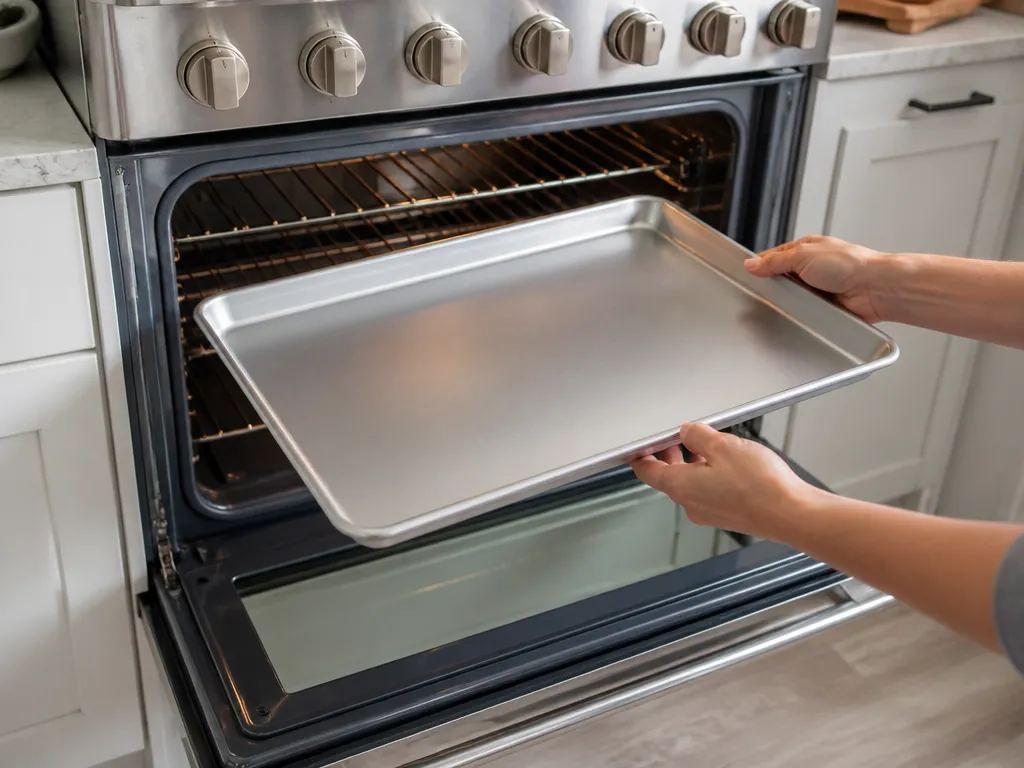
Half-sheet pans measure 18 × 13 inches, and that size is what most home recipes assume. If your pan is too big, it can block airflow and leave the corners cooking unevenly. If it’s too small, food gets crowded and steams instead of browning. For most home ovens, a half-sheet pan is the best starting point.
Quarter sheets measure 13 × 9 inches and work well in toaster ovens, smaller ovens, and for small batches. Full sheets measure 26 × 18 inches and are usually too large for residential ovens. Eighth sheets measure 9 × 6.5 inches and suit single servings or very small snacks.
The Right Sheet Pan at a Glance
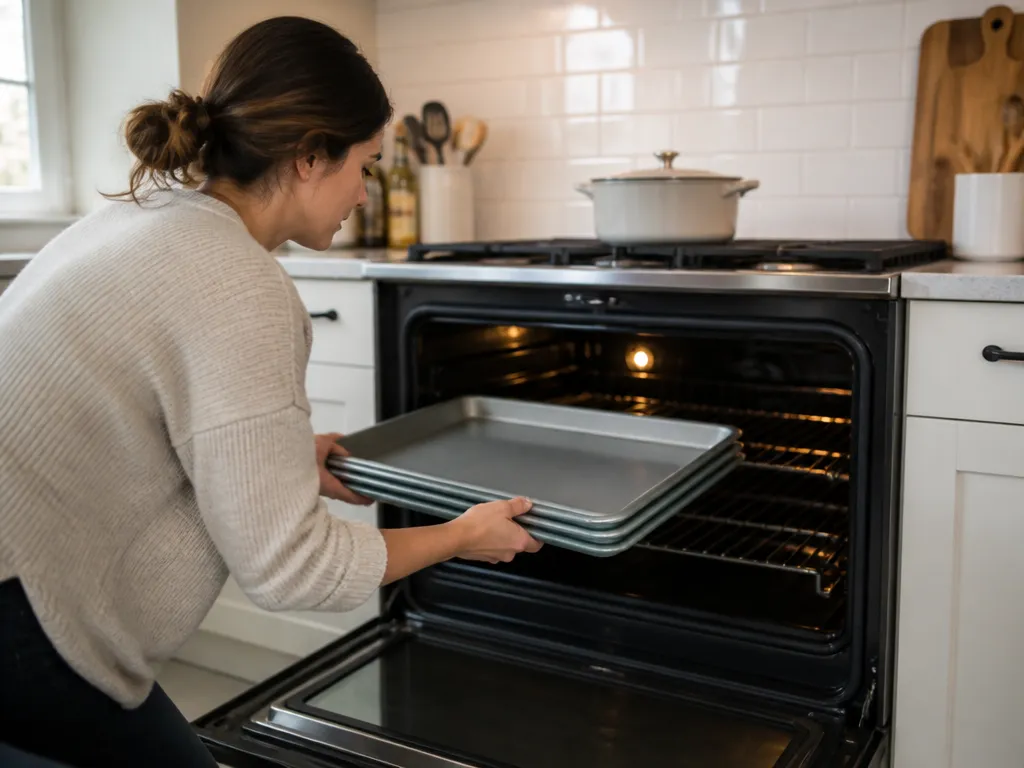
- Start with your oven. Leave about 2 inches of clearance for airflow around the pan.
- Measure storage space too. Check your cabinet or drawer before buying a pan you may not be able to store.
💡 Varied sizes let you choose the perfect pan while leaving oven clearance for proper airflow. Stainless Steel Cookie Sheet Set of 3, 9/12/16″ Baking Sheet Pans.
Start With Your Oven and Your Recipes
Choose a pan that fits your oven while leaving room for hot air to circulate. For most home ovens, that means starting with a half-sheet pan because many recipes are written around the 18 × 13-inch size.
Before shopping, measure three things: your oven’s usable interior depth and width, the clearance at the rack positions you use most often, and the storage space where the pan will live. Also consider what you bake most. Rimmed pans are usually the practical choice for sheet-pan dinners because their raised edges contain juices. Rimless cookie sheets can be easier to handle when you bake cookies and pastries.
Common sheet-pan sizes include:
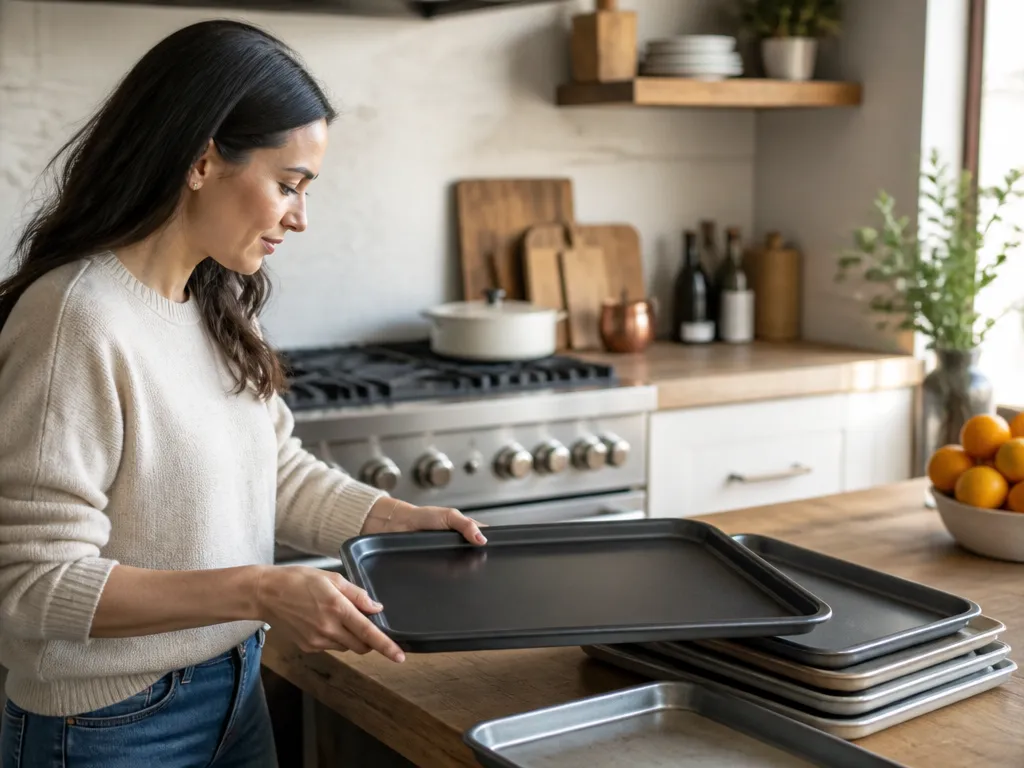
- Half sheet: 18 × 13 inches
- Quarter sheet: 13 × 9 inches
- Eighth sheet: 9 × 6.5 inches
- Full sheet: 26 × 18 inches
You will see these “half,” “quarter,” and “eighth” labels in recipes and kitchen supply stores.
How Fit and Airflow Affect Baking
Choosing a baking sheet comes down to two questions: does it physically fit, and can air move around it? A pan can slide into the oven and still cook poorly if it blocks convection or sits tightly against the oven walls.
Measure your oven’s interior width and depth at the rack level you use, then compare those measurements with the pan’s outside dimensions, not just its cooking surface.
Rack position matters too. A pan that fits on the middle rack may be too tall for the top rack if your oven has thick heating elements or a curved ceiling. If you plan to bake two pans at once, check the space between the racks. Oversized pans reduce the gap between trays, which can restrict airflow even when one pan fits comfortably.
Food also needs room. A pan that fits your oven may still be too small for the recipe. Vegetables, chicken pieces, and other foods intended for roasting should sit in a single layer with space between pieces. When food touches or piles up, moisture gets trapped and the food steams instead of browning.

Helpful pick
GoodCook Everyday Nonstick Steel Baking Sheet, 17 x 11-Inch, Gray
This 17 x 11-inch sheet maximizes oven space while promoting even air circulation for better baking results.
Step-by-Step: Choose the Right Baking Sheet
- Measure the oven’s usable interior. Measure width and depth at the rack level you use most, and note the maximum height or clearance if your oven is tight.
- Pick your starting pan size. If you have no reason to go smaller, start with a half-sheet pan measuring 18 × 13 inches. It fits most home ovens and matches the most common recipe assumption.
- Check airflow clearance. Compare the pan’s outside dimensions with your oven interior, aiming for about 2 inches of space around the pan on all sides.
- Choose a secondary size. A quarter-sheet pan measuring 13 × 9 inches works for smaller batches, multiple pans, and toaster ovens.
- Match the pan to your cooking. Cookies and pastries often work well on smaller or rimless sheets. Sheet-pan dinners usually need rimmed pans to contain juices.
- Check the food layout. Dry foods should spread in a single layer when you want browning. If your usual recipe overflows the pan, use a larger pan or bake in batches.
If your oven interior at the middle rack measures close to 22 inches wide by 17 inches deep, a half-sheet pan will usually be the just-works option. Its 18 × 13-inch dimensions leave about 2 inches of room for airflow on each side. If your oven only comfortably holds about 17 inches by 13 inches, a quarter sheet measuring 13 × 9 inches is the better match.
Many home bakers end up with two useful sizes: one half-sheet pan for most recipes and one quarter-sheet pan for smaller batches and toaster-oven use. That combination covers most everyday baking without forcing an oversized pan into a tight oven.
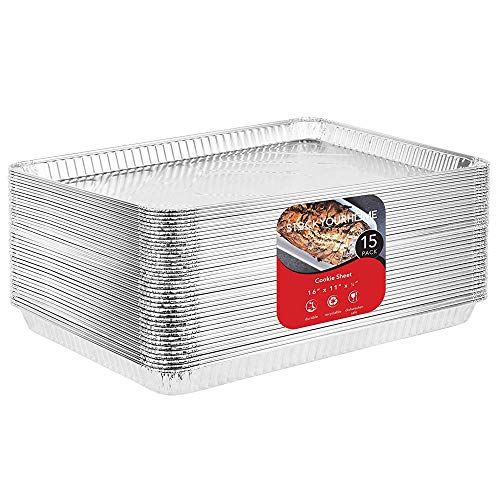
Helpful pick
Stock Your Home Aluminum Pans – 15 Pack Disposable Aluminum Foil Trays – Reusable Nonstick Baking Sheets – 16 Inch x 11 Inch
These 16″ x 11″ aluminum pans match full-size sheet pan dimensions, ideal for verifying your oven’s usable interior space before committing to larger bakeware.
Techniques for Matching Pan Size to the Job
Use a recipe-to-pan translation: when a US recipe says “sheet pan” or “baking sheet,” it usually means a half-sheet pan. When it mentions a “quarter sheet,” “mini sheet,” or toaster-oven-friendly pan, it generally refers to a 13 × 9-inch pan.
Use a bake-count check: if you regularly bake two trays at once, quarter-sheet pans may be easier to manage than trying to fit two half sheets into a smaller oven. Smaller pans let you stagger items, avoid crowding, and rotate each tray more easily.
Rim height also affects the right choice. Rimmed pans contain drips and juices from roasted vegetables, meat, and sheet-pan dinners. Rimless sheets make it easier to slide cookies off cleanly and can suit certain pastry workflows, but they are a poor choice for liquid-heavy foods.
Quick Size Match Guide
- Most home recipes: Half-sheet, 18 × 13 inches
- Toaster ovens or smaller batches: Quarter-sheet, 13 × 9 inches
- Very small snacks or single servings: Eighth-sheet, 9 × 6.5 inches
- Commercial-scale batches: Full-sheet, 26 × 18 inches, usually too large for home ovens

Helpful pick
GoodCook Everyday Toaster Oven Mini Baking Sheets Set of 2 Set of 2 Heavy-Gauge Steel Baking Pans with Scratch-Resistant Nonstick, 9 x 6.2-Inch, Gray
These 9 x 6.2-inch heavy-gauge steel pans with nonstick coating are ideal for quarter-sheet and toaster-oven recipes in small home ovens.
Materials, Rims, and Everyday Use
Choose a half-sheet pan as your default, then add a smaller one if you need flexibility. In a typical US home, an 18 × 13-inch half sheet balances surface area with oven fit. It also matches the size used by many recipes and cookware sets.
If your oven is small or you often bake multiple items at once, make a 13 × 9-inch quarter sheet your second pan. Quarter sheets are easier to fit on racks, rotate, and store when space is limited. They also work well when different foods need different cooking times.
Check the pan’s gauge and resistance to warping after choosing its size. A correctly sized pan can still perform poorly if it bends during heating. Warped trays can create uneven contact and cause batter or oil to pool. If you bake hot and often, thicker, more rigid pans generally keep their shape better.
Avoid coatings that limit high-heat use if you roast at higher temperatures. A surface that handles high heat gives you more flexibility for roasting. If you mainly bake cookies at moderate temperatures, you have more options, but roasting is where materials and coatings face their toughest conditions.
Account for your oven type as well. Convection ovens benefit from generous airflow, so clearance matters even more. Conventional ovens may tolerate a slightly tighter fit, but overcrowding still produces uneven results.
Standard Sheet Pan Sizes for US Homes
| Pan size (name) | Dimensions (inches) | Dimensions (cm) | Best for |
|---|---|---|---|
| Full Sheet Pan | 26″ × 18″ | 66 × 46 cm | Commercial kitchens, large batches |
| Half Sheet Pan | 18″ × 13″ | 46 × 33 cm | Home ovens, most versatile |
| Quarter Sheet Pan | 13″ × 9″ | 33 × 23 cm | Small batches, toaster ovens |
| Eighth Sheet Pan | 9″ × 6.5″ | 23 × 17 cm | Very small batches, single servings |
Baking Sheet Size Mistakes to Avoid
Do not assume “sheet pan” means exactly the same size across brands and recipes. Most US recipes assume a half-sheet pan, but product labels vary and cookware sets sometimes mix sizes. Measure the pan you already own and compare it with the recipe before baking.
Avoid rimless sheets for liquid-heavy foods. Meat drippings and saucy vegetables can spill over the edges, creating a mess and potentially smoking in the oven. Use a rimmed pan when the food releases fat, water, or sauce.
Do not buy based on storage alone. A pan may fit neatly in a cabinet but still be wrong for your oven or your recipes. Fit and airflow come first; storage comes second.
Practical Tips for Better Results
Use a layout test before committing to a size. Spread one of your most common roasting recipes on the pan you are considering. If everything fits in a single layer with space between pieces, the size works. If pieces touch or pile up, choose a larger pan or plan to bake in batches.
If you bake at higher temperatures, prioritize rigidity to reduce warping. A warped tray can bake unevenly even when its dimensions are correct. Thicker construction helps the surface stay flat through repeated heating.
When using two pans, rotate them and swap their positions if one side of your oven runs hotter. Ovens develop hot spots, and rotating the pans can improve browning more than changing the recipe or temperature.
Check handling and storage before buying. You should be able to slide the pan in and out smoothly, even when it is hot and loaded with food. A pan that is almost the right size can feel awkward during heavy bakes, increasing the chance of bumping the rack or disturbing the food.
FAQ Of How To Choose Baking Sheet Size For Home Oven
What size baking sheet fits most home ovens?
A half-sheet pan is the typical fit for most home ovens, and it measures 18 × 13 inches. If your oven is on the smaller side or you want easier maneuvering, a quarter-sheet pan measuring 13 × 9 inches is the next common choice.
Should I choose a half sheet or a quarter sheet pan?
Choose a half sheet for most everyday baking because it matches the most common recipe assumption: 18 × 13 inches. Choose a quarter sheet measuring 13 × 9 inches if you bake smaller batches, use a toaster oven, or want to bake more than one tray at a time.
What’s the safest clearance when choosing a baking sheet size?
Aim for about 2 inches of free space around the pan on every side so hot air can circulate. If the pan sits too close to the oven walls or heating elements, you will often see uneven browning.
How do I know if I should bake in batches instead of using one pan?
Bake in batches if your food cannot spread out in one layer. If vegetables, chicken, or dough pieces touch or pile up, the pan is too small for the amount of food, and the result will be steaming instead of browning.
What’s the most common mistake people make with baking sheet size?
Overcrowding is the biggest mistake because it causes uneven cooking even when the pan technically fits. The second common problem is ignoring airflow clearance, which can also produce pale centers and darker edges.
Disclosure: As an Amazon Associate, I may earn from qualifying purchases at no extra cost to you. Amazon and the Amazon logo are trademarks of Amazon.com, Inc, or its affiliates.
