
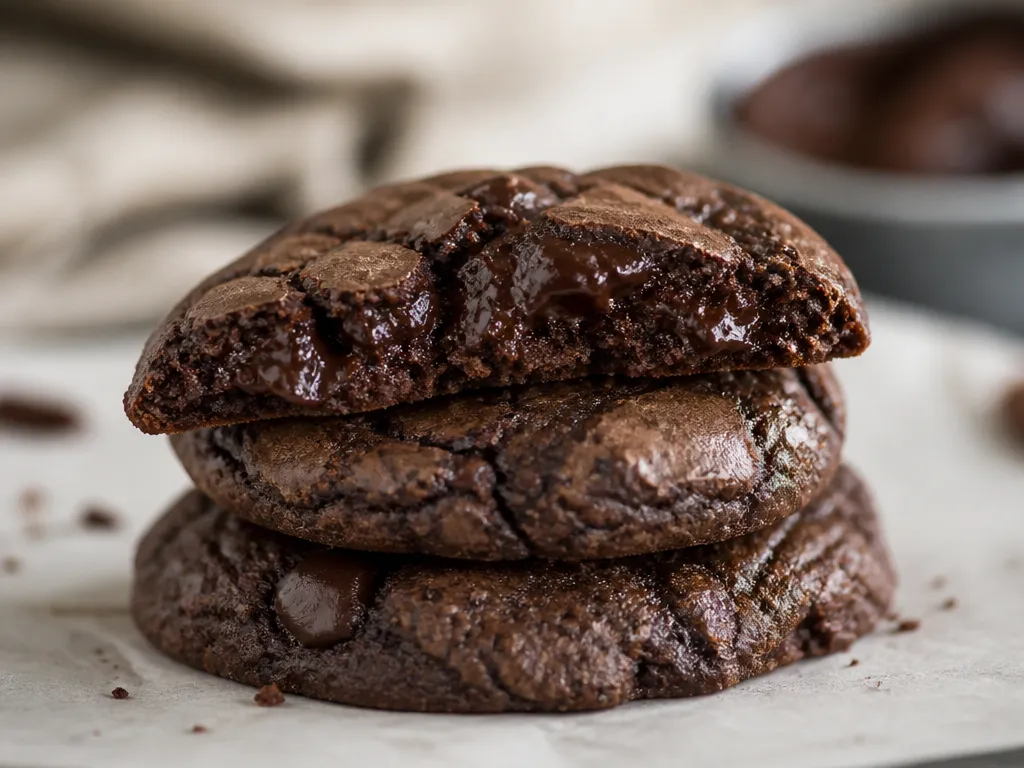
Fudgy chocolate cookies come down to moisture, fat, and how long you bake before the structure sets. If you overbake, the cookies dry out as proteins fully set and water escapes. Cocoa or chocolate with enough fat, a balanced sugar mix, and careful bake timing all help keep the centers dense and tender.
Chocolate cookies get fudgy when the center stays moist and the dough retains enough fat and sugar to prevent full drying. Pull them from the oven when the edges look set but the centers still look slightly soft. The cookies continue setting as they cool, so bake time and cooling matter as much as the recipe.
Key Takeaways
- Moisture is the key. Pull cookies when the edges set and the centers still look underdone, then let them cool to finish setting.
- Fat increases fudginess. Butter and chocolate fats keep the dough tender instead of letting it dry out.
- Sugar controls texture. Brown sugar helps retain moisture and promotes a softer, fudgier bite.
- Do not overmix. Mix just until combined to avoid developing a tougher structure.
- Chocolate choice matters. Melted chocolate brings more fat than cocoa, which tends to bake firmer.
- Time beats temperature. A shorter bake creates fudgy centers; longer baking makes cookies drier or more cake-like.
How Chocolate Cookies Become Fudgy
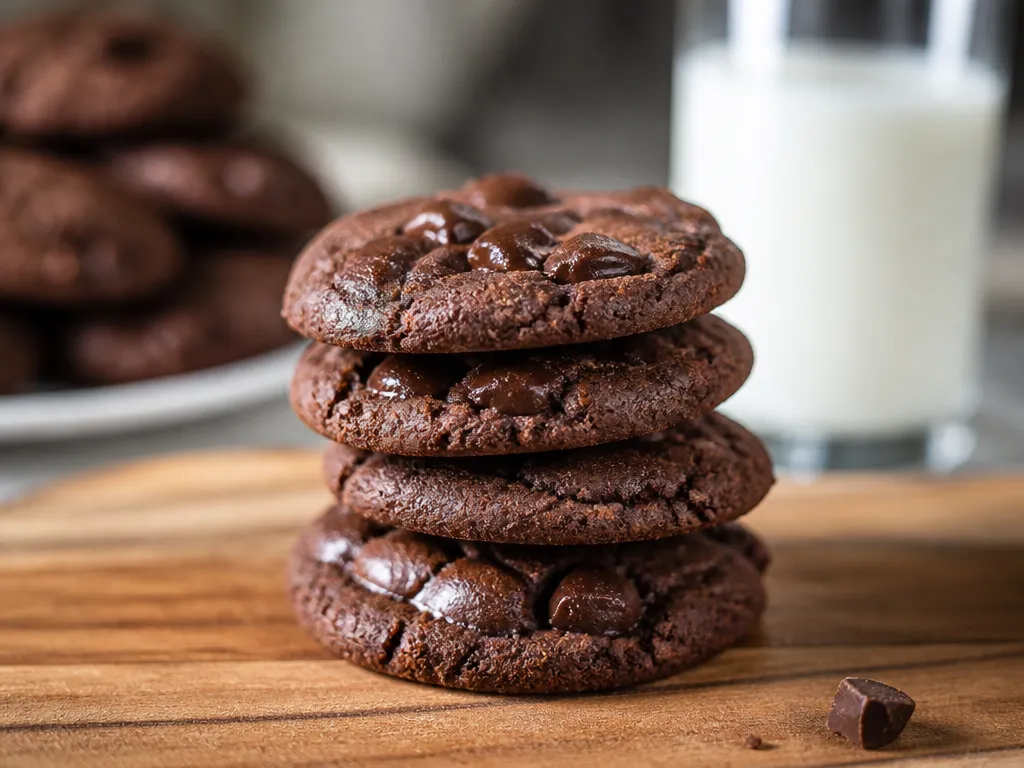
Three factors control the texture: how much water the dough holds, how much fat and sugar slow drying, and how far heat sets the dough’s structure. Flour and eggs create that structure, but they also make the cookie firmer as they cook. That is why two recipes with the same instruction to “bake 10 minutes” can produce different results, especially when ovens run hot or dough has been chilled for different lengths of time.
The Texture Factors That Make Cookies Fudgy
Fudginess is a tug-of-war between structure and moisture. Flour proteins and starches set as they heat, while eggs coagulate and make the cookie firmer. Stopping the bake just short of complete setting preserves a softer, denser center.
Sugar and fat shift the balance toward tenderness. Brown sugar contains molasses, which adds moisture and slows crystallization and drying. Melted chocolate, or chocolate with a higher fat content, adds more fat than many cocoa-only recipes. That extra fat helps keep the cookie from becoming dry and crumbly.
The most reliable ways to make cookies fudgier are:
- Pull timing – Removing cookies earlier keeps the middle moist.
- Sugar type – Brown sugar generally creates more chew and softness than white sugar alone.
- Chocolate form – Melted chocolate usually gives a softer, fudgier bite than cocoa alone.
- Fat level – More fat, within reason, reduces dryness and increases tenderness.
- Mixing – Overmixing can create tougher structure and reduce fudginess.

Helpful pick
Dare Whippet Cookies, Original, Single Pack (14 Cookies) – Made with Real Chocolate, Cloud-Like Marshmallow, 100% Peanut Free, 8.8 Oz box
These cloud-like marshmallow cookies demonstrate how soft, moist centers contribute to the overall fudgy experience that defines a high-quality chocolate treat.
How to Make Chocolate Cookies Fudgier
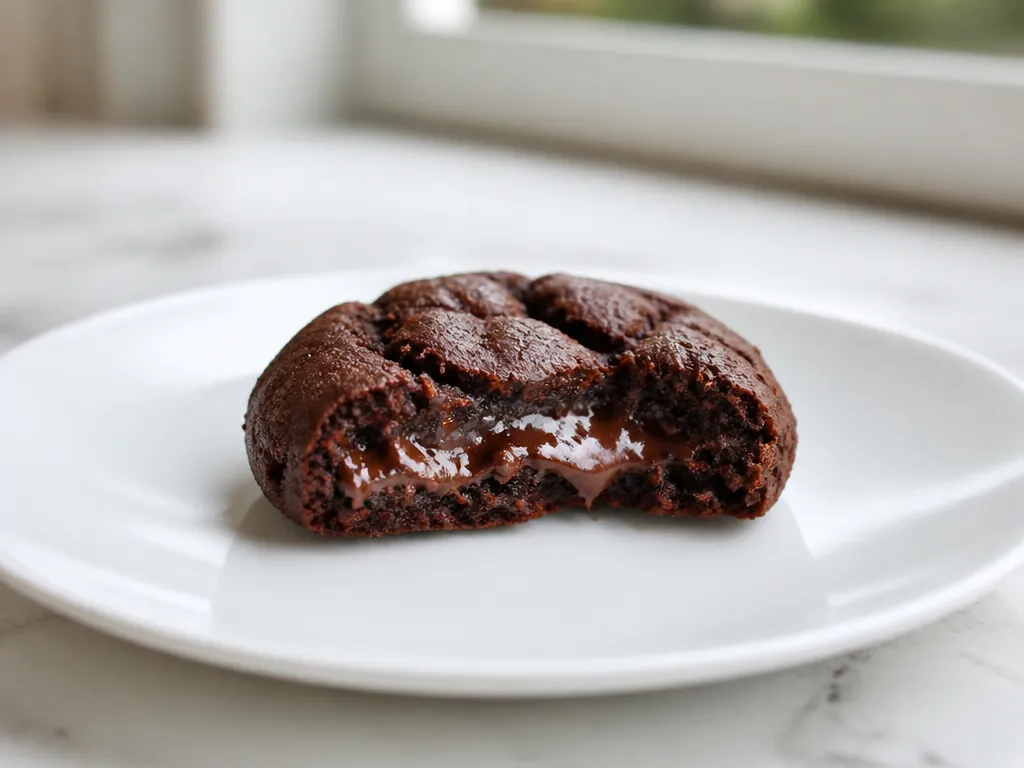
Start with the problem you are trying to fix. A cakey, dry, or fast-crisping cookie needs a different adjustment than one that spreads too much. Changing one factor at a time makes the result easier to judge.
1. Bake until the edges set, not the centers. Look for edges that are set and slightly matte, with centers that still look a little soft or glossy. If the center looks dry or shows no movement, the cookies have probably passed the fudgy window. Leave them on the tray for a few minutes after baking, then move them to a rack so the bottoms stop cooking.
2. Use brown sugar. If a recipe relies mostly on white sugar, replace part of it with brown sugar. Brown sugar adds moisture and produces a thicker, fudgier chew. Do not increase it too aggressively in an already-fudgy recipe, or the cookies may seem underbaked and collapse more than you want.
3. Choose the chocolate deliberately. Cocoa powder can produce a deeply chocolatey cookie, but it often bakes firmer. For a fudgier texture, add melted chocolate or replace some cocoa with melted chocolate. In dark chocolate cookies, melted chocolate often makes the biggest textural difference.
4. Chill the dough with a purpose. Chilling improves flavor and limits spread, but very long chilling can dry the dough slightly and change how quickly the center sets. If fudginess is the priority, chill the dough until it is firm enough to scoop cleanly, then bake it promptly.
5. Mix only until combined. Stop stirring once the ingredients come together. Fold in any remaining flour streaks, but do not keep beating the dough. Less mixing usually means less toughness.
6. Keep the baking conditions consistent. Salt affects more than flavor; it can also influence how the dough hydrates and browns. Use the middle rack for more even heat. Pan color matters too: dark metal pans brown cookies faster, which can push them past the fudgy window if you follow the timer without checking their appearance.

Helpful pick
Gluten-Free Double Chocolate Chip Cookie Mix
For those struggling to balance structure and moisture, this mix provides a reliable foundation to practice your baking technique without the usual stress.
Why Fudgy Cookies Stay Soft and Dense
Fudgy cookies deliver a dense, chewy chocolate center that comes close to a brownie without requiring a separate brownie recipe. Their retained moisture and fat also slow drying compared with crisp, thoroughly baked cookies.
A fudgy dough gives you a little more room for error. If you bake it a minute too long, it is less likely to turn immediately into dry crumbs than an ultra-crisp dough. It still can become overbaked, but the texture usually holds up better.
For groups, fudgy cookies are easier to eat because they are less likely to snap or shatter. Their dense chocolate texture also holds up well with milk, coffee, and ice cream.
Different Ways to Make Chocolate Cookies Fudgy
The best method depends on the ingredients already in your pantry. Cocoa-based cookies offer deep chocolate flavor, while melted chocolate creates a denser, more brownie-like texture.
Texture Paths That Work
| Option | Key ingredients to emphasize | Best for |
|---|---|---|
| Brown sugar fudgy | Brown sugar + butter + careful pull timing | Chewy, soft centers with classic chocolate cookie taste |
| Melted chocolate fudgy | Melted chocolate + fat-rich dough + shorter bake | “Brownie-like” denseness and stronger chocolate mouthfeel |
| Cocoa fudgy | Cocoa powder + enough fat + don’t overbake | Chocolate depth when you want cocoa-forward flavor |
| Thicker dough method | Slightly higher flour-to-liquid balance + careful timing | Less spread, thicker fudgy center |
| Chilled dough fudgy | Moderate chill + reduced mixing + consistent bake time | Reliable shape with tender crumb |
The fastest route is usually melted chocolate plus brown sugar, followed by an early visual check rather than strict reliance on the timer. Melted chocolate supplies fat, while brown sugar helps retain moisture. The combination is forgiving as long as you remove the cookies before the centers fully set.
How to Diagnose Dry, Cakey, or Greasy Chocolate Cookies
Match the adjustment to the failure you see. Cakey cookies usually need less baking time or a less structured dough. Dry cookies have likely spent too long in the oven or do not retain enough moisture. Greasy cookies may contain too much fat relative to flour, or the melted chocolate may have separated and thinned the dough.
- Cakey center – Pull the cookies earlier and check whether the sugar mix is mostly white.
- Dry bite – Reduce bake time by 30- to 90-second increments, and consider adding more brown sugar or melted chocolate.
- Spreading too much – Chill the dough briefly and bake at the same oven temperature rather than increasing the heat.
- Greasy or under-set – Bake a little longer, and avoid over-melting the chocolate so it does not thin the dough excessively.
Weigh ingredients when possible. Cup measurements can vary considerably, especially for flour and cocoa, and those differences change the moisture balance that controls fudginess.
Cooling is part of the bake. Fudgy centers often finish setting as the cookies cool. If you move them too early onto a hot tray or into a container, they can cook unevenly and lose their tender center.

Helpful pick
Double Chocolate Fudgy Cookie Mix
If your homemade batches are consistently turning out dry or cakey, using this dedicated fudgy cookie mix can help you achieve consistent results.
Examples of Fudgy Chocolate Cookie Adjustments
Cookies made with cocoa powder that resemble chocolate shortbread or feel firm can benefit from more fat and some melted chocolate. Replacing part of the cocoa with melted chocolate, or adding melted chocolate alongside the cocoa, changes the texture because the melted chocolate contributes more fat to the dough.
If you want fudgy cookies without changing the ingredient balance, focus on baking and cooling. Use a light-colored pan if your oven runs hot, or reduce the bake time slightly when using a dark pan. Leave the cookies on the tray for a few minutes, then transfer them to a rack.
FAQ
Why are my chocolate cookies fudgy at first but dry the next day?
Fudgy cookies can lose moisture if you cool them in a way that keeps the centers cooking. Store them in an airtight container once they are fully cool to slow moisture loss.
What makes chocolate cookies fudgy, cocoa powder or melted chocolate?
Melted chocolate generally makes cookies fudgier because it adds more fat to the dough, which helps retain tenderness as the cookies set. Cocoa powder can still produce a rich cookie, but it often bakes firmer unless the recipe includes enough fat and careful pull timing.
How long should you bake chocolate cookies to keep them fudgy?
Use the low end of the recipe’s bake-time range and assess the cookies before adding time. Ovens and dough conditions vary, so add time in small increments only if the centers are truly under-set.
Do I need to chill the dough to get fudgy chocolate cookies?
No. Chilling can control spread and improve flavor, but it is not required for fudginess. If your cookies turn out dry or firm, try chilling them for less time or baking them sooner after chilling. If they spread too much, chilling can keep the dough thick enough to form a fudgy center.
What is the most common mistake that stops cookies from being fudgy?
The main problem is using a bake time that takes the cookie past its fudgy stage. Overmixing is another common problem because it can create a tougher, less tender cookie.
Disclosure: As an Amazon Associate, I may earn from qualifying purchases at no extra cost to you. Amazon and the Amazon logo are trademarks of Amazon.com, Inc, or its affiliates.
